Lebanese Shia reference Ali Amine: Wilayat al-Faqih becomes political system

-
-
1257
-
0
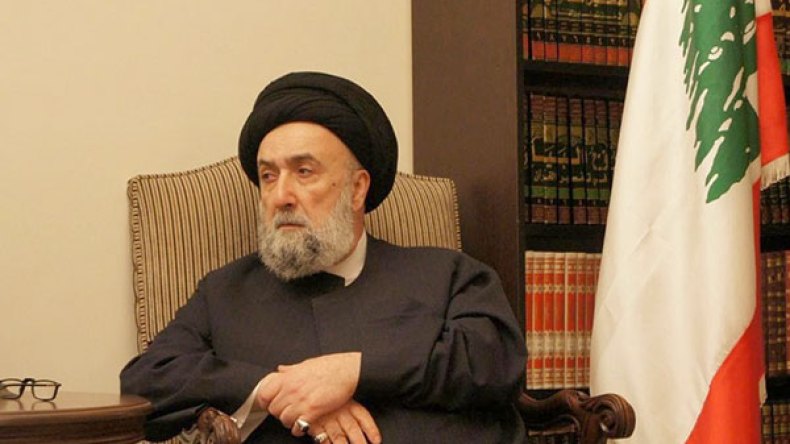
Ali Amine, an important Shia reference in the Arab World including Lebanon has showed positions against Hezbollah. He opposes Iran’s new trend in the region. “Wilayat al-Faqih has been turned into a political system,” he told Echorouk in an interview.
It is clear now that Arab Shia partisans are attached to Wilayat al-Faqih in Iran except some voices. Why is that?
Wilayat al-Faqih has become a political system in Iran med by Wali al-Faqih. It is no more a religious reference. Arab Shia partisans and others have always been related to religious references in Iraq even of non-Arab origins. This was not a problem as it was no more than a religious spiritual link. As for Wilayat al-Faqih in our time, it has nothing to do with religion but it was turned into a political system. Most of Arab Shia partisans and others are not related to it spiritually. It is linked to some Arab Shia political groups and parties in Lebanon and Iraq.
The blame is not on Arab Shia but it is on their States which failed in setting moderation.
You criticized Hezbollah for having sectarian ideas. To which extent does this harm Lebanon?
We still criticize this team for its political performance which caused sectarian division and weakened the State in Lebanon. In 2008, Beirut was invaded and the Lebanese government was toppled. Hezbollah intervened in the fight in the Syrian lands and did not respect the Lebanese State’s decision. This fuelled sectarian tension in Lebanon and the Arab World.
Speaking about Hezbollah, what do you think about the Iranian role in Lebanon and the other Arab nations?
Relations between nations should be based on mutual respect and non interference in domestic affairs. We repeatedly called for direct relation between Iran and Lebanon and not through parties, associations and sects.
Don’t you think that we live an illusionary conflict. Arabs are distracted from their eternal enemy: Israel to focus on Iran?
No doubt, normal relations between Iran and its Arab neighbors led to pay less attention to the Arab-Israeli conflict and other national causes. Yet, we should seek the reasons behind that. Muslim nations, scholars and rulers are responsible for that. They should unify all the Muslim nations because they can do it. They should show moderation in Muslim communities.
From a religious point, how can a rapprochement between Sunni and Shia partisans be achieved in the region?
Our religious vision is based on one single religion. Specialists made efforts to understand religious texts from its official sources in the Holy Quran and Sunna. There are many opinions about that. We call this doctrines. This is no more than an attempt to understand the same religion and not many religions. Muslims used to be as one family before doctrines had appeared.
We proposed to rulers to change school programs in religious institutes and to open their door to religious sciences students from different doctrines. We have to highlight that Islam is the religion which unifies us. Doctrines are just opinions and ideas. The difference between them does not mean a religious conflict.
In this regard, a scientific university can be established to reach rapprochement between doctrines. Its students would be deployed all over the Muslim World. Al Azhar is the best organisation to be in charge of this mission.