University Training For Over 1,000 Algerian Doctoral Students And Researchers In Spain
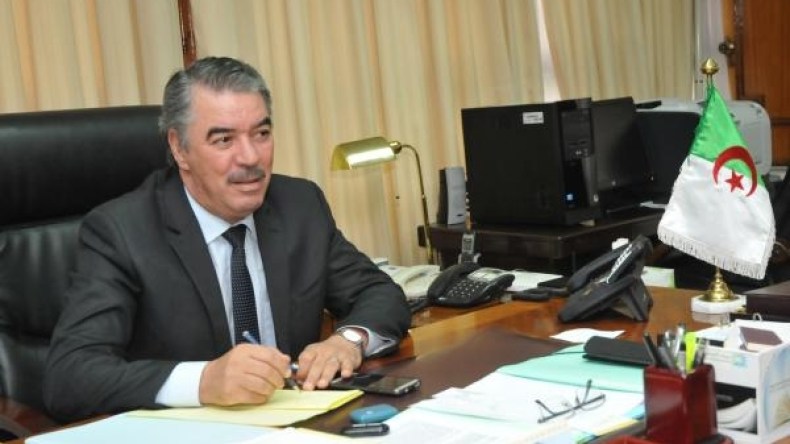
The strengthening of Algerian-Spanish cooperation in the university sector was discussed on Tuesday in Algiers, during a meeting between the Minister of Higher Education and Scientific Research, Mr. Tahar Hadjar, and the Director General of the Cervantes Institute, Mr. Luis Garcia Montero, said a statement from the Ministry.
On this occasion, the two sides examined the possibilities of “further bolstering” university cooperation between the Cervantes Institute and Algerian universities.
Such cooperation has “intensified” and “developed”, particularly after the holding in April 2018 of the Algerian-Spanish Higher Joint Commission, the statement said.
In the same context, “108 agreements and conventions” have been signed between Algerian universities and Spanish institutions, allowing “more than 1,050 Algerian doctoral students and researchers” to be duly trained in the various Spanish universities and research centers.
In addition, it should be noted that Spain “remains one of Algeria’s most important” European partners in the field of higher education and scientific research, since the co-publication of “more than 1,260 research articles, including 221 research works during the year 2017” has been reported, added the same source.
Added to this is the existence of “two memoranda of understanding, thus constituting a legal anchoring to other agreements, particularly in the field of scientific research where the Directorate General of Scientific and Technological Research (DGRST) has signed agreements with its Spanish counterparts for possible groupings of researchers from both countries in different disciplines and scientific fields, such as the lactic acid bacteria research project in applied sciences”, the statement further said.
On the same occasion, Mr Tahar Hadjar “requested the Spanish side to open a Cervantes Institute in the wilaya or province of Constantine (eastern Algeria) which despite its high number of students and academic institutions, has a deficit in such a valuable institution meant for the teaching of the Spanish language and civilization”.
In response, the Spanish side stated that it was “fully available to carry out such a project as early as possible”, noted the same source.