Algeria at the Heart of the EU’s Mediterranean Clean Energy Plan
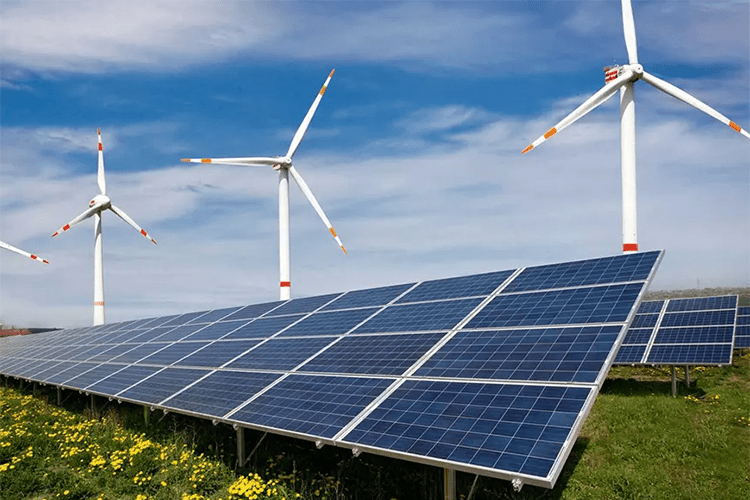
As the European Union accelerates its transition away from fossil fuels, Algeria is emerging as a key player in Brussels’ vision for a Mediterranean clean energy hub. Through a new initiative expected to attract billions of euros in investment, Algeria could become one of Europe’s most important suppliers of renewable electricity and green hydrogen.
The European Commission has begun implementing an ambitious renewable energy strategy across the Mediterranean basin, with Algeria positioned at the heart of the project. The initiative, known as T-MED (Trans-Mediterranean Renewable Energy and Clean Tech Cooperation Initiative), aims to mobilise up to €25 billion in investments by 2035 and reshape the region’s energy landscape around clean and sustainable sources.
According to the French newspaper Les Echos, an unnamed senior European Commission official stated that “a portion of Algerian territory alone could cover all of the European Union’s energy needs,” underscoring the country’s exceptional solar potential and its ability to generate renewable electricity at highly competitive costs.
The T-MED initiative, published by the European Commission’s website, seeks to transform the southern Mediterranean into a global hub for renewable energy production. Investments will focus on large-scale solar and wind power projects, as well as the development of a green hydrogen industry capable of supplying European markets.
Beyond electricity generation, the strategy includes modernizing transmission networks, expanding cross-border energy connections, and establishing new corridors linking North Africa with Europe. Among the flagship projects under consideration is the repurposing of existing natural gas infrastructure to transport hydrogen across the Mediterranean.
To attract private capital, the European Commission plans to launch a dedicated investment platform in 2026, backed by €5 billion in European guarantees. Brussels estimates that these guarantees could leverage up to €25 billion in additional investments from financial institutions and private-sector partners.
The initiative also seeks to remove administrative bottlenecks that have traditionally slowed energy projects. Current approval procedures often take between 24 and 48 months; under the new framework, the Commission intends to streamline regulations and significantly shorten project development timelines.
A major pillar of the strategy involves human capital development. European officials estimate that approximately 100,000 workers will require training in renewable energy technologies, infrastructure management, and hydrogen-related industries.
The goal is not only to increase energy production but also to foster a new generation of Euro-Mediterranean industrial partnerships capable of creating jobs, transferring technology, and strengthening local value chains.
The renewable energy initiative forms a central component of the European Union’s broader New Pact for the Mediterranean, unveiled last autumn. The framework proposes a new model of cooperation between the EU and countries on the southern shore of the Mediterranean, including Algeria. One of the most significant proposals is the South H2 Corridor, a planned hydrogen transport network that would connect Algeria to European consumers, reinforcing the country’s role in the continent’s long-term energy security strategy. The project forms part of a broader vision aimed at integrating southern Mediterranean countries, including Algeria, into a new cross-border energy system linking both shores of the mediterranean.
Through the pact, Brussels launched the ambitious T-MED initiative to establish a large-scale investment platform bringing together European institutions, financial organizations, and private-sector stakeholders to finance solar and wind energy projects, aiming to support economic modernization, industrial development, and climate transition efforts while deepening the integration of partner countries into European markets.
As part of this strategy, the EU is encouraging reforms of energy regulations in southern Mediterranean countries to facilitate exports of renewable electricity and green hydrogen. At the same time, European officials insist that local economies must benefit through technology transfer, workforce development, and industrial growth.
For Algeria, the initiative represents far more than an energy project. It offers an opportunity to leverage one of its greatest natural assets—abundant solar resources—to diversify an economy traditionally dependent on hydrocarbons.
With Europe seeking reliable, low-carbon energy sources and Algeria possessing some of the world’s most favorable conditions for solar power generation, the convergence of interests could redefine economic relations across the Mediterranean. If successfully implemented, the T-MED initiative may position Algeria not merely as a neighboring energy supplier, but as a cornerstone of Europe’s renewable energy future.