“Autonomy” For Western Sahara… “A Storm In A Teacup!”
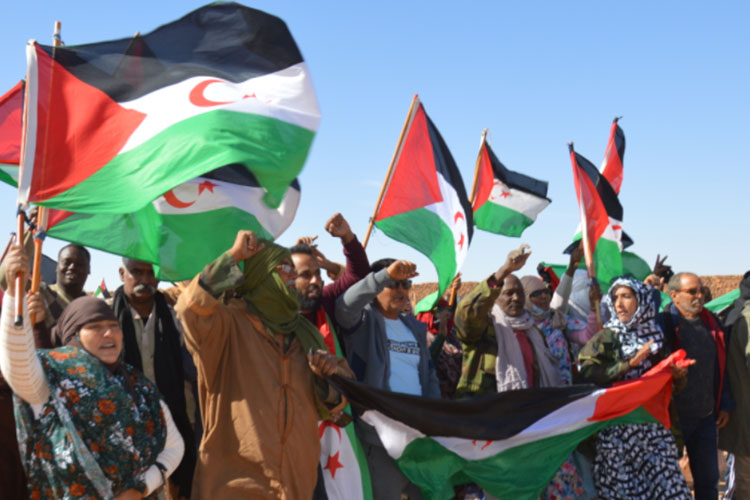
All eyes are on the UN headquarters in New York this Thursday, where Security Council members are preparing to vote on a US draft resolution on the Western Sahara issue.
This resolution has sparked widespread controversy within the Council’s corridors due to its inclusion of provisions that contradict the UN Charter, especially concerning the status of non-self-governing territories, and directly conflict with international law related to decolonization.
Beyond the details of the Security Council resolution, a fundamental question arises about the fate of the resolution, which is a clear attempt to impose a fait accompli policy in the Western Sahara issue. This is because it directly excludes the option of self-determination for the Sahrawi people and further complicates the negotiation process between the “Polisario” Front and Morocco. It has thus transformed into a set of dictates that leave no room for negotiation or compromise solutions capable of opening the door for dialogue between the two parties to the conflict.
The Security Council resolution will further exacerbate the atmosphere and complicate the existing crisis between the “Polisario” Front and the occupying state, Morocco, because it contains impossible and non-negotiable conditions that are considered legally unacceptable.
On the other hand, this resolution will not contribute to changing the reality on the ground in this issue, which is officially registered with the United Nations as a decolonization matter. Nor will it grant Morocco any legitimacy or additional privileges, as the Kingdom continues to occupy Sahrawi territories and deplete their natural resources.
This exploitation continues through benefiting from the revenues of commercial deals concluded with the European Union and some Western countries, despite numerous rulings issued by the European Court that explicitly prohibited the exploitation of Western Sahara’s natural resources by the Moroccan occupation.
From a purely legal standpoint, this resolution will not confer official and legitimate status on what is known as “autonomy under Moroccan sovereignty,” because the resolution represents a clear violation of international legitimacy, and the United Nations cannot contribute to approving a measure that contradicts its charters related to the self-determination of peoples, especially those issues registered in the Fourth Committee (Decolonization Committee).
Considering the contents of the resolution, it is clear that the American drafting has fully adopted the Moroccan autonomy plan, as it neglected to mention self-determination as another option.
On the contrary, it stipulated the exercise of the right to self-determination exclusively within the framework of the “autonomy plan,” while explicitly granting Morocco “sovereignty over Western Sahara.”
Thus, the United States has transformed the Sahrawi issue into an American issue, fiercely defending it and refusing to include or make any amendments to the content of the resolution. Washington has thereby disregarded all fundamental proposals and amendments put forward by member states of the Security Council, whether permanent or non-permanent, which confirms the strength of American adoption of the Moroccan proposal.
More than that, Washington, in its capacity as the penholder for the Western Sahara file in the Security Council, proceeded to fully adapt the draft resolution to align with the Moroccan proposal, thereby ignoring what had been agreed upon among member states, without taking into account the proposals of other partners in the Council.
With this action, the United States has deviated from the principle and duties of a neutral “penholder” and has clearly become a direct party to the conflict.
The United States was not alone in leading the defense front for the Moroccan project; other countries, such as the United Arab Emirates, France, and the Zionist entity, undertook a persuasion campaign within the Security Council. These countries conducted intensive contacts on behalf of Morocco, seeking to rally support for the project, which comes as a direct reward to Morocco for standing with the Zionist entity in its horrendous aggression against Gaza.
Thus, the Moroccan regime has collected the price of its betrayal of the Palestinian cause, trading the Western Sahara file for the central issue of the nation.