Endorsement Of Draft Laws Criminalizing Colonialism, Road Traffic, And Political Parties
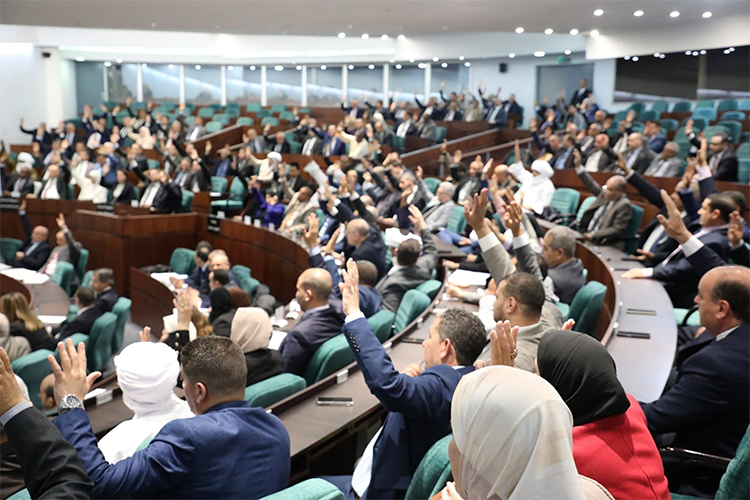
On Monday, the members of the People’s National Assembly unanimously approved the report of the Joint Committee regarding the disputed provisions in the draft road traffic law and the law criminalizing French colonialism. During the same session, a number of other legislative texts were also voted on, related to the organic law on political parties and the law on the territorial organization of the country, in addition to the settlement of the 2023 budget.
Regarding the road traffic law, the Minister of Interior explained that one of the most prominent achievements of the Joint Committee was the removal of the criminal nature from some road traffic violations contained in the provisions of this law, with a review of penalties and fines to ensure a balance between legal deterrence and consideration of the social dimension.
In this context, it was agreed to delete the word “felonies” from Articles 104, 119, 161, 166, and 170, in addition to reviewing some fine amounts for road traffic violations, as well as replacing the term “temporary imprisonment” with “detention” and reducing some penalties.
The Minister indicated that the articles that were in dispute between the two chambers of Parliament amounted to 11 articles. The amendments focused on reviewing some penalties and fines to align with the state’s new criminal policy and achieve a balance between deterrence and prevention, and to enhance the applicability of the text.
He also stressed that this law constitutes a legal framework primarily aimed at protecting citizens’ lives, enhancing road safety, and instilling a culture of respect for the law on the roads.
Following this, the deputies also approved the disputed provisions in the draft law related to criminalizing French colonialism in Algeria. The Minister of Mujahideen and Rights Holders, El Aid Tachrifet, affirmed that this step reflects Algeria’s adherence to its national memory and historical rights, stressing that the crimes committed by French colonialism against the Algerian people will remain present in the collective memory.
The Minister explained that this law expresses the conscience of the Algerian nation and its loyalty to the sacrifices of the martyrs, affirming that historical rights do not lapse with time, and that Algeria is committed to protecting its national memory and preserving its history. He also considered that this text goes beyond being a legislative measure to constitute a political and legal message reflecting Algeria’s adherence to its right to restore historical truth and establish justice in the face of colonial crimes.
On the other hand, the members of the Assembly voted on the organic law related to political parties, which aims to bolster the constitutionally enshrined principle of political pluralism, while enriching the provisions related to the establishment of parties and enshrining transparency in their financial management, thereby contributing to confronting various forms of corruption in political life.
The text includes a set of new measures aimed at expanding the areas of parties’ contribution to public affairs, especially through contributing to the implementation of the government’s general policy and submitting proposals and opinions regarding the formulation of public policies.
In the same context, the deputies also approved the draft law related to the territorial organization of the country, which falls within the reform workshops launched by the President of the Republic, especially concerning strengthening decentralization and addressing developmental imbalances between different regions.
The new law includes the promotion of 11 administrative districts to full-fledged wilayas, as part of a review of the country’s territorial division, thus encompassing 69 wilayas or provinces. These are Aflou, Barika, El Kantara, Bir El Ater, El Aricha, Ksar Chellala, Ain Oussera, Messaad, Ksar El Boukhari, Boussaada, El Abiodh Sidi Cheikh, in a step aimed at bringing administration closer to citizens, improving the quality of public service, and accelerating the response to residents’ concerns.
The Assembly also approved the settlement of the 2023 budget, within the framework of constitutional procedures related to monitoring the implementation of financial laws, allowing for the evaluation of how financial appropriations are implemented and ensuring transparency in the management of public resources.