Boualem Sansal: «France is Over for Me, I’m Leaving. I Hate Pris»
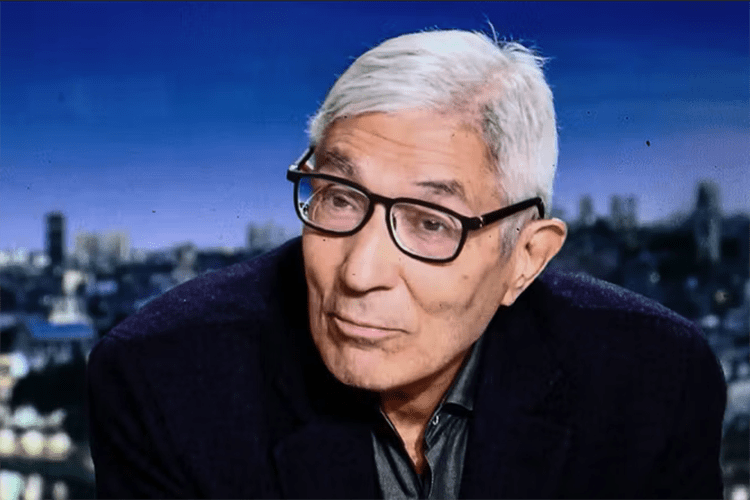
On the eve of his induction into the Royal Academy of French Language and Culture in Belgium, Franco-Algerian writer Boualem Sansal declared on Saturday, April 25, 2026, in Brussels: “France is over for me.” He added that he would be leaving the country in a few months for either Belgium or Switzerland.
In an interview with TF1 on Saturday, he said he is a victim of a conspiracy in France: “It’s not possible. I’m not going to fight a losing battle now. (…) France is over for me. I have a few years left to live peacefully. I’m leaving, I don’t know where. To Belgium, if they’ll accept me, or somewhere else.” Before that, he told AFP on Friday: “But I hate Paris, I don’t think I’m going to stay in France.”
Following his release from prison due to a presidential pardon, the writer, who became a French citizen in 2024, has captivated the French public. Some French people started to learn more about him as an individual, while others are exploring his ideas, friendships, and the boundaries of his loyalty.
The writer’s shift from his long-time publisher, Gallimard, to Grasset, owned by the far-right billionaire Vincent Bolloré, in March 2026, was one of the most significant events that transformed Sansal’s image in the eyes of the French public.
During Sansal’s imprisonment, some voices argued that the detained writer, contrary to what was being promoted at the time, was not an “enlightened figure defending noble causes.” Instead, he was seen as someone who spread racist, anti-immigrant, and anti-Muslim rhetoric. These critics faced backlash and even physical threats, as illustrated by the attack on political researcher Nadjib Sidi Moussa following his appearance on the public channel France 5’s “C Politique” program on November 24, 2024.
Sansal was arrested at Algiers airport in November 2024 upon his return from France due to statements he made on the far-right online channel Frontiers concerning Algeria’s borders. He was released in November 2025 by President Abdelmadjid Tebboune on humanitarian grounds.
Today, the situation has changed. With the writer’s statements and stances, the “legendary” image he sought to cultivate for himself, supported by far-right figures and media outlets, has begun to fade, and voices of criticism have been unleashed.
On April 7, Le Monde published an extensive two-page investigation titled ” A growing unease surrounds Boualem Sansal,” which detailed how the author’s reputation has been gradually declining in recent weeks. The article also examined his ties to the French far-right and his transition to the Grasset publishing house, posing the question: “Does receiving a significantly larger sum justify betrayal?”
Before Le Monde, Libération published an investigation in April. 1 entitled: “Boualem Sansal’s Move from Gallimard to Grasset: The Behind-the-Scenes Story of a Highly Political Transfer.”
On April 21, the same newspaper published an article by Iranian writer Fariba Hachtroudi titled, “Why I No Longer Recognise Myself in Boualem Sansal’s Literature?”
Unlike many who discovered the writer only after his imprisonment, Hachtroudi had been following his work since its beginnings. She reminded readers that she had defended him during his time in prison, asserting that “defending a man doesn’t mean ignoring his work and political beliefs.”
She said she felt “the profound bitterness of those who fought for over a year with admirable energy and unwavering determination for his freedom, only to find themselves today accused of betraying his cause!”
She added: “This latest manoeuvre by the writer—who abandoned his publishing house and his family, citing insulting pretexts—has deeply offended many of his supporters. I know all too well the turmoil of betrayed trust; it’s truly difficult to acknowledge that behind the image of the writer we supported and admired lies a more ruthless and innocuous character.” She suggested that Sansal had, disastrously, further destabilised an already fragile world of literature.
With the arrival of the writer, who was elected to the French Academy on January 26 of this year, at the Parisian publishing house, the director, Olivier Nora, was officially dismissed on April 14. He was replaced by Jean-Christophe Thiery, a close associate of Bolloré, following a dispute over the publication of Sansal’s book.
This caused a hemorrhage within the publishing house, with more than 130 writers leaving in protest against the influence of the far-right businessman Vincent Bolloré… even Bernard-Henri Lévy was among them!
In a letter announcing their departure from the publishing house, they stated that they did not want their ideas and work to become the property of the far-right billionaire, expressing their refusal to be “hostages in an ideological war that seeks to impose authoritarianism everywhere within culture and the media.”
During his appearance on the public channel France 5 on April 15, Sansal was asked about his responsibility for the situation. He responded by claiming he didn’t even know who Vincent Bolloré was. This response was quite surprising, especially considering that Sansal is a writer familiar with French cultural and political circles and regularly discusses French public affairs.
Faced with pointed questions from journalists Mohamed Kaci, Slimane Zeghidour, and Estelle Martin, the writer appeared flustered. Unlike his previous appearances on far-right television channels, where he readily echoed their anti-Islam, anti-immigrant, and anti-Algerian rhetoric, this time he seemed completely like a fish out of water.
After his statement today about his intention to leave France, Franco-Algerian Senator Akli Mellouli commented, recalling all that France had done for the writer, starting with granting him French citizenship in 2024. The mobilization at the highest level in the French state for him from the time of his arrest until his release, passing through granting him the “Knight of Honor” medal in January 2025, then his election to the French Academy, asking: “When I look at these events and examine them as a whole, with a look back, I wonder about this man: Is he a mercenary, or worse, an ingrate?”