BP to invest $2 billion in Algeria over 5 years

-
-
3760
-
0
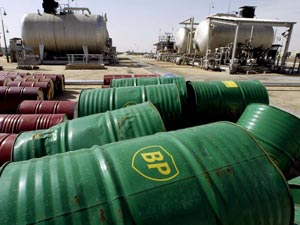
Oil major BP plans to invest $2 billion over the next 5 years in the oil and gas projects it operates in Algeria, the head of the company's Algerian unit said in an interview.
-
The investments will include drilling three new exploration wells at a promising gas field, maintaining production at two large gas fields that BP jointly operates, and the world’s first industrial scale project to capture and store the carbon dioxide released from gas production.
“BP is still committed to invest in Algeria and just in our existing projects, we plan to invest $2 billion over the next five years,” Akli Brihi, head of BP Algeria, told Reuters in an interview late last week.
Algeria is the world’s fourth largest gas exporter and its eighth biggest exporter of crude. BP says its investments in the north African country in the past 12 years have totaled $5 billion, making it one of the biggest foreign investors.
The gas exported from the large In Salah and In Amenas gas fields — both of which BP operates jointly with Norway’s StatoilHydro (STL.OL) and Algerian state firm Sonatrach — is equivalent to one third of Algeria’s annual gas exports.
Brihi said the company, in conjunction with StatoilHydro and Sonatrach, would deliver an $800 million compression project at the In Salah field early next year, and was planning to drill new production wells in the south of the block.
The aim was to sustain production at the current level of about 9 billion cubic meters (bcm) of gas a year, said Brihi.
He said the three partners had similar projects in the pipeline for the In Amenas field, which also has a production capacity of 9 bcm a year, plus about 50,000 barrels a day of gas condensate and liquid petroleum gas.
BP is conducting seismic studies and also plans to drill three new exploratory wells starting late this year on its Bourarhet exploration block to gauge the size of gas reserves.
“We made a promising gas discovery last year,” said Brihi. “By 2012, we hope to get a clear picture about the potential of gas reserves in the Bourarhet block.”
—-Future contracts —-
However, BP’s decisions on whether to invest in new Algerian acreage are linked to a large extent to the terms the government puts on the table, said Brihi.
The company, alongside other foreign firms, is looking at 10 oil and gas contract areas for which Algeria is inviting bids. The areas on offer in the bid round include one gas field with big potential reserves.
In a previous bid round last year, only a quarter of the contracts on offer were awarded.
That round was the first held since Algeria adopted a new law giving Sonatrach a minimum 51 percent stake in any project and changing the tax terms — reforms some energy analysts said could discourage investment.
“We will of course be eager to look at the potential of the blocks offered by Algeria,” said Brihi.
The In Salah contract area is also the site of a project that aims to serve as a test-bed for future initiatives around the world to capture and store carbon dioxide, whose release into the atmosphere contributes to climate change.
The project, which cost $100 million to build, separates CO2 from natural gas produced at the In Salah field and buries it nearly 2 km (1.2 miles) underground.
Brihi said over 3 million tones of carbon dioxide had been captured and stored there since 2004. “The project is unique because of its industrial scale and its positive impact on the environment,” he said.
He said the scheme does not produce any financial return for partners BP, Statoil and Sonatrach because it is not eligible for carbon credits under the United Nations’ Kyoto Protocol on climate change.
Brihi said the project partners were working on a mechanism that could be accepted by the UN climate change body to allow similar projects to bring a financial return and so create an incentive for more of them to be built.