Clues about 3G specifications and its various applications

-
-
1513
-
0
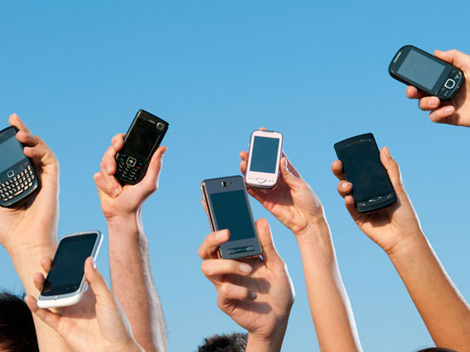
3G, short for “Third Generation”, is the third generation of mobile telecommunications technology.
3G telecommunication networks support services that provide an information transfer rate of at least 200 kbit/s. However, many services advertised as 3G provide higher speed than the minimum technical requirements for a 3G service. Later 3G releases, often denoted 3.5G and 3.75G, also provide mobile broadband access of several Mbit/s to smartphones and mobile modems in laptop computers.
3G finds application in wireless voice telephony, mobile Internet access, fixed wireless Internet access, video calls and mobile TV.3G technology is the result of ground-breaking research and development work carried out by the International Telecommunication Union (ITU) in the early 1980s.
3G specifications and standards were developed in fifteen years. The technical specifications were made available to the public under the name IMT-2000. The communication spectrum between 400 MHz to 3 GHz was allocated for 3G. Both the government and communication companies approved the 3G standard.
Several telecommunications companies market wireless mobile Internet services as 3G, indicating that the advertised service is provided over a 3G wireless network.
Services advertised as 3G are required to meet IMT-2000 technical standards, including standards for reliability and speed (data transfer rates). To meet the IMT-2000 standards, a system is required to provide peak data rates of at least 200 kbit/s (about 0.2 Mbit/s).
However, many services advertised as 3G provide higher speed than the minimum technical requirements for a 3G service. Recent 3G releases, often denoted 3.5G and 3.75G, also provide mobile broadband access of several Mbit/s to smartphones and mobile modems in laptop computers.
The Algerian communications market generated revenue of US$4.9bn in 2012; they forecast $5.65bn for 2017, for a 2.9% CAGR. The Algerian market is set to become more competitive as 3G is introduced by December 1st 2013 and expected regulatory changes allow number portability and local loop unbundling.
The mobile sector produced revenue of $3.6bn in 2012. The arrival of 3G will boost mobile data ARPS, which should generate 24% of total mobile ARPS by 2017.
The Algerian government is talking to Amsterdam-based VimpelCom to acquire its 51% stake in Djezzy: by the end of 2013, the government should be the strongest player in both the fixed and mobile segments. Now that that conflict is winding down and new regulations are on the way, they project that the market will grow faster than in previous years.
They expect Djezzy and ATM Mobilis to hold nearly 75% of the mobile market throughout the forecast period, but we also expect Nedjma to continue to compete strongly against these two government-controlled powerhouses.
Circuit-switched service generated 74.6% of total fixed revenue in 2012, but this figure is expected to fall to 63.1% by 2017 because of the increase in revenue from Internet access. Analysts also forecast that broadband will capture 99% of total Internet access revenue by 2017.