EU-US Agreement Exposes European Hypocrisy Towards Algeria
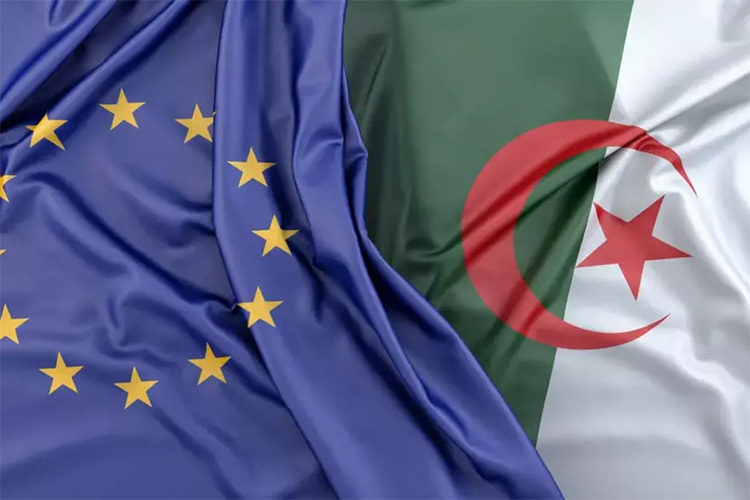
The recently concluded trade agreement between Brussels and Washington highlights the European Union’s blatant hypocrisy toward Algeria.
The EU has long refrained from investing in Algeria, claiming that the ultimate decision rests with companies. Meanwhile, the bloc has committed to investing $600 billion in the US market, in addition to purchasing more energy resources from the US, which could have direct or indirect repercussions on Algeria’s stake in the continent.
In this context, a comparative study prepared by legal advisor Mouloud Hedir, a member of the Think and Action on the Enterprise (CARE) association, a copy of which was obtained by Echorouk. The study, titled “Analysis of the New US-EU Trade Agreement – An Algerian Perspective,” indicates that under this trade agreement, Brussels has committed to purchasing unprecedented quantities of American oil and gas and to pumping massive European investments into the American economy.
Although the deal, as the same study explains, appears on the surface to be a bilateral issue between two economic powers, its repercussions are likely to extend to third parties, most notably Algeria, which is closely linked to the European market, particularly in the energy sector.
Expert Mouloud Hedir explained that the energy component of the agreement represents a real challenge for Algeria, as it stipulates a commitment by the European Union to purchase $750 billion worth of oil and nuclear energy from the United States over three years, equivalent to $250 billion annually.
Hedir explained that these massive quantities give Washington a share of no less than a third of the European market, narrowing the scope for traditional suppliers, most notably Algeria.
Figures for 2024 reveal that the United States had a 38.1% share of the European LNG market, compared to only 11% for Algeria, and a 44.9% share of the LPG (propane) market, compared to 12.5% for Algeria. Its share of crude oil reached 14.9%, compared to only 3.1% for Algeria.
The economic consulting expert concluded that the entry of additional US supplies of this magnitude is likely to widen the gap and simultaneously put pressure on prices, which will directly impact Algeria’s hard currency earnings.
Among the striking points in this agreement, expert Hedir’s study revealed, Brussels’ commitment to inject $600 billion in investments into the US market by 2029. According to Hedir, this reflects a duality in the European position. The EU has long rejected any direct investment commitments in Algeria, claiming that the decision rests with private companies. However, today it has agreed to encourage massive investments within the United States.
The comparative study shows that this paradox could give Algeria leverage to reopen the European investment file, especially since it offers globally competitive energy prices, in addition to the incentives approved by the new investment law. However, according to the document, attracting these investments necessarily requires a stable business environment and avoiding sudden changes in exchange and foreign trade laws, which have previously confused many investors.
According to the same document, the US-EU agreement also addressed what Washington describes as “non-tariff barriers” and “scissors,” noting that these measures will pose a direct challenge to Algerian exports, especially with the imminent entry into force of key legislation. These include the Carbon Border Adjustment Mechanism, which will require the purchase of carbon credits starting in January 2026 when emissions exceed the permissible limit; the Corporate Sustainability Due Diligence Directive (CSDDD), which will be implemented in 2027 and requires exporting companies to ensure compliance with environmental and social standards throughout the supply chain; and the Corporate Sustainability Reporting Directive (CSRD), which will be gradually implemented between 2025 and 2028 and requires large companies to submit detailed reports on their environmental and social performance.
According to him, these regulations will require Algerian companies to make significant investments to modernise production systems and ensure compliance; otherwise, they risk losing their competitiveness in the European market.
This agreement, explained Hedir’s study, aims to reduce Europe’s trade surplus with the United States, which could slow economic growth in the European Union. It notes that any such slowdown would lead to a potential decline in energy demand and, consequently, a decline in global oil and gas prices. For Algeria, such a scenario would impose additional budgetary pressures, especially given its large dependence on hydrocarbon revenues.
Despite the severity of the challenges posed by the agreement, Algeria still has an opportunity to reposition itself on the global energy scene, the document asserted. This can be achieved by diversifying its export markets toward Asia, Africa, and Latin America, intensifying negotiations with European customers to conclude long-term agreements before the new US share takes hold, and exploiting its geographic proximity to offer faster and less costly supply terms than shipments arriving from across the Atlantic.