European Farmers Reveal Secret Negotiations Between Rabat and Brussels
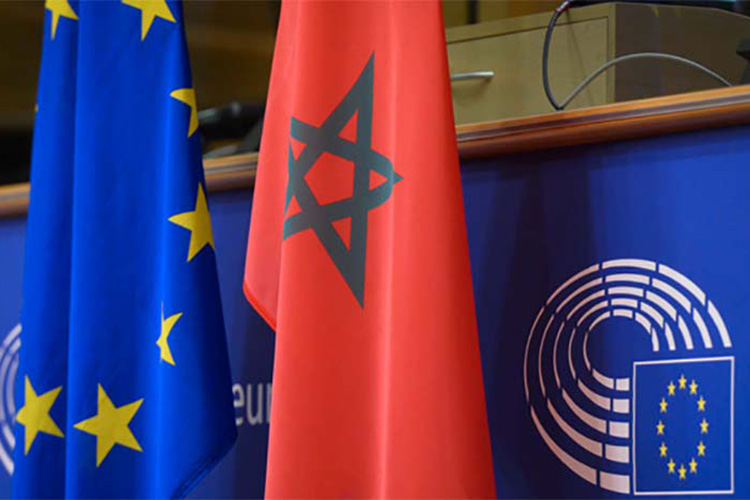
European farmers have revealed secret negotiations between the Moroccan regime and the European Union aimed at circumventing the European Court of Justice’s ruling of October 4, 2024, which suspended the fisheries and agricultural products agreement signed between Rabat and Brussels in 2019.
These secret negotiations are taking place in anticipation of the European Court of Justice’s ruling, which is set to come into force on October 4th. The court’s ruling gave both parties, the Moroccan regime and the European Union, a one-year grace period to terminate the agreement in the interests of both parties. This has prompted Rabat to race against time to convince its European partners to salvage whatever remains.
This information was reported by the Spanish newspaper “El Independiente” on Thursday. The newspaper stated that European farmers, particularly French and Spanish, warned their governments and the European Union against circumventing the European Court of Justice’s ruling. This is to align their interests with those of the Sahrawi people. This is because exports from Western Sahara under the aforementioned agreement, carried out in the name of the Kingdom of Morocco, impose “unfair competition” on their products, given the disparity in costs and burdens, as well as the tax concessions provided by the fisheries agreement.
Producer associations in the European Union are demanding strict compliance with the European Court of Justice’s ruling, according to the same source, which reported that producers feel that “Brussels is turning its back on them, and that geopolitical reasons are once again taking precedence over agricultural ones,” based on a statement by Andrés Góngora, the country representative for fruit and vegetables on the Coordinating Committee of Farmers’ and Livestock Breeders’ Organizations in Spain.
The Spanish newspaper quotes Andrés Góngora as saying: “There is a terrifying secrecy surrounding this issue. They have acknowledged the existence of talks with Morocco, but they are being conducted behind the backs of the sector and the European Parliament itself. If they try to save the agreement, we will go to court. They will not convince us, no matter how hard they try.”
The Danish Foreign Ministry published a document it said constituted a proposal to resolve the fisheries agreement between Rabat and Brussels, which was annulled by a court ruling. Copenhagen, which holds the rotating presidency of the European Union until the end of this year, claimed that the proposal guarantees respect for the decision of the people of Western Sahara to benefit from its resources, and also labels products exported from Morocco to the EU that originate in Western Sahara as non-Moroccan, in accordance with the European Court of Justice ruling. However, it ultimately guarantees the continued implementation of the fisheries agreement, which constitutes a circumvention of the decision.
In response to this proposal, the Spanish farmers’ representative lashed out at Denmark, saying, “The plan claims that the Sahrawi people support the agreement.” They argue that this strategy is to invoke the ruling to obtain “presumed consent” from the Sahrawi people, thus legally protecting imports. However, he firmly asserts, “They are trying to suggest that the Sahara benefits economically from exports, but that’s not what the judge says. If they do that, we will file a lawsuit again.”
For those opposing any attempt to circumvent the ECJ’s ruling, “the battle is not only legal, but also political. The two member states with the largest agricultural interests—Spain and France—have expressed their interest in preserving the agreement. According to Góngora, this is no coincidence: instead of circumventing the court’s ruling, what they are doing is submitting to Morocco. They don’t want problems with Rabat. And this extends to the Ministry of Agriculture.”
According to the same source, the French and Spanish are the most affected by the European Court of Justice’s ruling. Major European agricultural companies, many with French and Spanish capital, have invested hundreds of millions in Morocco’s agricultural sector. However, the European Court of Justice’s ruling is part of these investments, creating legal uncertainty that hinders the expansion of crops in North Africa, according to a representative of Spanish farmers.
“If Parliament repeals the ruling, everything will be reactivated,” Góngora warned. European investors are expected to expand their farms in Morocco again, further increasing pressure on Spanish farmers. We have succeeded in halting this growth thanks to the ruling, but a new agreement will undo everything.” This has created an unprecedented movement among agricultural organisations across the European Union, which are discussing the issue with European politicians, as farmers fear that “diplomacy will prevail over justice.”