French Interior Minister Responds to Ségolène Royal
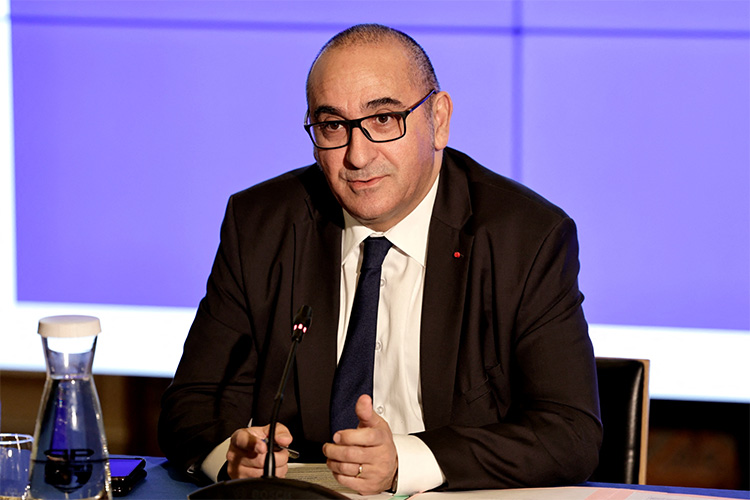
French Interior Minister Laurent Nuñez was keen to respond to statements made by Ségolène Royal, president of the “France-Algeria Association,” who implicitly blamed France for the current relations between the two countries, which are experiencing an unprecedented crisis since its defeat in the Algerian War of Independence more than six decades ago.
While Ségolène Royal put the onus on French President Emmanuel Macron for decisions and stances that have damaged relations with Algeria, urging him to rectify the situation by taking unilateral steps as a gesture of goodwill, the official French side, represented by Bruno Retailleau’s successor at the Élysée Palace, continued its usual policy of evasion by imposing what it considered conditions—a policy that Algeria vehemently rejects and detests.
During a press conference held at the end of her visit to Algeria, Ségolène Royal urged French President Emmanuel Macron to “take action and make initial steps toward Algeria,” implicitly acknowledging that Paris had initiated the escalation by adopting hostile positions and aligning itself with the Moroccan regime’s efforts regarding the Western Sahara issue. Royal also suggested that the Élysée Palace address the issue of recognising French colonial crimes in Algeria and called on it to “show humility and seriousness to turn the page and build new partnerships.”
In an interview with Radio France Internationale (RFI) on January 30, 2026, the French Interior Minister appeared to be unaware of the underlying causes of the escalating diplomatic and political crisis between the two countries. He spoke of some preconditions that had to be met before he visited Algeria, which he had announced at the end of November but which have not yet been concretised.
Laurent Nunez said, “I was supposed to travel to Algeria, but several preconditions had to be met, notably the issuance of travel permits for Algerian citizens residing illegally in the country,” suggesting that the French side did not cause the crisis plaguing relations between the two nations.
Moreover, in a provocation that no sovereign state can accept, especially when it comes to Algeria, which insists on parity in its foreign relations, Laurent Nunez spoke of the release of French sports journalist Christophe Gleizes, who is serving a seven-year prison sentence for supporting and praising terrorism, as one of the conditions Paris considers necessary for resuming strained relations.
Raising the issue of Christophe Gleizes is itself an attack on the credibility of the Algerian judicial authorities. This stance justifies the summoning of the French chargé d’affaires in Algeria, as the convicted man is serving a sentence he deserves, having confessed to it and requested clemency from the judges of the Tizi Ouzou Court of Appeal at the beginning of last December, admitting his mistake. This statement enhances the credibility of the Algerian judiciary and exposes the lack of respect shown by French officials for a principle they hold sacred in their own country: the independence of the judiciary.
Confirming a situation for which France alone bears responsibility, the French Interior Minister explained that “the talks are not progressing as quickly as I and many others would like.” He also spoke of the difficulties in bilateral relations, attempting to gloss over the facts, while demanding that Algeria take the initiative instead of courageously assuming its own responsibility.
What is remarkable is that the French Interior Minister, while speaking about what he described as “conditions,” did not dare to tell the public opinion in his country that Algeria has more than legitimate demands, foremost among them correcting the French position on the Western Sahara issue, as it is an unfriendly position towards a country with which the relationship is intended to be special. This is followed by the release of the imprisoned consular employee in whose case the French authorities violated the Vienna Conventions on Consular Relations, and stopping the provocation of the Algerian community and resorting to bilateral agreements in the deportation of Algerian nationals.