Moroccan Regime’s Campaign to Sabotage Pedro Sánchez’s Visit to Algeria
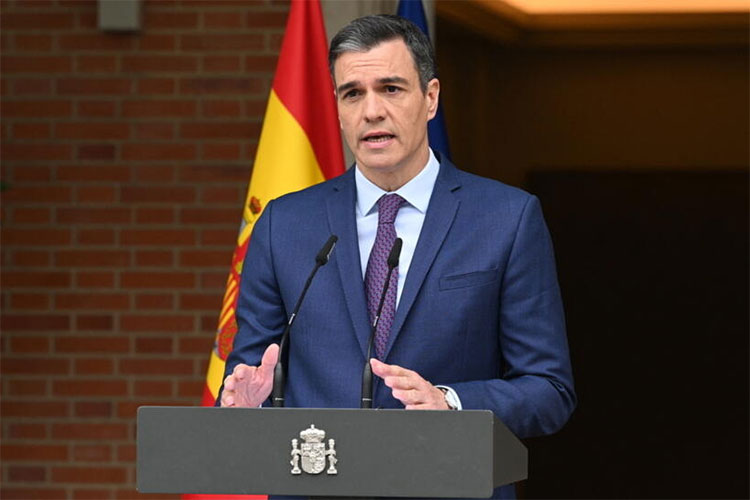
The Moroccan regime is attempting to undermine the upcoming visit of Spanish Prime Minister Pedro Sánchez to Algeria, scheduled for July 20, by circulating misleading information through media outlets aligned with the monarchy. According to these reports, the visit had been postponed until next autumn due to the legal troubles surrounding Sánchez’s wife, Begoña Gómez.
In response to what it described as disinformation originating from the Moroccan regime, the Spanish newspaper The Objective, citing Spanish diplomatic sources, confirmed that Prime Minister Sánchez will indeed travel to Algeria on the scheduled date. He is expected to be accompanied by two cabinet ministers, whose identities were initially undisclosed. The visit will mark Sánchez’s second official trip to Algeria since 2020.
According to the same sources, Sánchez’s visit to Algeria will follow a trip to France on July 14, where he is expected to attend the traditional Bastille Day military parade in Paris. The delegation to Algeria will reportedly include Third Deputy Prime Minister and Minister for the Ecological Transition Sara Aagesen, along with another member of the Spanish cabinet.
The visit coincides with what The Objective describes as a highly significant political development: Spain’s efforts to address what some view as a historical debt owed to the Sahrawi people. Last Tuesday, after more than a year and a half of deliberation, the Justice Committee of the Spanish Parliament lifted its hold on proposed legislation that would grant Spanish citizenship to eligible residents of Western Sahara, recognizing the territory’s status as a former Spanish colony. The only remaining step is approval by the full Parliament, which the governing Sumar coalition intends to secure before the end of the month.
The proposed “Descendants Law” would allow all Sahrawis born before August 11, 1977, to obtain Spanish nationality through naturalization, even if they do not legally reside in Spain. Sánchez’s visit also coincides with Spain’s broader initiative to regularize the status of large numbers of migrants, a measure that is expected to benefit many Algerian nationals living in the country, the same source explained.
Confirmation of Sánchez’s travel plans came after a news website reportedly financed by Moroccan intelligence services claimed that the visit had been postponed until early autumn because of legal proceedings involving Begoña Gómez. The report further alleged that she faced corruption-related allegations and had been barred from leaving Spain.
The Spanish Prime Minister’s visit comes amid a marked improvement in Algerian-Spanish relations following an unprecedented political and diplomatic crisis that lasted nearly 28 months. The dispute erupted after Spain shifted its position on the Western Sahara issue, prompting Algeria to recall its ambassador and impose economic measures against Spain. The resulting tensions reportedly cost Spanish companies an estimated €3.2 billion, as Spanish exports to Algeria fell from €1.9 billion in 2021 to just €330 million in 2023.
The Moroccan authorities are concerned that Sánchez’s visit could further strengthen ties between Algeria and Spain, relations that began recovering in early 2025 after the deep rupture caused by Madrid’s 2022 decision to support Morocco’s autonomy plan for Western Sahara. It argues that Morocco has therefore sought to disrupt the visit by spreading false information, prompting Spanish officials to publicly refute what they characterize as a disinformation campaign aimed at preventing closer cooperation between Algiers and Madrid.
Morocco’s palace concerns extend beyond Sánchez’s visit. It also points to the expected visit of Algerian President Abdelmadjid Tebboune to Germany later this month, which is anticipated to deepen Algerian-German cooperation. Given Germany’s influential role within the European Union, alongside Italy—which already maintains close strategic ties with Algeria—and the improving relationship with Spain, making Algeria’s position within Europe stronger. This comes at a time when Algeria and the European Union remain at odds over the revision of their Association Agreement, which entered into force in 2005.