Russian Ambassador Underscores Algeria’s Strategic Role in Sahel Stability
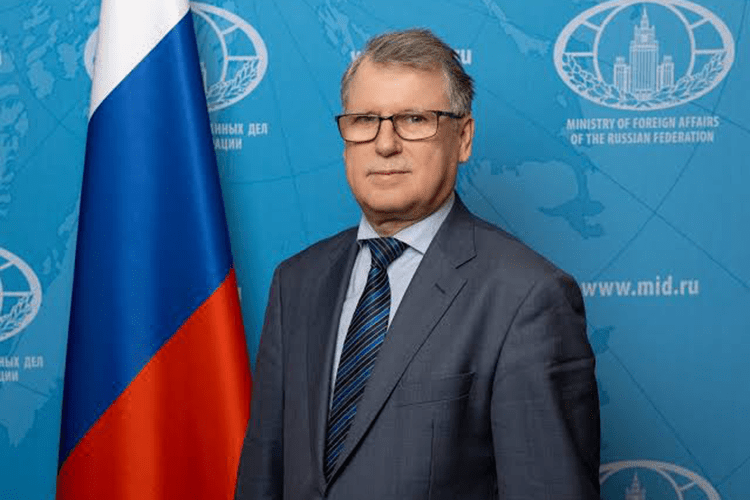
Algeria and Russia appear to be moving beyond minor disagreements that have clouded bilateral relations in recent years, following the Russian military presence in the Sahel, particularly in Mali, whose authorities had suspended the implementation of the 2015 Algiers Peace and Reconciliation Agreement.
Russian Ambassador to Algeria Alexey Solomatin said in an interview with Russia’s RIA Novosti news agency on Saturday, September 4, that the rapprochement between Algeria and Mali in recent weeks could help establish stability in the impoverished country and, by extension, throughout the Sahel region.
The Russian diplomat said Moscow believes that “dialogue and a peaceful process among the countries of the region could help ensure stability and security throughout the Sahel,” noting that the two countries “have already begun steps toward normalizing relations after a period of tension. Algeria has decided to return its ambassador to Bamako, while Mali has decided to return its ambassador to Algeria and reopen its airspace to flights traveling to and from Algeria.”
Algeria-Mali relations have regained a measure of calm in recent weeks, with the rapprochement reinforced by the visit of Mali’s transitional Prime Minister Abdoulaye Maïga to Algeria on August 24. Maïga carried a message from Mali’s transitional President Assimi Goïta to President Abdelmadjid Tebboune.
Within less than a year, Algeria has also managed to overcome a crisis that was fueled by parties known for their hostility toward the country. It has notably strengthened ties with Niger, as demonstrated by the military assistance Algeria provided to Niamey in recent weeks to help thwart the latest failed coup attempt. Niger’s ruling authorities accused France of being behind the attempt, although Paris swiftly denied the allegation through its Foreign Minister, Jean-Noël Barrot.
In the same context, Solomatin spoke of the desire of both Russia and Algeria to resume direct flights between Moscow and Algiers as soon as possible. He said the issue was among the matters discussed at the latest meeting of the Russian-Algerian Intergovernmental Joint Commission in Moscow.
He noted that procedures and documentation are currently being completed for Air Algérie’s representative office in Russia, and that the process will require some time. At the same time, he stressed that the Russian side is keen to accelerate the process, because the continued absence of direct flights between the two countries, as Alexey Solomatin put it, has “a negative impact on the movement of tourists and students between Russia and Algeria, as travelers are forced to use flights involving transit stops, making travel longer and more expensive.”
Commenting on the Russian ambassador’s remarks, a retired diplomat said relations between Algeria and Moscow are historic and firmly rooted, and therefore cannot be undermined by statements made by some Russian officials under particular circumstances.
In remarks to Echourouk, the diplomat said the Russian ambassador’s latest comments represented “the lifting of the clouds that briefly darkened bilateral relations.”
The same source explained that “relations between Algeria and Moscow are too deeply rooted to be shaken by temporary positions resulting from differences in viewpoint between two countries with historic ties,” an apparent reference to earlier statements by Russian Foreign Minister Sergey Lavrov that were regarded in Algeria as “inappropriate.”
The retired diplomat described what is happening between Algiers and Moscow as a “return to normal” in relations with a country that is Algeria’s main arms supplier, as well as a supporter of many of Algeria’s positions and causes, including the Palestinian and Western Sahara issues, although Moscow has faced criticism from Algeria in other cases.
The latest developments therefore appear to mark a return to pragmatism in Algeria’s relations with both Moscow and its Sahelian neighbors. As regional tensions continue to reshape the geopolitical landscape, Algeria’s ability to maintain channels of dialogue with key regional and international actors could reinforce its role as an important force for stability and mediation in the Sahel.