Tax Reform: Unlocking 1 BCM of Gas and $4B in Export Revenue
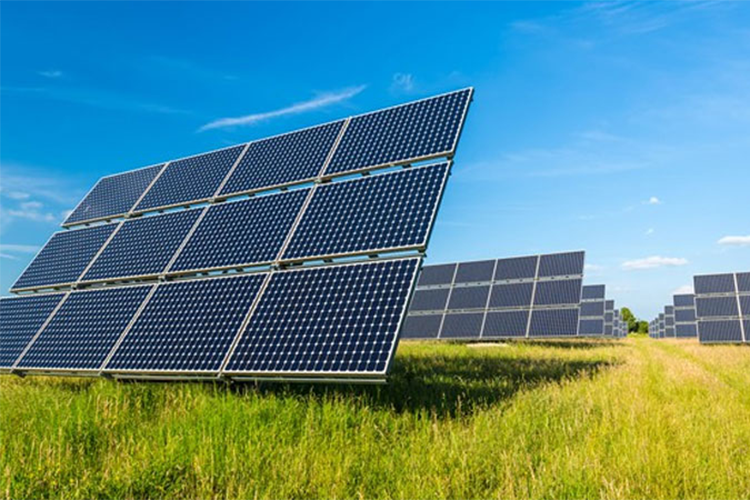
Green Energy Cluster Algeria “GECA” has unveiled a new proposal to reform Article 103 of the Finance Law, calling for enhanced tax incentives for companies investing in renewable energy and linking these incentives to the level of local content integration.
According to the GECA, the measure could free up nearly 1 billion cubic meters of natural gas annually for export and generate more than $4 billion in additional revenue, without placing any direct burden on the state budget.
A copy of the proposal, obtained by Echourouk and submitted to the Ministries of Finance and Energy and Renewable Energies, argues that the current framework under Article 103 of the 2026 Finance Law—allowing a tax deduction of up to 5% of taxable profits for renewable energy projects—remains insufficient to encourage large-scale investment, particularly among small and medium-sized enterprises (SMEs).
The association contends that introducing a tiered tax deduction system based on local integration rates would transform the existing incentive from a modest support mechanism into a powerful investment driver. According to the proposal, every dinar of corporate tax revenue forgone by the state could generate up to 18.2 dinars in additional income through exports of natural gas that would otherwise be consumed domestically for electricity generation.
The proposed framework establishes four incentive levels. Projects with limited local integration would continue to benefit from a 5% deduction, while higher levels of integration would qualify for deductions of 10%, 20%, and up to 30% for projects in which Algerian-made components and services account for more than 70% of total investment value.
The association argues that tying incentives to local integration would simultaneously achieve three strategic objectives: accelerating renewable energy investments, strengthening domestic manufacturing industries, and creating sustainable demand for Algerian products and services, including solar panels, metal structures, electrical cables, engineering solutions, installation services, and maintenance operations.
The study underpinning the proposal examined a pool of 785 industrial companies that meet the eligibility criteria of Algeria’s Electricity and Gas Regulatory Commission. These companies are viewed as the foundation for a new wave of large-scale solar investments across the national economy.
According to the study’s simulations, applying the highest incentive level could enable the installation of up to 2,400 megawatts of solar capacity across participating companies. This capacity would generate approximately 4.8 terawatt-hours of clean electricity annually, freeing up around 987 million cubic meters of natural gas each year for export.
Based on prevailing European benchmark gas prices, the additional export volumes could be worth approximately $4.1 billion annually. In comparison, the maximum estimated tax expenditure would not exceed 29.8 billion dinars per year—equivalent to just 1.3% of total corporate tax revenues. The estimates assume that participating companies deploy the projected solar capacity. Actual results could vary depending on market conditions and investment uptake.
The proposal maintains that the reform should not be viewed as a fiscal burden but rather as an indirect public investment capable of mobilizing more than 312 billion dinars in private-sector spending. Once fully implemented, the measure could generate a net annual surplus for the state treasury estimated at 569 billion dinars. It has yet to receive formal government approval and remains under review by the relevant authorities.
Beyond its financial impact, the study highlights broader economic benefits. Encouraging green investments would strengthen the competitiveness of Algerian companies in international markets, particularly as European regulations increasingly incorporate carbon-footprint requirements for industrial products. It would also accelerate the development of an integrated domestic ecosystem focused on renewable energy technologies, energy storage solutions, and specialized engineering services.
The GECA has proposed incorporating the amendment into the 2027 Finance Law through a revision of Article 103, with implementation details to be defined later through regulatory texts issued by the relevant authorities.
Industry experts note that the effectiveness of the measure will depend on the ability of local manufacturers and service providers to meet higher domestic-content requirements while maintaining competitive costs and quality standards.
The proposal concludes that the objective extends beyond promoting solar energy. It aims to transform every kilowatt-hour generated from renewable sources into an additional source of export revenue, making the energy transition a catalyst for economic growth, industrial development, and stronger public finances.
While the proposal presents a strong economic case, its projected benefits will depend on several factors, including future gas prices, the pace of solar deployment, and the willingness of industrial firms to invest in renewable energy projects.