The Expected Results of the Italian “BF” Project in Algeria
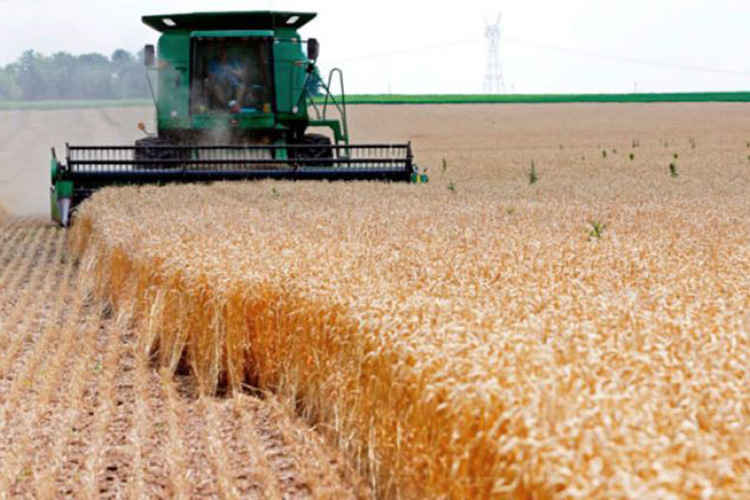
An Italian platform specialising in discussions and studies of current and future European policy trends has revealed the desired results and anticipated production, economic, and social impacts of the Italian Bonifiche Ferraresi Group’s project to produce wheat and dry legumes on 36,000 hectares of the Algerian Sahara, specifically in the Timimoun province.
The data was revealed in a study by the European House Ambrossetti/TEHA Club, a permanent platform for private, high-level discussions and networking where European executives and decision-makers regularly meet to discuss priority business and economic issues related to the Italian government’s Mattei project for Africa, which was presented Saturday at the “Ambrosetti-Towards the South” forum in Sorrento, Italy.
The study, a copy of which is in Echorouk’s possession, states that the massive agricultural project between Algeria and Italy in Timimoun (Sahara) is expected to achieve strategic results on several levels to become one of the most prominent successful models for reclaiming desert lands and stabilising national food security.
The study indicates that, from a production perspective, it is expected to add between 40,000 and 45,000 tons of grains and legumes annually, directed entirely to the local market. This will contribute to reducing the import bill and strengthening Algeria’s domestic production capacity in largely consumed crops such as wheat, lentils, and beans.
On the economic front, the project is expected to generate an additional financial value of between $76 and $129 million annually, representing approximately 0.24% to 0.40% of the national agricultural market, while the total annual economic impact will reach $193 million.
On the social front, the project is expected to improve the living conditions of approximately 600,000 to 650,000 people by creating direct and indirect jobs and supplying local markets with basic food products at affordable prices.
By 2028, the project’s expected date of full capacity, an integrated agricultural and industrial system will have been built, encompassing agriculture and food processing, including a pasta production complex. This will strengthen value chains and give the project a long-term development and strategic dimension.
The report indicated that, according to the Italian BF Group, by 2028, the project will see 70% of the area allocated to it cultivated in the form of grains (primarily wheat), while the remaining portion will be allocated to dry legumes, meaning that wheat will occupy approximately 25,200 hectares.
As is well known, the Italian BF Group had requested several weeks ago to expand its investments in Timimoun to include raising cows and calves for the production of red meat, milk, and fodder.