Tunisia exempts Algerians from entry fiscal tax, contrary to all other foreigners

-
-
3391
-
0
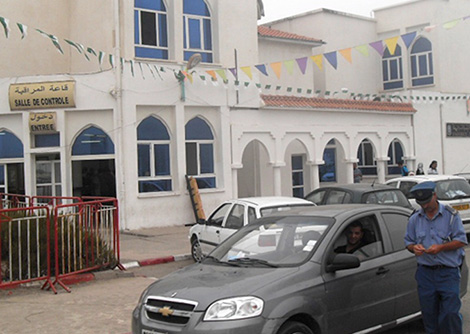
The Tunisian government has decided to exempt Algerians from the 30-dinar fiscal tax which must be paid by all foreigners when leaving Tunisia after a stay there as part of newly-revised provisions of the country’s 2014 budget law.
Such a decision has been conveyed by the tourism ministry to all border crossings, ports and airports across Tunisian territory regarding this exemption, well-informed sources in Tunisia told Echorouk.
The same sources said the Tunisian authorities’ commendable decision to exempt Algerian tourists from such a fiscal tax altogether was motivated by the historical and exemplary relations linking the two brotherly neighbouring countries in all sectors of activity.
The Tunisian government’s move to introduce such a fiscal tax for all foreigners visiting Tunisia has been dictated by purely economic concerns with a view to rejuvenating the flagging economy with on focus the tourism sector through increased hard-currency spin-offs.
Tunisia’s 2014 budget act and the objectives of the program backed by the IMF implies a major reform of fiscal policy. This reform is likely to involve scrapping uneconomical rates (notably the flat-rate system), cutting the company tax rate from 30% to 25%, taxing dividends at the rate of 5%, and the creation of a reduced tax rate of 10% on companies that export their entire production,
The long-term aim being to end up steadily with a uniform 20% corporation tax rate. Projections for 2014 and 2015 confirm that tax revenues globally are likely to hold steady at around 25% of GDP – 2% higher than in 2010 – and that the rate of fiscal pressure is likely to oscillate around 21%.
A nominal increase of 2.3% in the state budget is planned for 2014. However, investment spending is likely to rise to 6.8% of GDP, and the wage bill to increase by nearly 8%. Fiscal slippage may be expected.
In the context of a political and security crisis, Tunisia registered moderate growth of 2.6% in 2013, down from the 2012 level (3.7%).
Growth is likely to accelerate in 2014 and 2015 in the calmer climate brought about by the adoption of a new constitution and the formation of a transitional government composed of technocrats.
Tunisia’s return to durable growth will require a rationalization of public spending and effective oversight of the financial sector, the labour market and investment.
Tunisia registered growth of 2.6% in 2013, below the official forecast (4.5%) and the 2012 level (3.7%).
The chief macroeconomic indicators deteriorated and social spending, notably energy subsidies, weighed heavily on fiscal balances.
Growth is likely to resume in 2014 and 2015, bringing an end to the episode of recession that occurred in 2011 (-1.8%). And the current account deficit is likely to diminish in 2014 through economic recovery and the revival of tourism with the securing of significant hard-currency revenues.