What Future For Algerian-French Relations After the Fall of the Bayrou Government?
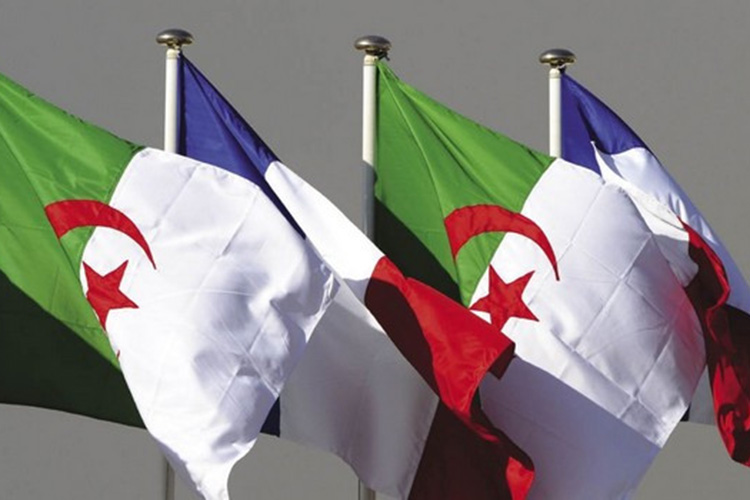
As expected, the government of French Prime Minister François Bayrou fell, along with Interior Minister Bruno Retailleau, who is portrayed by some politicians and media figures in France as the archenemy of Algeria.
This minister, who leads one of France’s most prominent right-wing parties, the Republicans, is credited with destroying Algerian-French relations. He succeeded in galvanizing the entire executive branch, led by Emmanuel Macron, to his side in adopting the “iron fist” policy he has wielded since his arrival at the Palais de Beauvau.
Since assuming power at the Palais de Beauvau in September 2024, he has pursued a strategy aimed at undermining Algerian interests, persecuting its diaspora with provocative statements, and deporting some migrants of Algerian origin outside consular and legal norms. This was the spark that ignited the unprecedented crisis between Algeria and Paris.
Although French President Emmanuel Macron initially rejected the “gradual response” policy of his Interior Minister, Bruno Retailleau, in managing the crisis with Algeria, and gave him the choice of leaving the issue to the Ministry of Foreign Affairs, as part of its mandate and authority, or leaving the government, he continued to poison relations with Algeria until he succeeded in dragging in the remaining pockets of resistance within the executive branch.
Fallen Prime Minister François Bayrou is considered one of Bruno Retailleau’s most prominent supporters in his hostile stance toward Algeria. They exploited the weakness of the Élysée Palace’s leader, Emmanuel Macron, who has lost much of his influence and power since his former party, France En Marche, and his current party Renaissance, lost the French legislative elections last summer. This left him trapped between the traditional right-wing and far-right parties, led by the Le Pen family and Bruno Retailleau, respectively.
The question that comes to mind for anyone interested in and following Algerian-French relations is: Can the fall of François Bayrou’s government, which provided political protection to Interior Minister Bruno Retailleau for a full year, contribute to restoring warmth to bilateral relations? Or has the crisis reached the point of no return, and has the situation slipped out of the French president’s hands?
All interpretations that attempt to explore this approach tend toward the negative side. This is due to the state of decay that the crisis between the two capitals has reached over a year of action and reaction, during which all familiar and unfamiliar weapons have been used. Decades-old agreements are now subject to demands for review or cancellation, as is the case with the 1968 migration agreement, not to mention other agreements such as those of 1994 and 2013.
Among those who adopt this pessimistic approach is Hossam Hamza, a professor of political science at the University of Algiers. He believes that the crisis between Algeria and Paris goes beyond the provocative positions of Interior Minister Bruno Retailleau, who has fallen out with the government. This is evidenced by Macron’s directive to the Bayrou government to adopt what he described as a “firm” policy in dealing with the escalating crisis with Algeria.
Commenting on this development, Hossam Hamza told Echorouk: “The roots of the dispute between Algeria and France are not only related to the Prime Minister, but also to heavy issues that have accumulated over the years: the memory issue, French nuclear tests in Algeria, security cooperation in the Sahel regin and economic interests. These issues have continued to fuel tensions between the two parties, given France’s reluctance to confront them with the courage they require.”
Then came Interior Minister Bruno Retailleau, who served in Bayrou’s government. The political science professor added that his hardline rhetoric and political choices (particularly the review of the migration agreement and the visa issue) added new fuel to the crisis, causing relations to deteriorate to a level unseen in decades, gradually approaching a rupture.
Professor Hossam Hamza explained that the French parliament’s rejection of François Bayrou’s government in a confidence test will “not radically change the situation in the near future.” The political analyst expects that “stalemate will remain the norm until a new government is formed in Paris and its approach to addressing the outstanding issues becomes clear. Only then can we gauge whether relations will enter a phase of gradual calm or continue on the path of gradual estrangement.”
There are also those who paint a darker future for Algerian-French relations, believing their fate hinges on Emmanuel Macron’s departure from the Elysee Palace, after the latter publicly adopted the proposals of his Interior Minister. Macron may not remain president until 2027, the end of his term, but he may leave before that, given the demands of many politicians from various ideological backgrounds for his resignation due to his failure to manage the French state.