With Gaddafi’s heritage in Libya

-
-
1360
-
0
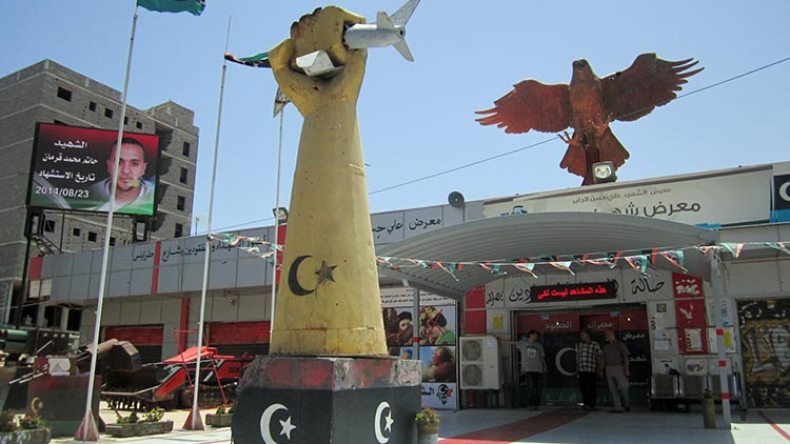
Four years passed since the so-called Arabic Spring. In Libya, Colonel Muammar Gaddafi was killed by his own people. His family was forced to leave the country and the symbols of his regime were jailed. Yet, do Libyans still have some of his heritage?
Azizia …. Only the name is remaining
The Gaddafi regime had always been linked to his “stronghold” named Azizia. It is a military base located in southern Tripoli. It was Gaddafi’s headquarters and house along with a number of military and security barracks. It is also close to all the official departments in the capital and the motorway to the Tripoli Airport.
Azizia is the most protected site in Libya. Yet, it could not resist rebels who fought for “liberation.”
Authorities restored the place but no one used it. According to Libyans, it was supposed to be turned into an amusement park. Yet, political leaders did not agree to do it.
On the coastline between Tripoli and Mesrata, the traces of battles between Gaddafi’s forces and rebels are still there. Tens of destroyed machines and tracks are laid on the road.
Mesrata … vegetable boxes full of bullets
The city shows how much the battles which took place were strong. Tens of plastic boxes were not full of vegetables but with heavy bullets. Gaddafi wanted to foil the resistance movement there so that it would not reach Tripoli.
The king iskilled
At the city’s entrance, there are four big photos of Colonel Gaddafi. He gave himself the name of “The King of Africa’s Kings.” Subsequently, he found himself chased, killed then buried in an unknown place. Here, there is a question: didn’t he think of that before?
Under a verse of the Quran, two different photos are displayed. The first shows Gaddafi as he the King of Africa’s Kings and the other one shows him wounded and begging rebels. Under the photos, a sentence is written in bold: “People shut the tyrant’s mouth.”
The story of 6,000 victims
Inside a museum, there are photos of children, adolescents, old people and women with their names and date of death. They were killed by Gaddafi’s forces.
Although the colonel died in October 2011, the museum organizers say Gaddafi produced a criminal system. His militias and terrorist organizations still kill Libyans.
The last displayed photos show young people who were killed in a suicide bomb at the city of Mesrata in March.
People step on the Colonel
On another corner of the museum, visitors have to walk on a carpet where there is Gaddafi’s picture.
There is also a luxury chair with a golden color. It was Gaddafi’s chair. Next to it, it is written: “please, don’t sit.”
On the chair, there is a cartoon about Gaddafi. It shows two pupils walking under his Green Book who become donkeys.
Behind the chair, there is a glass shelf carrying tens of Gaddafi’s belongings including a sword, shoes, hat and his famous green dress.