“First Algerian insulin available in early 2016 … and is to be exported to Africa and Asia”

-
-
2372
-
0
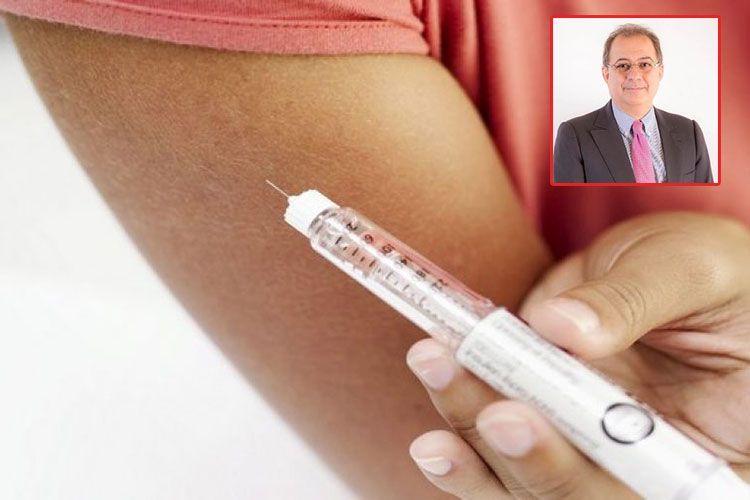
“We agreed with the Algerian authorities to curtail the insulin price to better serve the investment partnership linking the two sides”.
The insulin to be produced as part of the Saidal-Novo Nordisk partnership will be produced in Constantine, eastern Algeria, and will be available on the national market in the first half of 2016. The produced insulin in Algeria will be in vials or in the form of pens.
This breakthrough was confirmed by the vice President Director General, in charge of Novo Nordisk laboratories in the Africa region, John Paul Dege, in an interview granted to Echorouk’s special envoy to Sweden.
The latter noted in this exclusive interview on the sidelines of the forum of the 51 European Societies for Studies on Diabetes, held earlier this week in the Swedish capital Stockholm, that it was agreed with the Algerian authorities to reduce insulin prices in line with joint investments, while stressing the importance of developing the level of treatment for the Algerian patients, through an enhanced coordination between GPs and health specialists to provide the best quality level.
When will the official marketing for the first insulin produced in Algeria?
“We cannot provide a specific date just now, because it is linked to the process of quality control, which is subjected to pharmaceutical products, and the most important and much-awaited moment now is to wrap up the ratification of the year-end procedures, a way that allows putting products for sale, beginning from the first half of 2016. Today, we’re in the process of developing Saidal’s complex quality system, an endeavour which requires time.
Under the bilateral agreement, the first objective is to respond to local demand before ensuring the Algerian market’s access to export towards African and Asian countries. The partnership between the two sides will be geared to the production of 200 kinds of new drugs for the treatment of chronic diseases, including diabetes and cardiovascular diseases”.
Will the planned manufacturing by the insulin-producing Constantine plant be of the same quality compared to the one that is currently being imported?
“Well, the Novo Disk laboratories all have the same quality standards, and Saidal’s projected insulin production will be of the same high-grade standards.
The Ministry of Health of late requested the various laboratories to slash the prices of medicines, and discussions and negotiations were held in this regard, so how are you going to deal with the cost of insulin?
“Well, we agreed with the Algerian authorities on the principle of reductions in insulin prices in accordance with joint investments”.
What is the cost of the Novo Nordisk laboratories’ investments in Algeria?
“The overall cost is estimated at more than 50 million Euros, it is the budget for decades, and particularly concerns domestic production, and our next goal is to reach 500 million Euros in all Novo Nordisk factories in conjunction with Algeria’s Saidal complex”.
Do you think that the Algerian government’s 51/49 investment rule is a hurdle for potential foreign investors?
“Well, this rule is considered an obstacle for the outside, but it cannot be as well for the local investor when there is an agreement between the shareholders because foreign investors.
I should point out that this 51/49 rule introduced by the Algerian government is not a constraint in theory, but in practice, it’s a hindrance for many foreign investors and the abolition of this rule could boost greatly direct foreign investments in Algeria. This file ought to be regulated by clear-cut control procedures in order to avert damaging drifts and lapses on the matter”.
According to different studies by the Ministry of Health, Population and Hospital Reform, 10 to 12% of the Algerian population suffer from type 2 diabetes.
As a matter of fact, people all over the world can get diabetes. The numbers vary from place to place and among ethnic groups. The risk of getting diabetes depends on who you are, how you live and where you live.
Type 1 diabetes is a lifelong condition. Treatment involves daily insulin injections, in conjunction with healthy eating and regular exercise. Type 2 diabetes is a term for several disorders with different causes and degrees of severity. It is the most common type of diabetes.