Mali coup leaders facing growing domestic and international leverage

الشروق أونلاين
-
-
1042
-
0
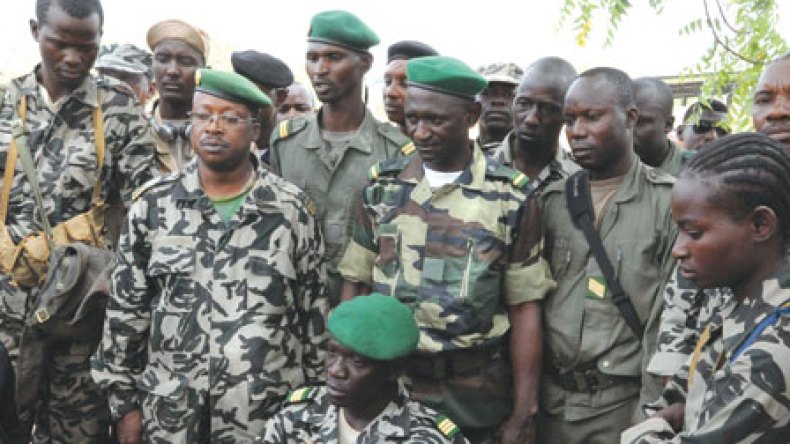
The United Nations Security Council has expressed deep criticism of the military coup in Mali and added to international demands for the democratically elected government of President Amadou Toumani Touré to be reinstated.
- Monday’s condemnation puts the Security Council in line with the African Union and other regional organizations and governments in opposing the mutinous soldiers who overthrew President Touré on March 22.
- A formal statement released by the council said the “fragile security and humanitarian situation” in the Sahel nations, several countries that stretch across northern Africa, had been “exacerbated” by the return of thousands of refugees following last year’s uprising in Libya.
- “The Security Council strongly condemns the forcible seizure of power from the democratically-elected government of Mali by some elements of the Malian armed forces,” read the statement.
- The statement went on to demand that “mutinous troops” halt all violence and “return to their barracks. The Security Council calls for the restoration of constitutional order, and the holding of elections as previously scheduled”.
- The whereabouts of toppled President Toure remain unknown although the junta has assured he is safe and in good health.
- Leaders of the military coup in Mali are facing increasing domestic pressure with Malian legislators and opposition figures seeking their departure as Tuareg rebels closed in on a key northern town.
- In the capital, Bamako, days after the coup, several hundred people gathered at a meeting of 38 political parties who announced the formation of a united front against the junta.
- “Our aim is clear, to get the junta to leave,” said Soumaila Cisse, who would have been one of the main presidential candidates in polls that had been planned for April 29 but were cancelled by the military rulers.
- “This coup d’etat is unconstitutional and we will not accept it,” Cisse said on Monday.
- The National Assembly issued a statement demanding an immediate return to constitutional order, the opening of all borders, the release of all arrested government officials and for elections to go ahead as planned.
- In defiance of the coup, 14 government figures, including the prime minister and foreign minister, have begun a hunger strike over their detention at a military barracks outside the capital, which serves as the junta headquarters.
- “There are 14 of us in a room of 12 square metres, sleeping three to a mattress,” said a message from one of the officials sent to the AFP news agency.
- However, rebels taking advantage of the coup, are negotiating with soldiers for a peaceful resolution in Mali’s strategic northern garrison town of Kidal, according to representatives of the Sahara’s nomadic Tuareg people.
- Kidal would be a major prize for the rebels, who relaunched their decades-old fight in mid-January, led by battle hardened officers and troops who returned after fighting on the side of former Libyan dictator Muammar Gaddafi.
- It is not known how many civilians remain in the town of about 26,000 where soldiers are living with their families.
- Meanwhile, Moses Wetangula, the Kenyan foreign minister, who returned to Nairobi after being stranded in Mali following the coup, criticised the coup leaders for their actions. He said there was a dangerous amount of weapons proliferation from Libya in the country.
- The Tuareg fighters have profited from the disarray in Mali’s military command following Wednesday’s coup by soldiers led by a middle-ranking US trained officer, Captain Amadou Sanogo.
- Sanogo said he wanted to negotiate with the rebels, but he also has promised to give the army what it needs to halt the insurgency.
- Disgruntled soldiers who staged the coup claimed the government was not giving soldiers the arms, ammunition and food supplies, which were needed to defend themselves and fight the rebels.
- Monday marks the 21st anniversary of the last coup in Mali, when Toure himself led the overthrow of Moussa Traore.