A New Law to Criminalize The Spread of Shiism In Algeria

-
-
624
-
0
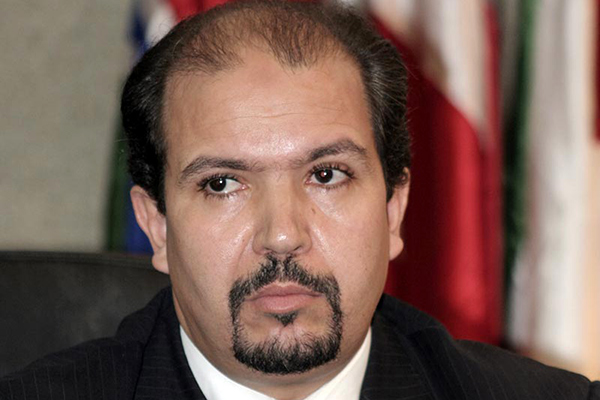
The Minister of Religious Affairs and Endowments, Mohamed Aissa, declined to comment on the enticing religious tourism offers from the Iraqi embassy to the Algerians.
Indeed, the Iraqi embassy in Algeria published a few days ago, a statement in which it informed that its services have just opened an office to receive applications from Algerian citizens wishing to travel to Shiite holy sites in Iraq.
In addition, instructions were given to facilitate the entry authorization and delivery procedures for Algerians stressing that such an operation is supported, not by the Foreign Ministry, but by the Iraqi Ministry of Culture.
This unprecedented announcement tacitly confirms the existence of a Shiite community in Algeria and accredit by the same, the alerts issued for several months in Algeria warning against a proselytizing campaign in a country (Algeria) with a Muslim Sunni majority deeply rooted on the Maliki rite.
Recently, Dr. Mohamed Aissa announced coercive measures against the spread of this nefarious phenomenon which, according to reports, continues to grow in some remote areas of the country, with the appearance of small communities evolving in secret sects and practicing esoteric cults which could be recovered by shadowy international networks.
The Minister also announced that his services in coordination with the Department of Justice is preparing a draft law criminalizing religious fanaticism and the preaching of other religions to preserve the Arab-Muslim identity of Algeria, as clearly enshrined in the Constitution.
In another development, the religious affairs minister stressed that his services, unlike previous years, gave instructions to proceed with the collection of Zakat al-Fitr, in collaboration with religious committees of the mosques, as from the 15th day of this holy month and which will be redistributed two days before the Eid feast to the poor and the destitute in the form of a salary of between 20, 000 DA and 25, 000 DA.
As a recall, Zakat al-Fitr (or the purifying alms of the feast of the end of Ramadan) is obligatory for every Muslim, whether wealthy or poor with a daily subsistence allowance and the Muslim must donate Zakat for himself and for all his dependents, even for an infant just born just before Eid el-Fitr.