Algeria: A Promising Regional Market, Brussels Bets on a Strategic Gas Partnership
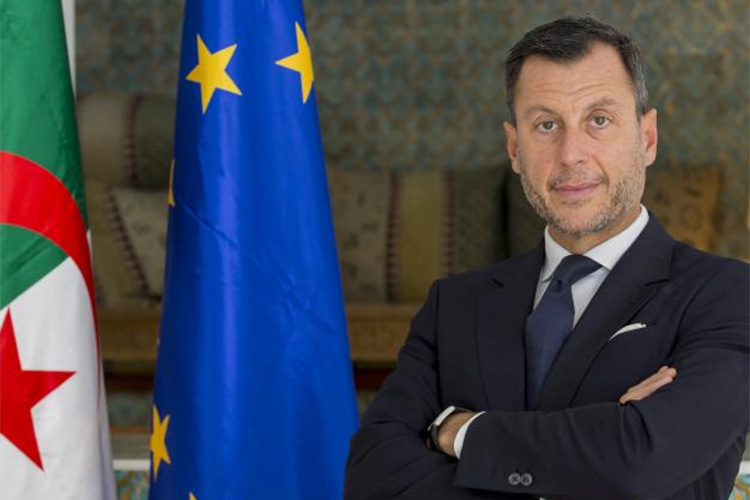
Brussels is counting on Algeria as a strategic energy partner, particularly in light of the geopolitical shifts occurring in Europe, triggered by the Russian-Ukrainian crisis, the European Union’s ambassador to Algeria, Diego Mellado Pascua, stated.
He added that Europeans view the Algerian market as a promising regional hub offering numerous opportunities, and considered the Mediterranean region a complementary space to the EU-Algeria partnership, which remains fruitful and promising.
In an interview with Echorouk, Diego Mellado explained that, as previously decided, Brussels has resolved to abandon Russian gas definitively. He added that they view Algerian gas as a potential factor that could contribute to the success of this endeavour, which has taken on an irreversible legal and legislative character.
Diego Mellado confirmed, “A few days ago, the European Commissioner for Energy, Dan Jorgensen, visited Algeria with a very clear message—a message that is both geopolitical and strategic: Europe is about to definitively eliminate its dependence on Russian gas through a legally binding ban.” He noted that the Europeans initially decided to reduce their reliance on Russian gas for a transitional period before reaching the final stage of a complete embargo on Russian gas imports, and that the time for this stage has now arrived.
On the sidelines of the second Contemporary Art Forum, held at the European Union Delegation headquarters on Saturday, February 14, the Spanish diplomat emphasised that the European Union considers Algeria a “strategic partner within a win-win relationship in a sector of paramount importance to Europeans, namely the energy (gas) sector.” He asserted that “the partnership between Algeria and the European Union is very rich and extensive, and extends beyond the energy sector.”
Commenting on the European Energy Commissioner’s visit to Algeria last weekend, Diego Mellado Pascua said, “Brussels hopes that high-level visits between Algeria and the European Union will continue and even reach the ministerial level, as seen with the Algerian Foreign Minister, Ahmed Attaf, and European officials, to strengthen bilateral relations. We also believe that the partnership within the framework of the Mediterranean Dialogue will provide a new space for intensifying and diversifying the partnership between the two sides.”
The European diplomat noted: “We can work on investment, a crucial sector for Algeria, and Europe can do a great deal in this area. Both sides should conduct frequent visits between the two Mediterranean countries, particularly to the European Bank for Reconstruction and Development, to strengthen economic dialogue and explore ways to achieve integration. We in Europe view the Algerian market as a large and promising regional market for several reasons, primarily because Algeria is located at the gateway to Africa, which can contribute to creating shared opportunities. We are working on this to launch promising projects by 2026 and 2027.”
Regarding the fate of the postponed negotiations between Algeria and Brussels on the Partnership Agreement, Diego Mellado explained: “The Partnership Agreement concerns all 27 member states of the European Union. We believe that the Mediterranean Charter helps modernise trade relations.”
He added: “Trade relations with Algeria are conducted through the partnership agreement, and discussions are underway regarding how Algeria can access the European market with its industrial base, as well as how Europeans can increase their investments in Algeria, leading to the creation of shared value chains. Much can be achieved on both sides, provided there is the will to work together in this area.”
According to the EU Ambassador to Algeria, “The coming weeks will see visits at the ministerial level, which will help establish a serious and fruitful dialogue. We are very keen to move forward in this direction.”
Regarding the visit of the French Interior Minister, Laurent Nuñez, to Algeria, Melladow explained: “This is a bilateral matter between Algeria and France, and we in the European Union believe that it is beneficial for all member states of the European Union to have good and stable relations with Algeria, because this helps to have good relations between Algeria and the European bloc as well.”
The sixth meeting of the high-level political dialogue on energy between the European Union and Algeria was held in Algiers on 12 February 2026 under the co-chairmanship of Mohamed Arkab, Minister of State, Minister of Hydrocarbons and Mines, Mourad Adjal, Minister of Energy and Renewable Energies and Dan Jørgensen, European Commissioner for Energy and Housing, for the European Union.
This meeting is part of the implementation of the Memorandum of Understanding on the strategic partnership between Algeria and the EU in the field of energy, signed in Algiers in 2013, which aims to develop and strengthen energy relations while respecting the balance of interests between the two parties.
This meeting was preceded by a bilateral meeting between the two Ministers and the Commissioner on ways to strengthen bilateral cooperation in the field of energy, reaffirming the strategic nature of the energy partnership between the EU and Algeria at a time when the global energy scene is facing complex challenges and the energy transition is accelerating.
This sixth meeting provided an opportunity to take stock of the state of play of bilateral cooperation and to reaffirm the common will to strengthen it through further exchanges in the framework of the sectoral working group and the two expert groups on natural gas and electricity, new and renewable energy and energy efficiency, created in 2015, which presented the report of their work.
Both sides welcomed the progress made in the implementation of the partnership, which contributed to a better mutual understanding on issues of common interest such as natural gas, renewable hydrogen, greenhouse gas reduction, the development of renewable energy and electricity interconnections, as well as the promotion of energy efficiency. They also highlighted Algeria’s role as a reliable and sustainable supplier of natural gas, as well as the EU’s role as a reliable provider of clean energy technologies and solutions, including for power grids, electrical equipment and system integration, supporting Algeria’s energy transition with high standards, reliability and long-term value creation.
On this occasion, the parties also discussed the prospects for the development of the hydrocarbon sector in Algeria, in particular natural gas, which is considered a common strategic issue. They stressed that Algeria remains a major and reliable supplier for Europe, and expressed the wish to see an increase in European investment in the hydrocarbons sector in Algeria.