Algeria At the Center of an Unprecedented Diplomatic Mobilization
With the intensification of the Russian-Ukrainian war, Algeria turned into a station for a diplomatic race between East and West, marked by a qualitative diplomatic landing, which will be reinforced next week, with the visit of the U.S. Secretary of State, Antony Blinken.
This diplomatic movement began a few days ago with the visit of the Italian Foreign Minister, Luigi Di Maio, to Algeria, and the call made by the Spanish Prime Minister, Pedro Sanchez with President Tebboune before the outbreak of the crisis between the two countries, then the visit of the U.S. Deputy Secretary of State, Wendy Sherman, and the visit of the Portuguese Foreign Minister, Augusto Santos Silva, and ending with the visit of Russia’s Chief of the Federal Service for Military and Technical Cooperation, Dmitriy Shugaev.
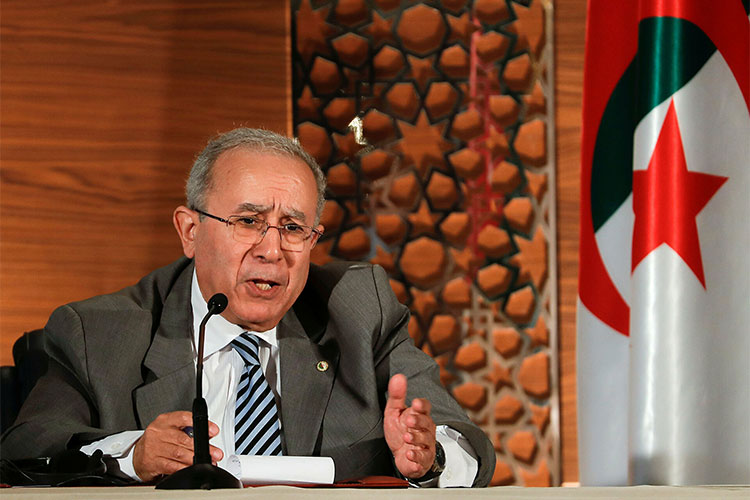
Before that, the Minister of Foreign Affairs and the National Community Abroad, Ramtane Lamamra, visited the People’s Republic of China, from March 19 to 21, and returned from there, reinforcing the Algerian position, by Beijing’s criticism of the Spanish move, which deviated from its last position on the issue of Western Sahara, when it supports the Moroccan Makhzen in this dispute.
The pace of visits to and from Algeria would have been enhanced if the expected visit of the French Prime Minister, Jean Castex, to Algeria, which was scheduled for March 23 and 24, according to what was announced by the Elysee Palace earlier, was not postponed.
The information that Echorouk has about the French official’s visit indicates that it was postponed to the coming week, exactly on March 28 and 29 (with reservation), but the possibilities of cancelling it are still present and strong, and the reason is the deep disagreements between Algeria and Paris over many files, foremost of which is the file of the movement of people, i.e. visas, which is the issue that the French authorities ignited last September when they unilaterally decided to halve it for the Algerians, noting that the visit of the French Prime Minister was postponed for the second time after it was scheduled a year ago, which confirms that the bilateral relations suffer from crises that are difficult to overcome so far.
What is certain is that the repercussions of the Russian-Ukrainian war are strongly present in this diplomatic movement, especially those related to the energy sector, which is witnessing a real crisis that is threatening the global economy, which has led to oil and gas prices reaching record levels that they have not reached for more than 14 years.
Algeria, under its strong relationship with the Russian strategic ally, and its stable relations with Western countries, led by the United States of America, must pursue very careful diplomacy, to prevent the “betrayal” of the Russian ally, but also without losing the Western camp, led by the United States, which is trying to withdraw countries “Neutral in the Russian-Ukrainian conflict”, along with “the anti-Russian camp”.
For the first time in the history of Algerian-American relations, an American official at the level of the Secretary of State and his deputy visited Algeria in less than two weeks, which means that there are heavy files that Wendy Sherman, who is Antony Blinken’s deputy, has been unable to reach agreement on with the Algerian authorities.
However, observers of this visit and the analyzes of the specialists as well, confirmed that the American official came to Algeria, dispatched by Joe Biden, to discuss the role that Algeria can play in the US-European strategy to encircle European dependence on Russian gas, with the certainty of officials in Washington that Algeria is a pivotal country in the southern shore of the Mediterranean, not only in the field of energy, and therefore any project that can be launched and does not involve Algeria as an actor, will have doubtful success.
What Wendy Sherman said during her visit to Algeria and her reception by senior officials, led by President Abdelmadjid Tebboune, does not go beyond affirming that “the relationship of the United States of America with Algeria is broad and deep, and “we look forward to continuing to deepen our cooperation”, she expressed her country’s readiness to cooperate with Algeria in the economic and renewable energy fields, security, and other sectors that were not mentioned.
Over the past week, Western media, after the dramatic shift in the Spanish position on the issue, was abuzz with news and analyzes that talked about the desire of the United States and its Western allies that Algeria retracts the decision to close the Maghreb-European gas pipeline linking Algeria with Spain on Moroccan soil, which has been out of service since the end of last October, intending to reduce the extent of dependence on Russian gas. however, the approach closest to reality is that Algeria is not ready to go back on that decision, especially after Spain and Morocco have become almost in one camp.