Atrocities Against Algerians That the French Are Ashamed to Hear About
While the law criminalising the French colonisation in Algeria continues to spark debate in Parisian circles, a new book has been published in France addressing a specific case during the early years of the French occupation of Algeria—a period marred by atrocities that shame colonial France but have not received the media and political attention they deserve.
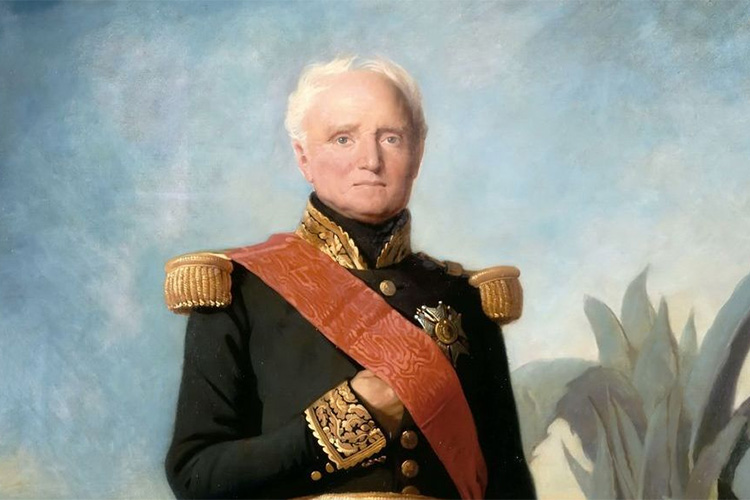
The book examines the life of a prominent French military figure, Marshal Bugeaud, born in 1784, under the title “Marshal Thomas Bugeaud: Hero or Executioner of colonial Algeria?” The author, Colette Zytnicki, attempts to put this war criminal on trial, a figure largely forgotten today except by “those nostalgic for French Algeria,” as stated in a lengthy summary of the book published on the Radio France Internationale (RFI) website on Friday.
The author views Marshal Bugeaud as “the chief architect of the First Algerian War, which he exploited with extreme brutality in 1836.” It’s worth noting that French literature doesn’t consider the 132 years of French occupation of Algeria as a continuous war, but rather summarizes it as the initial stages of the occupation, referring to the resistance movements of Emir Abdelkader, Ahmed Bey, and others, followed by the final eight years (1954-1962), which ended with the expulsion of the French occupation.
In describing Marshal Bugeaud’s character, Colette Zytnicki quotes a phrase written by the “war criminal” in a letter to his sister when he had just embarked on a military career, revealing the true nature of this bloodthirsty man: “I will simply tell you that the profession of hero is so much like that of a brigand that I detest with all my soul. One must have a heart of stone, devoid of all humanity, to love war.”
Marshal Bugeaud’s actions later revealed that his heart was even more hardened, perhaps even as hard as steel. He pursued Algerians into caves and suffocated them with the smoke from fires he himself lit, aiming to exterminate entire tribes without distinction between men, women, children, or the elderly—atrocities frequently recounted by French historians of the Algerian occupation.
The Algerian War began in the final days of Charles X’s reign. The three days of July 1830 changed nothing. The reign of Louis-Philippe marked the true beginning of the colonial era and the return to favour of Bugeaud, who was soon appointed Marshal of France. It was in this capacity that he led the suppression of the 1834 riots, already drawing on his expertise in Spain”.
According to the book’s author, Marshal Bugeaud’s crimes were not limited to Algeria. They began in Spain, where he fought alongside Napoleon, before spreading to the French capital itself, Paris. These massacres established his image as a brutal man, the complete opposite of the young man who detested military service. He was also involved in the killing of a left-wing deputy in a duel after the latter dared to mock his skills as a prison guard”, the source added.
Marshal Bugeaud was appointed Governor-General of Algeria in 1836 amidst the revival of the French imperial ambitions. Regarding this appointment, Colette Zytnicki wrote: “Colonisation was not colonisation, despite the then-emerging myth of a ‘civilising mission,’ and few dared to think, let alone write, like the Protestant writer and theologian Agénor de Gasparin, that ‘history throughout history tells us that one can drive out, exterminate, replace; but one cannot civilise.” “Ense et aratro,” replied Bugeaud, “by the sword and by the plow,” a program he would pursue during his twelve years in Africa, referring to the settlement policy of the time: the killing of the indigenous population and their replacement by a people from across the sea (the Pied-Noirs).
The author stated that the war criminal “Bugeaud’s agricultural knowledge was primarily used to starve the population. He treated the scorched-earth policy as both a threat and a reality, reviving the strategy of the ‘infernal columns’. She added,
He had over 100,000 men under his command, and his generals did not hesitate to resort to suffocation, in other words, to asphyxiating the rebellious populations—including the elderly, women, and children—in the caves where they had taken refuge. While the method caused a scandal even in mainland France, it was nonetheless adopted and modernised during the Algerian War of Independence, with the use of poison gas. Although he did not practice it himself, he encouraged it: “If these scoundrels retreat into the caves (…), smoke them out like foxes.”
Colette concluded by saying that when Marshal Bugeaud left Algiers in 1848, the city had a population of 72,000 inhabitants, including 48,000 Europeans, 18,000 Muslims, and 6,000 Jews. Those who could fled, while many others perished. In the governor’s palace, the salons were illuminated by a magnificent chandelier made of 300 bayonets. Barely back home, Bugeaud prepared to lead the suppression of the February 1848 revolution, but he was stopped in time. He died of cholera the following year. In Algeria, the war continued, and over four decades, the death toll reached hundreds of thousands.