Basel Institute's Annual Report Appears To Contradicts The US State Department

-
-
1249
-
0
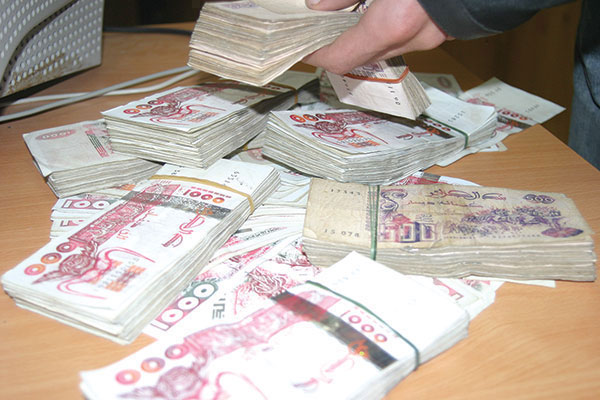
Algeria ranked 54th out of 146 countries with 6.48 points, according to Basel Institute’s annual report on money laundering and terrorist financing for the year 2017, making it one of the countries that are the most involved in dirty money laundering, along with a number of Arab countries such as Tunisia, Morocco and Egypt.
This comes at a time when banks in Algeria adopt a number of measures to monitor the movement of capital and prevent any violations.
Basel International Institute on Anti-Money Laundering issued its annual document for the year 2017 and revealed that Algeria is one of the most dangerous countries in the Middle East and North Africa region this year, occupying 54th place globally and fourth in the Arab world after Lebanon, Yemen and Mauritania, which placed it in a dangerous ranking, despite the US reports that were issued months ago and that classified it as one of the leading countries in controlling such of crimes.
The US State Department confirmed in its latest report last March that Algeria is firmly fighting money laundering due to tight controls on the banking sector.
It also expressed its satisfaction with the measures that are taken by the Algerian government in this regard, and in its 2017 report on drugs trafficking and financial crimes.
The US State Department has noted that money laundering in Algeria remains weak due to strict regulation of exchange controls, according to a report that was issued on March 1, 2017, by Congress due to tight controls on the banking sector, and it said that the limited exchange rate allowed the Bank of Algeria to control international financial transactions that are carried out by financial institutions.
The Basel Institute on Governance is an independent, non-profit center that is specializing in anti-corruption and public governance, anti-money laundering, criminal law enforcement and recovery of stolen assets.
Each country is given a score of 0-10, as the zero represents the least dangerous zero and the tenth represents the most dangerous countries.
Classification works to assess the risks of countries in the field of money laundering and the financing of terrorism by assessing their level of control in the country and other factors that are related to financial transparency and the efficiency of the judicial system.
Thhree least-dangerous countries remained the same of last year, represented in Finland, followed by Lithuania and Estonia, with the best ranking since 2016 by Sudan, Taiwan and Bangladesh.
Countries that deteriorated sharply in 2017 are Jamaica, Tunisia, Hungary, Uzbekistan and Peru .
Basel Convention against Money Laundering provides an annual indicator for the assessment of 146 countries in relation to money laundering and the financing of terrorism, which is the only global indicator that is issued by an independent, non-profit organization.