Benabderrahmane Presents A Project That Guarantees Algerian- European Energy Security
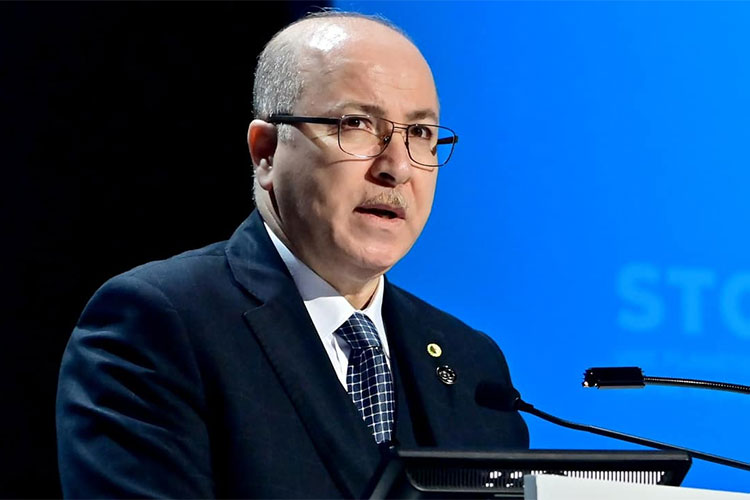
Prime Minister Aïmene Benaderrahmane presented a partnership project for the Europeans in the energy sector to raise Algeria’s gas production and ensure energy security for both parties.
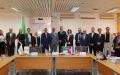
PM Benaderrahmane chaired Tuesday, in Algiers, the opening ceremony of the 2nd Algeria-EU Energy Business Forum organized to promote investments and industrial partnerships between the Algerian and European companies in the fields of natural gas and renewable energies.
In his speech during the forum on “natural gas and renewable energies”, the Prime Minister called on all European companies and dealers in the energy sector to work with Algeria to raise its production capabilities in this field, especially gas, to achieve common interests.
In this regard, the prime minister confirmed that Algeria’s potential in terms of oil and gas reserves is excellent, but it is still relatively unexplored, especially in the southwest and north of the country and in the offshore area, which makes investment opportunities open to Algerian partners.
Benabderrahmane explained that Algeria is working hard in the field of gas to enhance its cooperation with its economic partners, especially by making optimal use of its gas infrastructure, through the reactivation of the TSGP, Trans-Saharan gas pipeline project, that will link Nigeria with Europe which is a strategic choice that guarantees Algerian and European energy security.
On 28 July in Algiers, following months of negotiations, Algeria, Niger and Nigeria signed a memorandum of understanding formalising the 4,000km Trans-Saharan Gas Pipeline (TSGP) project, which will enable Nigerian gas to be piped into Europe.
“This agreement marks the commitment of the three parties to revive a project of regional and international scope, which will boost the social and economic development of our country”, Algeria’s energy minister, Mohamed Arkab, said shortly after putting his signature to the agreement alongside his counterparts from Niger and Nigeria.
In theory, the project involves building a pipeline to pipe gas from the Niger Delta towards In Salah, in the south of Algeria, passing through Niger. From a base at Hassi R’mel, in the north of the Sahara, nearly 30bn cubic metres of gas could be piped towards Europe via two Algerian existing gas pipelines, Transmed and Medgaz.
The Trans-Saharan Gas Pipeline project is not a new idea. Algeria first raised the subject with Nigeria in 2002, then with Niger. Subsequently, on several occasions, Nigeria reiterated its desire to pipe gas via trans-African pipelines to supply the European markets, currently supplied by more-costly gas tankers.
For the experts, the procrastination that has characterised the Trans-Saharan project is inextricably linked to the price of gas.
Until 2019, the price of a cubic metre of gas was “barely $4” on the spot markets, which made it an “uninteresting” and “unprofitable” business.
The war in Ukraine has changed all that. With the countries of Europe looking for gas suppliers outside of Russia, the TSGP has started to look attractive and “profitable”.
The possible start of the TSGP “is coming at a unique time both in terms of the geopolitical panorama and the energy markets, characterised by a high demand for gas and petroleum and a stagnation in supply rooted in falling investment, particularly in the domain of oil and gas exploration, dating back to 2015,” said Energy Minister Arkab.
Algeria, which currently exports nearly 56bn cubic metres of gas per year, would initially only be a transit country for the TSGP, but it will benefit from the transit. Algeria could increase its production capacity to export more energy, which can’t be done now because Algeria’s production is currently at maximum capacity.
On top of these benefits, if the project is completed, Algeria would reap political dividends, boosting its strategic position on the African continent. “Algeria needs to carve out a good place for itself within Africa and not remain on the sidelines,” President Abdelmadjid Tebboune said in a televised interview broadcast on 1 August.
He described the proposed pipeline as a “major African project”.
The project is also extremely important at the trans-African level since it would bring African countries closer together and build ties with Niger, Nigeria and Burkina Faso, a country with scant resources that will benefit from this project.
Nigeria has the largest gas reserves in Africa, holding some 5.5 trillion cubic metres (30% of the continent as a whole), followed by Algeria with 4.5 trillion (25% of production).
In 2020, the two countries accounted for 86% of exports of African gas, 58% corresponding to Algeria, which has the continent’s biggest gas pipeline network, and 28% to Nigeria. More than 62% of these exports are destined for Europe, according to data supplied by the Policy Center for the New South.