Book/The Blackest Streets: The Life and Death of a Victorian Slum by Sarah Wise

-
-
1043
-
0
an outstanding exploration of one of London’s worst 19th-century slums…
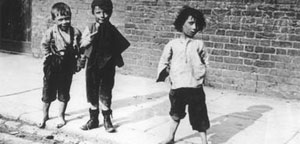
In the 1880s the Old Nichol was London’s most notorious slum. It was a dense patchwork of about 30 streets and courts north of Bethnal Green Road, with workshops, stables, cowsheds and donkey stalls packed in among rotting, jerry-built late-18th-century houses, and it was home to 5,719 people. Its “vestry”, or local council, was among the laziest and most corrupt in the capital. It persistently opposed attempts to make landlords carry out repairs or meet minimum sanitation requirements, invoking in its defence the sanctity of private property, a Victorian shibboleth. To their inhabitants, the Old Nichol properties were a deathtrap. A quarter of the children born died within their first year. But they were goldmines to those who owned or leased and sublet them, yielding profits of up to 150% on investments. These fortunate speculators included peers of the realm, lawyers, the Church of England, and several of the Old Nichol’s most prominent vestrymen.
Sarah Wise’s The Blackest Streets is a revelatory book, tearing the roofs off the Old Nichol’s festering tenements, beaming the light of impartial historical research into the horrible dens and alleys, exposing the blighted lives and the crushing deprivation. But it avoids the voyeurism that books about slums easily fall into. The cruelties it uncovers are not milked for Dickensian pathos, but itemised objectively. They are quite terrible enough without embroidery. One reported case is of a widow who supported her children and aged mother by making matchboxes. She collected wood, labels and sandpaper from the Bryant and May depot nearby, but had to supply her own glue. For every gross (144) boxes she was paid twopence farthing. The quickest makers could manage eight gross a day, earning 1s 6d,which was half the weekly rent for the family’s single room. Sometimes the smaller children, if they could bear their hunger no longer, would eat the glue.
What Wise’s account unexpectedly brings out is the pride and self-respect of the Old Nichol’s residents. They did not think of themselves as slum- dwellers but as people. Conditions that seem to us impossible were accepted as normal. In a two-room tenement that was home to a married couple and their six children, one room was the workshop where the husband and two sons made boot-uppers, the other was the family’s living quarters. It had no bed and, asked how they managed at night, the wife explained, “Oh we sleep about the room as we can.” Even the poorest took out insurance to cover their funerals if they possibly could, since being buried in a pauper’s grave was considered shameful. A greater disgrace was to be forced to go into the workhouse. Most people would rather have starved. Some did. The Bethnal Green coroner’s court regularly heard cases of death from starvation.
We tend to associate poverty with unemployment and dependence. But the list of occupations that were carried on within the Old Nichol’s cramped confines reads like a Victorian trade directory. There were furniture makers, satin weavers, cats’-meat sellers, ivory turners, french polishers, watercress hawkers, cobblers, omnibus-washers and dozens more. Many trades involved livestock, which sometimes cohabited with the humans. Pigeons, songbirds, white mice, parrots and rabbits were kept in the tenements or cellars and sold in the Old Nichol’s bird and animal markets. One family shared its single room with six ducks. Another reared terriers and kept them in cages round the walls.
Children were conscripted into the battle for life at an early age. They were, one Old Nichol survivor recalled in the 1970s, “born older than they are now”. A girl of six would be expected to cook for the whole family and do the housework, while her parents and older siblings toiled. One woman rented out her three children to theatres as imps, goblins and angels, dosing them on gin in hopes it would stop them outgrowing their costly stage costumes. Despite or because of the misery, every chance of pleasure was grasped. Social investigators noted that spontaneous dancing would break out in the streets whenever an organ grinder, or just a man with a mouth-organ, was heard. Men, women and children, sometimes barefoot, would dance in couples or holding hands in a ring.
It was their resilience that made the Old Nichol-ites such a headache for progressives. They simply would not believe that others knew what was good for them better than they did themselves. Anarchists and socialists strove in vain to raise some spark of political awareness among them. One dispirited revolutionary reported that it was like trying to tickle an elephant with a straw. When vaccination against smallpox was made compulsory for children under 14 it was defiantly rejected by the Old Nichol as
“medical quackery”. Compulsory school attendance, introduced by the education acts of the 1870s, was also seen as an unwarrantable interference with the lives of the poor, reasonably enough, since families needed their children to help earn bread. When plans to demolish the Old Nichol and replace it with model dwellings for workers were mooted by the infant London County Council at the end of the 1880s, outrage exploded. It was “taking away poor people’s houses”. Demolition went ahead all the same, and the rubble of Old Nichol was used to create the mound of what is now Arnold Circus. But only 11 of the 5,719 Old Nichol residents consented to move into the new development.
The heroes of Wise’s story are journalists and middle-class do-gooders. It was a Daily Telegraph reporter, Bennet Burleigh, who flushed out the identities of the profiteers who battened on the Old Nichol. He was helped by Lady Mary Jeune, a friend of Oscar Wilde and Thomas Hardy, who funded country outings for Old Nichol children, and set up the London Schools Dinners Association. A QC, Montague Williams, had woollen blankets manufactured and distributed to the poor, bearing his embroidered monogram so that they could not be pawned. The most remarkable Samaritan was Arthur Osborne Jay, a clergyman with high-society connections, who raised thousands of pounds to build a church, Holy Trinity. He imported mosaic work from Rome and stained glass from Germany, believing his deprived parishioners deserved the best. Lord Leighton, president of the Royal Academy, said it was the most beautiful church interior in England. Unusually, it was on the first floor, and beneath it was Jay’s Men’s Club and gymnasium, complete with boxing ring, where for 1d a week members had access to dominoes, cards, chess, billiards and all the current newspapers and journals. Holy Trinity was destroyed in the blitz, but well-known East End boxers, music-hall comedians and trapeze artists started their careers there.
Wise has misgivings about Jay. In later life he was attracted by the eugenics movement, favouring the seclusion of incorrigible criminals in utopian single-sex colonies on the south coast, with beautiful gardens and other recreational facilities. This does not seem necessarily a more inhuman solution than building more and bigger prisons, which is the current policy. But even if Jay was wrong in this instance, it is clear that he was a profoundly good man — a category not over-represented in Wise’s scrupulously researched and eye-opening book.