Court of Accounts’ Expenditures Observations Before Parliament
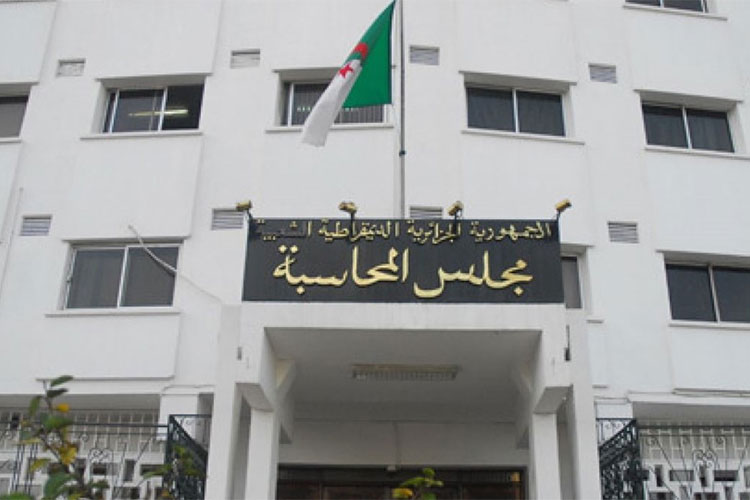
In its evaluation report on the 2023 budget settlement bill, the Court of Accounts raised serious concerns about budget implementation, noting significant disparities in allocations across different sectors, delays in project completion for several programs, and overspending in others.
The Court called for rationalising public spending and linking all expenditures to tangible results on the ground. The Finance and Budget Committee of the National People’s Assembly heard from Nassir Mohamed, the official in charge of managing the Court of Accounts, as part of the discussion of the preliminary draft on the settlement of the 2023 budget. He presented a detailed report on the budget’s contents, including the results of budget execution, the overall treasury balance, an evaluation of program performance, and the conditions for implementing public investment expenditures.
The speaker focused his remarks to the members of parliament on the delays and lack of documentation in some public works projects, in addition to analysing the structure of budget revenues, both in terms of ordinary resources and their contribution to covering operating expenses. He also presented several recommendations aimed, according to him, at improving the efficiency and effectiveness of ordinary revenues.
Nassir presented figures and percentages, the most significant data related to the financial allocations earmarked for achieving the objectives of the adopted public policy. He explained that this policy aims to maintain the country’s internal and external balances, ensure budgetary sustainability, support disadvantaged families, stimulate and diversify economic activity, and restore public finances in the medium term.
During the hearing, members of the Finance and Budget Committee raised several questions, primarily concerning the reasons for weak tax collection, the effectiveness of tax exemptions, the inability of some sectors to implement projects and the resulting delays, the impact of these costs on the public treasury, the budget deficit and public debt, and mechanisms to improve revenue through ordinary taxation.
The MPs considered the digital indicators to reflect an improvement in revenues and growth, but noted that they also revealed clear imbalances in investment, tax collection, and linking spending to results. They emphasised that the challenge is not limited to mobilising resources, but extends to the efficiency of their management and ensuring their tangible impact.
The Court of Accounts’ evaluation report on the preliminary draft of the 2023 budget settlement, as reviewed by Echorouk, included a set of recommendations to address the imbalances observed in the management of the state budget and to control the budget deficit. These recommendations included continuing efforts to control the tax revenue base and improve its efficiency, continuing to classify outstanding debts from ordinary taxes according to their collection levels, and adopting a performance-based approach that sets collection targets for managers and includes indicators to measure the achieved results.
The report also recommended compiling a comprehensive list of tax benefits granted within the framework of tax expenditures, defining the conditions for granting them according to precise objectives related to job creation and added value, and subjecting them to impact assessment. It further recommended streamlining public spending, particularly that related to social transfers, by completing the financial compensation mechanism stipulated in Article 168 of the 2022 Finance Law.
He also called for strengthening budget preparation by incorporating unforeseen expenditures not currently included in the state budget, adopting realistic approaches that enable the preparation of a budget reflecting actual burdens, and improving the quality and maturity of program recording, particularly regarding the scheduling and recording of investment operations. He further emphasised the need to propose financing for projects that have reached the required level of maturity, thus avoiding delays in implementation and the frequent recourse to costly reassessments for the public treasury.
For his part, the Chairman of the Finance and Budget Committee of the lower house of Parliament stressed in his speech the importance of the Court of Accounts’ report, especially about the implementation of the budget and the settlement of accounts, as it is a fundamental pillar in parliamentary work – according to him – because of the accurate and objective data it provides on the extent of respect for budget rules, the legitimacy of public expenditures, and the effectiveness of the use of resources approved by Parliament.