Crucial Meeting to Resolve Disagreements on Traffic and Criminalising Colonisation Drafts
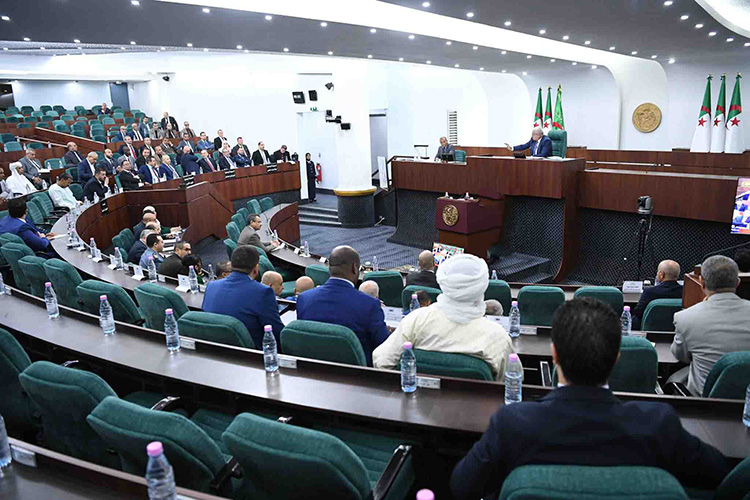
Members of the two joint committees will convene next Thursday for their first meeting to resolve the contentious provisions of the traffic law and the law criminalising colonisation, in accordance with Article 145 of the Constitution, to prepare a final report containing a consensus on the disputed articles.
A meeting to discuss the contentious articles of the law on criminalising colonisation will be held at the upper house of parliament, while a separate session will be held at the lower house to address the traffic law, to resolve the points of disagreement between the two chambers and ensure consensus among their members.
The first meeting, concerning the disputed articles in the law criminalising colonisation, will be attended by ten appointed members from both chambers and five alternate members in case of any quorum change or legislative emergency, according to sources who spoke to Echorouk newspaper. Simultaneously, a second session will be held on the same Thursday at the lower house to examine the disputed articles related to the traffic law, and to reach a consensus on the articles that have recently sparked controversy.
During the two meetings, members are expected to focus on a thorough examination of the disputed articles, exchange views, and draft two detailed reports outlining each committee’s final position. They will work to formulate a consensus on the contentious points, which will then be presented to the members of both chambers for a vote and ratification, as stipulated in Article 145 of the Constitution. No amendments to the final text can be made without the government’s approval.
This was preceded by the appointment of the members tasked with studying the disputed provisions in the Traffic Law, comprising 11 articles. These members are Yahia Charef, Saleh Reguig, Noureddine Bounefla, Dalila Bendjoudi, Mohamed Rabah, Nasreddine Baba Addoun, Mohamed Larbi Slimani, Youcef Aider, Youcef Boukoucha, and Abdelhamid Bouchrama, representing the various political parties in both chambers. The eldest member presides over the session. The same procedure applies to the disputed provisions in the Law on the Criminalisation of Colonisation, which number 13 and pertain to recognition and criminalisation, ensuring a systematic and thorough discussion.
Article 145 of the Constitution stipulates that if there is a continued disagreement between the two chambers, the Prime Minister or the Head of Government, as the case may be, shall convene a joint committee composed of representatives from both chambers within a maximum period of 15 days to propose a text addressing the disputed provisions.
The committee concludes its discussions within a similar period, and the government presents this text to the two chambers for ratification, noting that any amendment to this text shall only be made with the government’s approval. If there is continued disagreement, the government may request the National People’s Assembly to make a final decision, taking into account the text prepared by the committee or the final text voted on. Otherwise, the text shall be withdrawn if the government does not notify the National People’s Assembly.