Desperate Attempts by Morocco’s Regime to Disrupt Algeria–Mauritania Relations
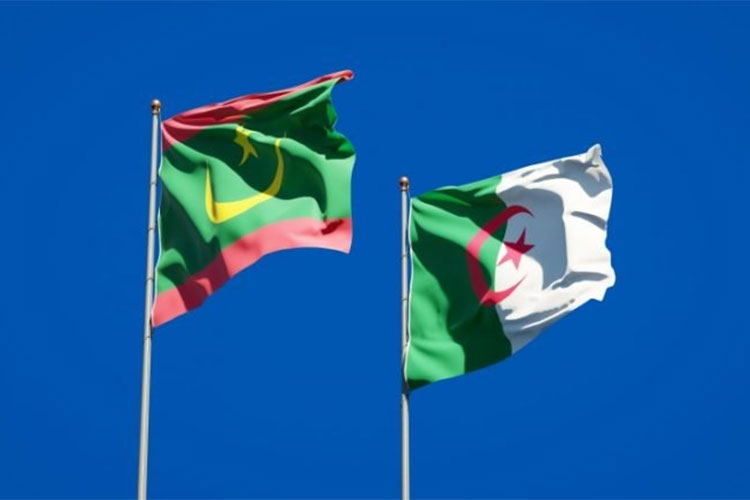
After Algeria succeeded in containing Morocco’s influence in the Sahel by strengthening its bilateral ties with Niger, Chad and Mali through cooperation and support agreements at several levels, Morocco is now attempting to catch up with Algeria’s progress in its relations with Mauritania, particularly in the field of infrastructure.
Rabat is concerned about losing its only gateway to West Africa, amid growing friction with its historic ally Senegal following allegations that Morocco was involved in stoking tensions between sovereign institutions within the Senegalese state.
Following the progress made in Algerian–Mauritanian relations at the political and economic levels, as well as in infrastructure development, the Moroccan regime has announced a project resembling the Tindouf–Zouerate road project, which stretches 840 kilometres and links Algeria with Mauritania, although the Moroccan initiative is smaller in scale.
The project involves rehabilitating the Mauritanian border crossing with the occupied Western Sahara, a route opposite the Guerguerat crossing. The latter was a key factor in the collapse of the ceasefire between Morocco and the Polisario Front on 13 November 2020.
The agreement was announced during Mauritanian Minister of Equipment and Transport Ely Ould El-Veirik’s visit to Morocco on Monday, where he was received by Morocco’s Minister of Equipment and Water, Nizar Baraka. According to a retired diplomat, the move appears intended to demonstrate that Rabat still considers Mauritania an important card in its geopolitical calculations, which have suffered significant setbacks following Algeria’s diplomatic achievements in strengthening relations with its neighbours in the region.
Algeria–Mauritania relations, however, extend beyond the political, economic and security spheres. Last week, State Minister and Dean of the Grand Mosque of Algiers, Sheikh Mohamed El-Mamoun El-Kacimi El-Hassani, visited Nouakchott to attend the 39th International Conference on the Prophet’s Biography. During the visit, he met Mauritanian officials and scholars and discussed ways of strengthening scientific and religious cooperation between the two countries—an activity that can be viewed as a form of religious diplomacy.
The most recent visit by a Mauritanian official to Algeria took place on 6 and 7 April 2026, when Mauritanian Prime Minister Mokhtar Ould Djay visited Algeria and co-chaired meetings of the Joint Commission with his Algerian counterpart, Sifi Ghrieb. Meanwhile, Algerian Minister of Foreign Affairs, African Affairs and the National Community Abroad Ahmed Attaf met his Mauritanian counterpart in Jeddah, Saudi Arabia, on 27 August 2026, on the sidelines of an Organisation of Islamic Cooperation meeting.
Commenting on the matter, a retired diplomat who spoke to Echorouk said the Moroccan regime’s announcement should be viewed in the context of an attempt to reassure Moroccan public opinion through what he described as peripheral issues, diverting attention from the more significant issue: the decision to raise diplomatic representation with the zionist entity to ambassadorial level. According to the diplomat, this move has generated discontent among long-suffering Moroccan people.
The same source did not rule out the possibility that the project could be merely a “media spectacle,” arguing that the Moroccan regime is unable to provide even the most basic necessities for the Moroccan population, let alone finance a project of this scale given its limited financial capacity. He added that this could only be possible if “a third party known for fomenting unrest in the region and across the Arab and Muslim worlds” were behind it, in an apparent reference to the United Arab Emirates.
Another interpretation, according to the retired diplomat, is that the desire to disrupt Algerian–Mauritanian relations appears to be strongly present, with the involvement of a third party. He believes this factor may have played a role in Algeria’s decision to sever relations with Abu Dhabi, particularly after efforts to damage Algeria’s relations with its southern neighbours—Mali, Niger, Chad and Burkina Faso—suffered a setback, with relations between Algeria and these countries improving again in recent months.
The Moroccan regime’s difficulties, however, do not stop at its attempts to draw Mauritania to its side in its losing confrontation with Algeria. They also extend to Senegal, which until recently was regarded as Morocco’s historic ally in West Africa, until the fall of former President Macky Sall.
Developments there are not favourable to Rabat following allegations that Morocco became involved in fuelling tensions between Senegal’s current President, Bassirou Diomaye Faye, and his political mentor and charismatic figure, Ousmane Sonko, who is a strong contender to lead Senegal in the coming years and where he is described as the “Erdogan of Senegal.”
The article alleges that Rabat supported Bassirou Diomaye Faye in opposition to Ousmane Sonko, describing this as a wager on a losing horse that could place bilateral relations before a difficult future should Sonko eventually assume the presidency. This would mean Morocco losing a historic ally in West Africa, a region it views as a gateway to the rest of the African continent.