EU’s Broader Trade Consultations to Amend Partnership With Algeria

The European Union intends to open a broad trade discussion with Algeria in November by reviewing the partnership agreement signed between the two parties in 2002. This comes in response to Algeria’s description of the agreement as unfair and unjust.
The new EU ambassador to Algeria, Diego Mellado, according to the “EFE” agency, published by the Spanish website “Infobae”, said here on Friday, that “the European Union is committed to establishing a strategic relationship with Algeria as a reliable partner”.
In the content of the program prepared by the European Union, in anticipation of launching new trade consultations with Algeria that are fair to both sides, Diego Mellado said, “We will first explain the European point of view on the new agreement and listen to the arguments of the Algerians who wish to implement profound amendments that enable them to diversify their economy” while acknowledging at the same time that “the agreement signed between the European Union and Algerian parties in 2002 did not allow Algeria to diversify its foreign trade due to the imbalances that affected many goods”.
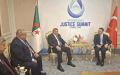
Regarding his meeting with President Abdelmadjid Tebboune, after accepting his credentials as the European Union Ambassador to Algeria, Diego Mellado said, “President Tebboune is very interested in the European Union and is fully aware of the importance of this relationship for both Algeria and the European Union,” describing the meeting that brought them together on October 22 as “very positive and fruitful.”
Ambassador Diego did not hide “Europe’s need for Algeria, especially after the Russian invasion of Ukraine”, and the EU’s imposition of sanctions on Moscow, which included many sectors, most notably energy (oil and gas), as he explained; “The European Union, which needs an alternative source of Russian gas, has realized the strategic importance of Algeria, and above all its reliability as an important partner in the field of energy”. Algeria has positioned itself as the second largest energy exporter to the European Union, aided by the pipeline network linking it to Spain and Italy.