France’s Double Discourse Toward Algeria Undermines Rapprochement Efforts
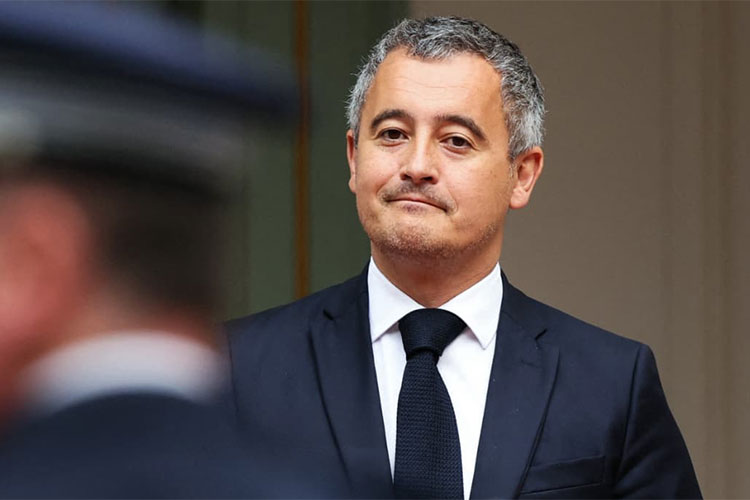
French Justice Minister Gérald Moussa Darmanin remained notably cautious when commenting on the outcome of his recent visit to Algeria. However, his latest remarks have exposed contradictions within the French government regarding efforts to restore calm and rebuild relations with Algiers.
While French Foreign Minister Jean-Noel Barrot adopted a confrontational provocative and unfriendly tone during his visit to the Moroccan capital, Darmanin struck a markedly different note by seeking to demonstrate a degree of respect toward Algeria, emphasizing its regional importance and the need for respectful dialogue in recognition of its status as Africa’s largest country and its pivotal role in North Africa and the Sahel-Saharan region. His tone appeared intended to ease tensions with Algerian authorities, who were angered by Barrot’s remarks, which many viewed as having pushed reconciliation efforts back to square one. The contrast has highlighted what many observers see as an increasingly incoherent French policy toward Algeria.
Speaking in a lengthy interview published on Sunday, May 24, in the French newspaper Le Journal du Dimanche, Gérald Darmanin reiterated France’s dependence on Algeria in several strategic areas, particularly security and energy. Thus underscoring its strategic value in these fields. He stated: “I would like to remind you that we are the largest importer of Algerian gas and that, whatever our opinions may be, Algeria—the largest country in Africa—partially protects our southern borders.”
While acknowledging the existence of “deep disagreements with Algeria” on several issues, Darmanin stressed the importance of maintaining mutual respect and defended diplomatic engagement with Algiers.
“What I did by going to Algiers, following the instructions of the President of the Republic, is diplomacy,” he said. “And diplomacy means speaking with everyone while respecting the other party.”
The statement appeared aimed at easing tensions after recent remarks by Barrot angered Algerian officials and reportedly undermined ongoing efforts to rebuild trust between the two countries. His comments were also widely interpreted as an indirect rebuke to hardline voices within the French political establishment, particularly former Interior Minister Bruno Retailleau, whose approach toward Algeria has been viewed in Algiers as openly hostile and was behind worsening tensions between the two countries.
Darmanin also pointed to a decline in security cooperation between the two countries after his departure from the Interior Ministry. He said: “When I was responsible for these matters—that is, when I served as Interior Minister before Retailleau—we carried out thousands of deportations’ licences annually from Algeria, especially involving the most dangerous individuals. However, this practically stopped afterward. This issue now falls under the authority of Laurent Nuñez, who is doing an excellent job.”
These remarks reveal deep divisions within the French government’s policy toward Algeria at a sensitive moment in bilateral relations. While some French officials advocate a pragmatic partnership with Algiers, others continue to adopt rhetoric perceived by Algerian authorities as provocative and confrontational.
The French Foreign Minister continues to make provocative and “unfriendly” statements toward a key North African partner at a time when relations are supposedly being repaired—and while some political circles in France increasingly portray Algeria as an “adversarial” state—other officials are attempting to pursue a more conciliatory line.
Although Gérald Darmanin emphasized the need to “respect” Algeria as a major regional power, his remarks may also have been aimed at securing greater judicial cooperation with Algeria, particularly regarding the extradition of individuals wanted by French authorities and believed to be residing in Algeria —figures often referred to in French media as the “DZ Mafia.” However, Darmanin may have weakened his own argument by reaffirming France’s refusal to extradite individuals sought by Algerian justice, even while insisting that they comply with French law.
France’s refusal to extradite certain individuals wanted by Algerian courts will continue to fuel accusations of double standards from the Algerian side.
The French authorities’ inconsistent and often contradictory approach toward Algeria continues to reinforce Algerian skepticism regarding Paris’s willingness to establish relations based on mutual respect and genuine partnership rather than political expediency. Whatever the motivations behind this dual discourse—even if partly driven by domestic political calculations—the Algerian authorities also operate according to their own national interests and strategic priorities, which could ultimately lead to a direct clash of interests between the two countries.
Several observers argue that Algeria is largely unconcerned with France’s attempts to balance its relations among Maghreb countries, particularly between the region’s two rival neighbors, Algeria and the Moroccan regime. Consequently, the French Foreign Minister,Jean-Noel Barrot’s remarks from Rabat are unlikely to pass without serious repercussions for ongoing French efforts to restore relations with Algiers, even if Paris attempts to justify its position by separating bilateral issues into distinct diplomatic tracks. Instead, they warn, such inconsistencies could further complicate efforts to restore trust between the two countries after months of heightened tensions.