German Auto Delegation Explores Algeria’s Growing Automotive Industry
The German delegation specializing in the automotive industry concluded its three-day visit to Algeria on Wednesday evening, following a program that spanned Algiers and Oran and highlighted the country’s accelerating ambitions in vehicle manufacturing and industrial integration.
During the visit, the delegation met with approximately 135 Algerian professionals active in the automotive and auto parts sectors. Most participants expressed strong interest in establishing partnerships and cooperation with German companies.
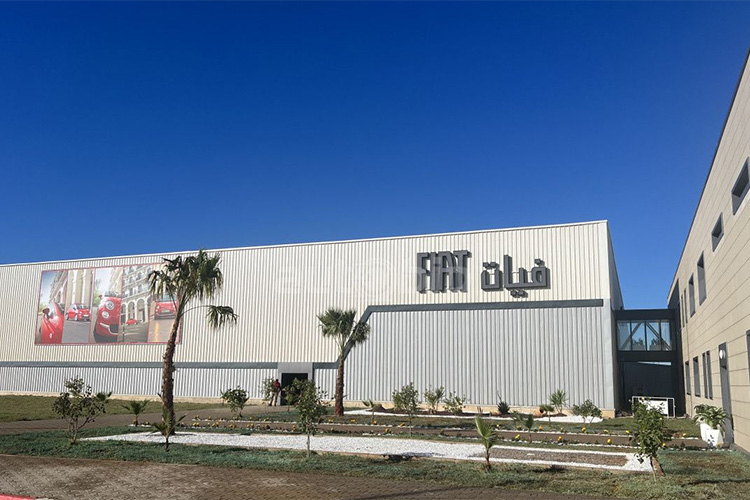
The delegation was also received by officials from Algeria’s Ministry of Industry and was briefed on the government’s strategy to develop the automotive sector. Delegates later toured industrial facilities to assess Algeria’s progress firsthand, including visits to the Fiat manufacturing plant and two component factories in Oran, western Algeria, specializing in electrical systems and exhaust technologies.
According to presentations delivered by Stellantis Algeria officials, the local supplier ecosystem currently includes 22 subcontractors working directly with the company and 16 operators in after-sales services. Local integration rates have already exceeded 20% and are expected to rise to 30% before the end of the year.
Rachid Bakhchi, President of the Western Algeria Subcontracting and Partnership Exchange, told Echorouk that the visit reflected growing interest among German manufacturers in the Algerian market, particularly as Algeria’s automotive and component industries undergo significant transformation.
Bakhchi added that the visit began with an Automotive Industry Business Day held in Algiers last Sunday, organized by the Algerian-German Chamber of Industry and Commerce (AHK) in cooperation with the Subcontracting and Partnership Exchange and the presence of the German delegation.
The event attracted nearly 135 Algerian participants—exceeding expectations—driven by strong interest from local companies seeking direct engagement with German counterparts and opportunities for investment and industrial cooperation.
Strong Participation Signals Growing Interest
The opening session was attended by Oliver Blank, Director General of the Algerian-German Chamber of Industry and Commerce, alongside Germany’s Deputy Minister for Economic Affairs at the German Embassy in Algiers and senior German officials, underscoring Berlin’s commitment to expanding industrial cooperation with Algeria.
Throughout the business forum, the Algerian Investment Promotion Agency presented an overview of the country’s business climate and investment opportunities in the automotive sector. Meanwhile, the Automotive Subcontracting Committee of the Algerian Economic Renewal Council (CREA) outlined the current state of the industry and its future outlook.
Seven German companies also presented their industrial expertise, technologies, and partnership proposals for collaboration with Algerian firms.
Algeria Positions Itself as an Emerging Industrial Hub
Bakhchi noted that the Subcontracting and Partnership Exchange introduced participants to Algeria’s industrial subcontracting framework and its role in building an integrated automotive industry.
He emphasized that the message delivered to German investors was clear: Algeria has become a genuine investment destination. Foreign companies are entering the market following careful assessment of its opportunities and industrial potential, positioning the country as an emerging platform for broader manufacturing development.
Fiat Algeria also presented its experience since launching operations, highlighting the factory’s expansion and job creation potential as a strategic industrial project.
Additionally, one of Stellantis’ local suppliers specializing in electrical wiring systems shared its experience working within the company’s supply chain and contributing to higher local integration rates.
Industrial Progress Observed Firsthand in Oran
At the conclusion of the Algiers program, the German delegation met with senior officials from Algeria’s Ministry of Industry, including the Director General for SMEs and the Director General for Industrial Development, who presented the government’s roadmap for strengthening vehicle manufacturing and attracting foreign investment.
On Monday evening, the delegation traveled to Oran, where the first stop was the Fiat plant. Delegates toured production lines and observed the various manufacturing stages, gaining direct insight into Algeria’s advances in automotive production. They also visited the section dedicated to locally manufactured components.
Stellantis representatives explained that the company currently works with 22 local suppliers and 16 after-sales service partners, while local integration has surpassed 20% and is projected to reach 30% by year-end.
The delegation also visited Aptiv’s facility, which specializes in electrical cable manufacturing. Visitors observed the full production cycle—from raw material processing to final assembly—as well as quality-control laboratories and development systems designed to meet international standards.
Delegates expressed particular appreciation for the scale of the workforce, the number of technicians and engineers, and the company’s strong emphasis on training and workforce development.
The tour included the company’s training center, which prepares young people from the region and develops qualified labor not only for the factory itself but also for other cable manufacturing facilities. Bakhchi described the initiative as a successful example of the broader economic and social impact of major industrial projects in job creation and skills transfer.
German Investment Expands Beyond Vehicle Assembly
The final stop of the visit was the Reichhart logistik plant—an existing German investment in Algeria currently preparing for production launch.
Delegates reviewed the installation of industrial equipment ahead of manufacturing operations. The facility is expected to begin supplying components to Stellantis starting next year.
According to Bakhchi, the German delegation left Algeria with highly positive impressions after witnessing firsthand the transformation taking place in the country’s industrial sector.
He said the visit had opened new prospects for expanding industrial partnerships and attracting additional German investment into automotive manufacturing and component production.
The delegation included representatives from several leading industrial and technology companies active across the automotive value chain, including specialists in industrial materials, vehicle engineering and development, industrial systems, logistics, tooling technologies, and automotive expertise.
The German delegation included representatives from several leading industrial and technology companies operating across the automotive value chain. Participants included Allod Werkstoff, specializing in industrial materials; AVL Germany, focused on vehicle engineering and development; Compound Engineering; INFICON International; the LMT Group – Fette Compacting; LMT Tools Systems; Moviniti GmbH; Reichhart Logistik; and Tech Solution, in addition to representatives from the Automotive Experts Circle of the Algerian-German Chamber of Industry and Commerce.
Participating companies held business-to-business (B2B) meetings with Algerian operators to explore investment opportunities, industrial partnerships, technology transfer, and expertise exchange in automotive manufacturing and components production.
Bakhchi concluded that this visit represents only the first phase of bilateral cooperation. The next stage will involve additional B2B meetings between German and Algerian economic operators aimed at deepening discussions initiated during the visit and converting early contacts into concrete investment projects—particularly in subcontracting, automotive components manufacturing, and transferring technology and industrial know-how to Algeria.