French linguist Henriette Walter to Echorouk: « Borrowings from French to Arabic of scientific nature go back to Middle Ages »

الشروق أونلاين
-
-
3726
-
0
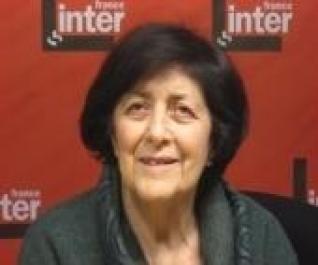
Henriette Walter is a French linguist born in Tunisia of French mother and Italian father. She learns languages very fast: French at home, Italian at school and Arabic in the street.
-
She is an emeritus professor known worldwide, member of the Superior Council of French Language, former director of phonology laboratory at The École pratique des hautes etudes in the Sorbonne and president of the International Society for Functional Linguistics. She has a bibliography mainly about the universe of languages she handles marvellously like English, Spanish or Italian but also other romance languages.
-
-
Her books like ‘le français dans tous les sens’ (French in all the ways), ‘le français d’ici, de là, de là bas’ (French hence, from there and from over there) and ‘Arabesques’ (Arabesques) with Bassam Baraké about the adventure of the Arabic in the West (Ed.Laffont) have been greatly successful among readers and critics. They have been awarded for many times by the French Academy and the SGDL.
-
-
How is French nowadays and what is its place in the French-speaking arena? What do you hope to be done for it as a linguist and writer?
-
-
Certainly, it does not occupy the first place of a great international language which used to be its. Yet, it still enjoys a certain prestige abroad. This prestige has often been linked to its history, literature and its role in the spread of Human Rights. It is also true that French lost ground in the last two decades. Yet, it is also true that it continues resisting fiercely. French has been taught in many countries in the world especially in Poland and China. We should admit that French’s international influence is not like it used to be in the past. Its dynamism varies from a region to another. Concerning its structure, French is doing very well. It continues progressing and expressing the modern world by integrating new phrases and new words. Though it is a received idea, French has not been dominated by English linguistic structures. Most of the French people were bilingual until the 20th century. From that time regional languages started losing ground and the French people became hopeless in foreign languages. In the past, they were lucky to speak two languages. So, they had an intellectual gymnastic which enabled them to pass from a language to another one without mixing up the world with language. When they lost this, they became the bad language learners in Europe. From this point of view, the renewal of regional languages should be encouraged and spread.
-
-
If we should talk about the relations between French and Arabic in the Mediterranean countries especially the Maghreb which you perfectly know and where French is largely spoken along with Arabic, what may you say about this relation comparing to the links between French and English as you explained in your books?
-
-
The situation is different. The lexical contribution of French and English are very old because they go back to the mid-eleventh century while borrowings from French to English go back to a little more than two centuries ago. On the other hand, borrowings from French to Arabic of scientific nature go back to the Middle Ages. Other contributions of Arabic to French are more recent as they started in the time of colonisation and which are of totally other nature: They have something to do with colloquial vocabulary and not scientific. Arabic in the Maghreb borrowed from French technical vocabulary. For example, it borrowed terms in the automobile filed but also in fashion and elegance field.
-
-
What is your point of view concerning the French-speaking world, its role, its people and particularly the reinforcement of its image in the international life?
-
-
The French-speaking world with a capital F is an organisation of a political type about which I can not give a competent opinion. With a small F, I can express myself, saying it is all those French-speaking people. That means all those people who speak French but they are not French. Because of that, all those French-speaking people should play a role in the future of French language nowadays.
-
-
-
How do you see the evolution of French especially its reinforcement if Arabic and English, for example, prevent it from expressing all its power, its modernity and even its dynamism as it is the case in books edition and the press in these countries?
-
-
I think that the French-speaking literature in the Maghreb is imposing itself pretty good on the international arena. Yet, there is a need to continue making efforts concerning French teaching on all levels. I believe that the Maghreb is a major asset to promote the French language and culture because they are an integrative part of its own history.
-
-
Finally, you said “We should always love one’s language, give it again flavour and learn it sufficiently and intelligently. When we speak neighbours’ language, we are less wary of them and we learn better to appreciate it.” Is that still relevant today in the world nowadays?
-
-
-
Today, it is more than ever if we understand the world which is moving.