Questions About France’s Seriousness in Repairing Relations with Algeria
The statements and actions of French officials regarding relations with Algeria appear to be moving along two contradictory tracks—an inconsistency that threatens to obstruct the fragile process of de-escalation between the two countries and leave several contentious issues unresolved indefinitely. Chief among these is the case of sports journalist Christophe Gleizes, for whom Paris is reportedly seeking a presidential pardon from President Abdelmadjid Tebboune.
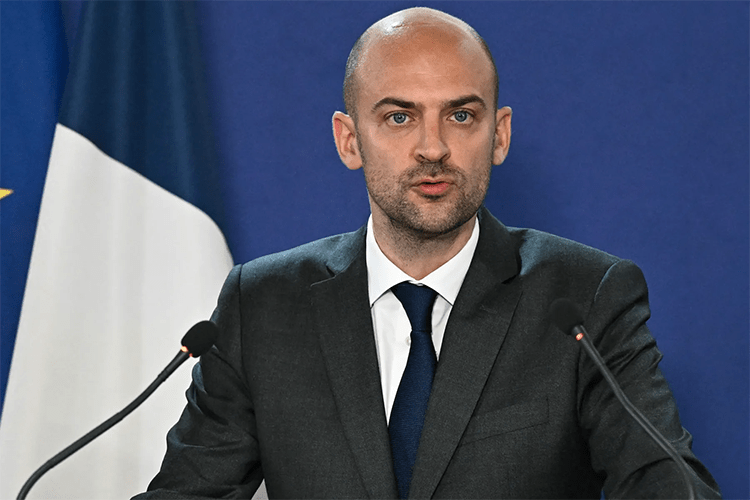
This contradiction is most evident in the recent remarks made by French Minister for Europe and Foreign Affairs Jean-Noël Barrot during his visit to the Kingdom of Morocco last weekend. Given both the timing and location of these statements, they are likely to provoke strong dissatisfaction among Algerian decision-makers. More importantly, they risk reinforcing the widespread perception in Algeria that Paris is not genuinely committed to building calm, stable relations founded on mutual respect.
Barrot’s statements constituted a serious provocation at an exceptionally sensitive moment—coming only two days after the visit of the French Justice Minister Gérald Darmanin to Algeria. In a video published on the French Foreign Ministry’s website, Barrot declared: “Regarding Western Sahara, which I know is an existential issue for Morocco, but also of strategic importance for France and the region, France’s position—as expressed by the President of the Republic—is that the present and future of this territory fall within the framework of Moroccan sovereignty.”
He further added: “The autonomy plan proposed by Morocco is the only basis for a just, lasting, and negotiated political solution. The UN Security Council adopted this approach in Resolution 2797. France welcomes this positive momentum, as well as the resumption of direct discussions between all parties concerned on the basis of this autonomy plan.”
The French minister continued by affirming that: “France remains committed to playing a leading role. We will continue supporting the major efforts undertaken by Morocco to develop these regions and improve the lives of their inhabitants.”
Barrot went even further by emphasizing the practical implementation of France’s policy on the ground: “As I announced in 2024, we have strengthened our consular and cultural presence by opening a visa application center and an Alliance Française center in Laayoune. We have also opened a new school there, while French companies continue to invest with the support of the French Development Agency and our partners. This is only the beginning.”
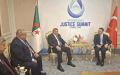
These remarks come at a time when Algerian-French relations had been showing signs of significant rapprochement. Over the past three months alone, three French ministers have visited Algeria, culminating in the resumption of security cooperation and the reactivation of consular procedures for Algerian nationals residing illegally in France.
Such progress did not occur spontaneously. It was achieved through sustained diplomatic efforts and political determination, particularly from figures such as Ségolène Royal, president of the “France–Algeria Association,” who is widely credited with helping ease tensions between the two countries. Against this backdrop, Jean-Noël Barrot’s statements appear reckless and politically counterproductive, undermining months of painstaking efforts aimed at restoring trust and improving bilateral relations since the beginning of the year.
What is particularly striking is that Barrot’s visit to Morocco was not primarily dedicated to bilateral French-Moroccan relations, but rather to the opening of the “Second Ministerial Conference on Peacekeeping in the Francophone Space.” Such a regional event hardly justified provocative statements of this nature—especially against a country that French Justice Minister Gérald Darmanin himself recently described as “the largest country in Africa.”
Questions surrounding France’s sincerity in rebuilding peaceful relations with Algeria become even more apparent when comparing Paris’s approach to that of Spain regarding the Western Sahara issue. Since Madrid altered its position on the matter, Spanish authorities have largely refrained from repeatedly politicizing the issue in international forums at the United Nations or during official state visits. France, by contrast, has intensified its engagement and involvement in support of Morocco’s position.
As Darmanin himself acknowledged, French support for Morocco on the Western Sahara question has extended beyond traditional diplomacy. This became evident during discussions at the United Nations last October, when Paris reportedly sought to mobilize non-permanent European members of the UN Security Council in favor of Morocco’s stance. French involvement has also included financial backing for projects in the disputed territory, in addition to repeated visits by French officials to Western Sahara. Such actions contradict the spirit of relevant United Nations resolutions, which do not formally recognize Western Sahara as part of Moroccan sovereignty. They also raise questions regarding compliance with rulings issued by European courts, whose legal authority France is obligated to respect within the framework of European institutions.
French officials often defend the shift in their position towards Western Sahara issue under the principle of national sovereignty in foreign affairs. However, Algerian President Abdelmadjid Tebboune has openly described France’s positions on Western Sahara as “unfriendly.” In diplomatic terms, this distinction is significant: while states are free to shape their foreign policies independently, deliberately adopting positions perceived as provocative while simultaneously seeking reconciliation can seriously undermine efforts to rebuild trust.
Remarks have emerged alongside the announcement by the French Interior Minister Laurent Nunez of postponing the planned visit to France by his Algerian counterpart, Saïd Sayoud. Although French officials attributed the delay to scheduling constraints, the provocative statements in that precise timing has fueled speculation that the postponement may be linked to the controversial statements made by French officials following recent diplomatic exchanges with Algeria. Whether this interpretation proves accurate will likely become clearer in the coming days.