French Official Figures: The 1968 Agreement No Longer Beneficial to Algerians
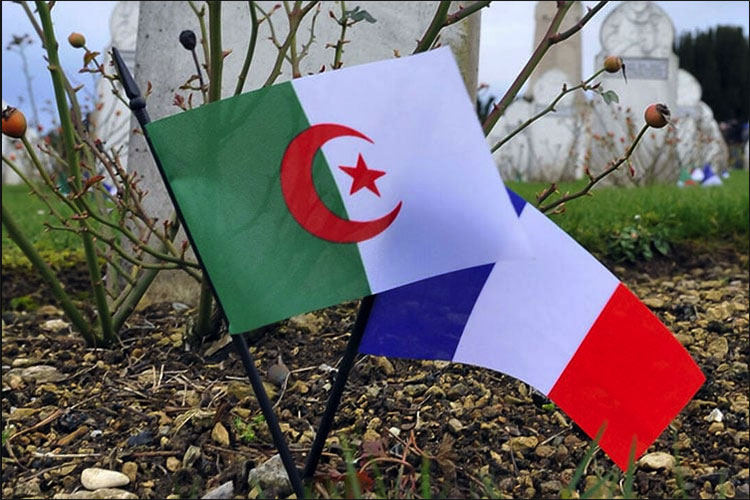
Figures issued by the French Interior Ministry regarding residence permits for Algerians in this country prompted those who follow Algerian-French relations to question the feasibility of continuing to work with the 1968 Migration Convention, which confers a special status for Algerians in the field of work, residence, and the practice of free activities, compared to other nationals of neighbouring countries.
These recently published figures revealed that the number of Algerians who obtained residence permits in France during 2022 and 2023 decreased significantly, while the number of permits granted to nationals of a neighbouring country increased, even though it does not have a special agreement with France similar to the 1968 agreement with Algeria.
For the second year in a row, and based on data from the French Interior Ministry, nationals coming from the Kingdom of Morocco, for example, obtained more residence permits than their counterparts in the Arab Maghreb, that is, in both Algeria and Tunisia, which remains a legitimate question given the existence of a special immigration agreement linking Paris to Algiers without any other former French colony.
In 2023, the French immigration services issued the equivalent of 326,954 residence permits for immigrants, compared to 318,000 in 2022, and 287,000 in 2021.
However, what is interesting about these numbers is that the permits obtained by Algerians are less than those granted to Moroccans. Algerians obtained 31,943 residence permits, compared to approximately 36,648 residence permits for Moroccans, meaning that the permits for Algerians are approximately 5000 fewer, while Tunisians rank third with approximately 22,639 residence permits.
These numbers raise questions about the feasibility of continuing to implement the 1968 agreement on immigration, which the French far-right exploited to mislead public opinion by arguing that it is in Algeria’s favour, demanding that it be reviewed or cancelled unilaterally if the Algerian party refuses to respond to French demands.
The 1968 Agreement grants Algerians a special status in the fields of work, study, residence, and free activities, to the exclusion of other nationalities. However, on the ground, these rights have not been evident, given the number of residence permits they have obtained, compared to nationals of a neighbouring country that does not have an exceptional agreement with the French party.
Over recent months, the French far-right harrassed Algerians with its repeated demands for the necessity of reviewing the 1968 agreement, believing that this agreement gives special privileges to them, and obstructs French immigration services in deporting them when necessary. At the head of those demanding this has emerged the former French ambassador to Algeria twice, Xavier Driencourt, who soon turned into a far-right ideologue, constantly frequenting their many media platforms.
Although the Algerian party did not comment on these demands as they were issued by parties obsessed with hostility to Algeria from outside the official authorities in Paris, one of the well-known Algerian diplomats, Abdelaziz Rehabi, recently came out to reduce the positive impact of this agreement on Algerian interests, because it relates mainly to employment. Algeria no longer sends simple workers, confirming that it is France that steals Algerian elites after they were trained locally to work to benefit its economy and society.