French Parliament Asks For Handing Over Skulls Of Algerian Resistance Fighters

-
-
2080
-
0
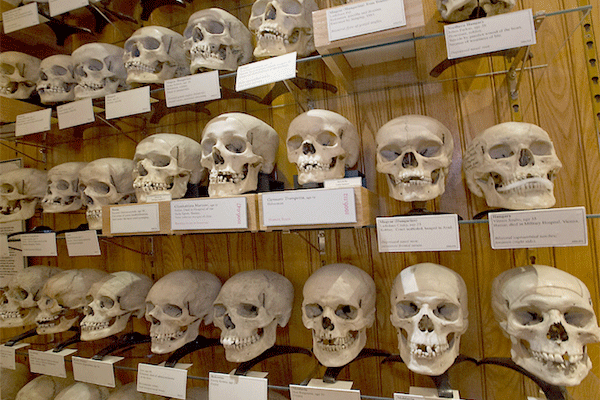
French National Assembly (parliament) called on the Paris authorities to take a bold step and to restore the skulls of the Algerian resistance fighters, especially those of the Zaatcha Revolution to Algeria, which are still exhibited at the Paris Musée de l’Homme, at a time when the Algerian Parliament, has not yet decided to take such an initiative and remains silent, since this file was opened in 2011.
These demands came from a written accountability of the French MP at the French Parliament, Majid Al Gharab, (National Assembly), to the French State, Ecologic Transition Minister, Nicolas Hulot, dated, November 28, 2017.
The accountability was brought to the attention of the State, Ecologic Transition Minister, on the issue of the rearmament of Algerian fighters, which is dating back to the nineteenth century and that is still exhibited in the Musée de l’Homme.
According to the French MP, sources from the Musée de l’Homme, between 34 human remnants, of which only 6 were identified accurately as belonging to Algerians who resisted the French invasion and attempted to take over the area of Zaatacha.
French MP added that in order to contribute to the calm in terms of memory files between Algeria and France, and to launch new and innovative thinking about history, it is advisable to start the process of lifting the preservation of these remains and the skulls of Algerian resisters, through a law of this process (ah doc), like what was done with the skull of South Africa Sturgeon Batman (that was recovered from the same museum in 2002).
The accountability stated that the remains and skullcaps are still being exhibited and held at the Musée de l’Homme (Man’s Museum) in Paris, despite the launching of petitions to hand them over to Algeria since 2001, at the initiative of the historian, Farid Belkadi, and another initiative in 2016 that was led by the researcher Ibrahim Snoussi.
The initiator explained that with regard to the return of human remains, the applications are governed by law, and can not be directed and studied only to the remnants which were identified by the names, and applications must be submitted by grandchildren, considering that this procedure is an obstacle to the return of these skulls and remnants to Algeria, proposing the treatment of the file through a special code that will be generated for the file itself.