French Parliament set to pass bill recognizing heinous massacres of October 17, 1961, in Paris

-
-
445
-
0
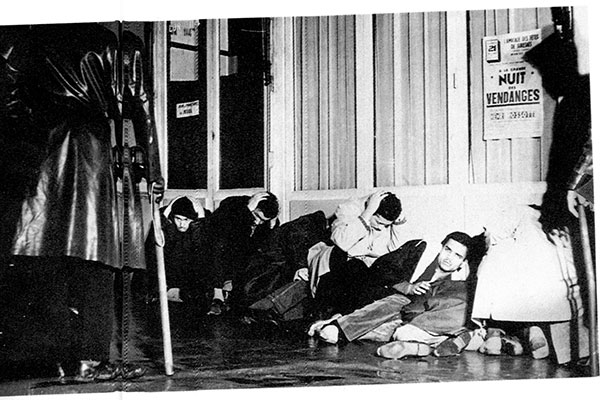
The French National Assembly is examining a proposed bill that officially and publicly recognize of the horrendous massacres of October 17, 1961 of peaceful Algerian demonstrators in Paris, by considering what happened then as “a dark period of the past of France”.
The legislation concerning these tragic events has been forwarded to the Assembly’s Committee on Constitutional laws, legislation and public administration.
The relevant text of the proposal was duly signed by numerous French deputies from different political formations numbering 69 MPs.
It should be recalled that five months before the end of the war of national liberation, on October 17, 1961, Paris was the site of one of the largest massacres of the common people in contemporary history of Western Europe. That day, tens of thousands of Algerians peacefully demonstrated against the curfew that had targeted them since October 5 and the ensuing repression organized by the then prefect of police, the sinister Maurice Papon.
The then French police response was terrible. Dozens of Algerians, perhaps between 200 and 300, are coldly executed. Some bodies with handcuffed hands were found in the Seine River. For decades, the memory of this major episode in the war of Algeria will be obscured on the part of the successive French governments.
This was an event of exceptional gravity, the death toll prompted two British historians [Jim House and Neil MacMaster, in a telling book: “Algerians, and the Republic of state terror”, Tallandier, 2008] to affirm that it was sheer state repression, the most violent that ever caused a street demonstration in Western Europe in modern history.
How repression of this magnitude that couldn’t be seen for decades was “obliterated” for such a long time from the history of France? The historian Pierre Vidal-Naquet used the term “mystery”. I wondered about the factors that help explain how the wanton massacre of peaceful Algerian demonstrators in the streets of Paris was overshadowed in the French collective memory.
It seems to me first of all there is a desire of silence on the part of French authorities. First, of course, the authorities of the time who were involved in the organization of this repression were namely the police prefect of the Seine, Maurice Papon, the Prime Minister, Michel Debré, and Roger Frey, minister of the interior.
Fifty years after the horrendous massacres, the French government hasn’t admitted its responsibility.
There has been recognition on the part of local communities, including the city of Paris in 2001 that made a strong gesture with the affixing of a commemorative plaque on the St. Michel Bridge. Other municipalities in the French suburbs have made similar gestures. And the fiftieth anniversary this year of these sad events will be marked by a series of good-will initiatives, including in the boulevard of 17-October near the Prefecture of the Hauts-de-Seine, Nanterre. But on the part of the French State, there is still no sign of official recognition.