French People Expose The Lack Of Professionalism Against Algeria In The “France 2” TV Program!
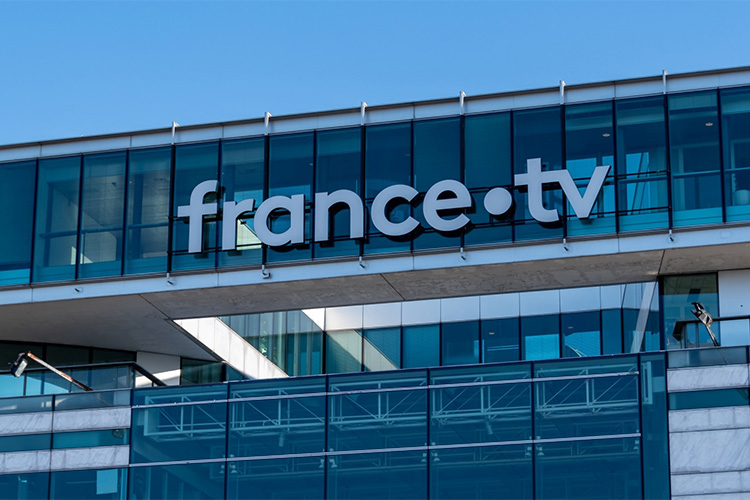
The investigative program titled “Complementary Investigation: Rumors and Dirty Tricks,” broadcast last Thursday by the French public TV channel France 2, sparked a wave of criticism among French experts and specialists due to the program’s producers’ failure to adhere to accepted media rules and their dire lack of professional ethics, which should be the main determinant in such cases.
Among the specialists who strongly criticized this suspicious program was the French historian, Benjamin Stora, who described it as “disappointing.”
He also spoke of a serious ethical violation through the exploitation of his statements in favor of a biased and hostile campaign against Algeria, noting that “I was only given ten seconds of airtime, while full minutes were allocated to people who have no connection to this Franco-Algerian history,” as he said in statements on Monday to Algeria International Channel (Algeria 24).
For the historian, who is considered the foremost expert on Algerian-French relations, what the French public television did “could significantly complicate the already difficult relations between France and Algeria and shift the discussion away from its real historical and political issues,” stressing that his participation in that controversial program was based on a specific framework, and he said: “They asked me to talk about the thorny relationship between French and Algerian memory. Based on this specific question, I agreed to the interview.”
The accusation of violating professional rules in this television program was not limited to those who participated in it as guests and felt exploited for ignoble purposes, such as Benjamin Stora, but also extended to specialists, such as the well-known French writer and journalist, Jacques-Marie Bourget, who reviewed in tedious detail the French television’s professional breaches and the many pitfalls into which French internal and external intelligence fell, in deliberately targeting Algeria, harming its interests, and violating its sovereignty.
Jacques-Marie Bourget cited the “Munich Charter,” particularly articles eight and nine, and based on that, he judged the “France 2” program as presenting “propaganda for the Élysée Palace.” He wrote on Monday in an article on the investigative newspaper “Mediapart” website: “The diplomat who was interviewed was nothing but a mouthpiece, repeating the usual rhetoric, asserting that the Western Sahara is Moroccan land, but the Charter states that journalism should not be practiced in this way.”
The writer, who works for several French media outlets, adds: “Worse still, as in TV series – ‘The Bureau’ being the model – we saw a solo performance by the ambassador, held at his home, in elegant reception rooms, which I believe were borrowed from the Quai d’Orsay (French Ministry of Foreign Affairs), making it complicit in the scheme. The punishment was swift: the talkative diplomat was declared ‘persona non grata in Algeria’.”
Unlike many French people who protested the imprisonment of Christophe Gleiz, and although Jacques-Marie Bourget regretted it, he attacked the producers of the controversial program over this issue, writing: “It is unfortunate for our colleague, but we were not informed of the details of the case that led this naive man to this prison. It is simple: on Algerian territory, he practiced his profession without respecting the law, meaning without obtaining the required press visa.
To make matters worse, from Algeria’s point of view, the journalist was in contact with activists from the ‘MAK’ terrorist movement, an organization based in Paris and strongly supported in Israel.”
To enrich their report, the author adds, “the journalists did not bother to research, but went directly to the offices of Reporters Without Borders, an organization that lost its credibility when we know it is funded by Washington and Israel.
A wrong choice of key to open a lock in Algeria,” accusing those responsible for the controversial program of favoring the terrorist “MAK” organization by broadcasting scenes of them in Paris, while ignoring scenes of those who demonstrated against this organization, in a blatant violation of media and journalistic ethics.
The writer points to a deliberate desire in the program to blame the other side, by focusing on Algerian “secret agents,” an imprisoned Algerian diplomat, as well as “the desire of intelligence agencies to monitor French elected officials of Algerian origin, accusations not supported by evidence from the French General Directorate for Internal Security and the French counter-intelligence service,” says Jacques-Marie Bourget. He commented: “Unfortunately, no documents are presented to us, and we are left to believe France 2. This is not convincing at all.
This mixture of rumors has become boring in its approach. We know nothing, but we tell you everything, which has severely damaged journalism.”Jacques Marie Bourget also criticized the lack of balance in the television program, such as ignoring sensitive issues, like Algeria’s accusation that the French Directorate-General for External Security (DGSE) smuggled an opposition figure from Algeria to Tunisia, whom Algeria intended to prosecute (Amira Bouraoui).
It also mentioned nothing about Mohamed Amine Aissaoui, who claims he “was recruited by French spies with the aim of establishing terrorist cells in Algeria,” and he wondered: “Why was Aissaoui not interviewed… It is clear that French intelligence agents have high morals that prevent them from entering Algeria.”