Insurance Companies To Buy Bonds Worth 130 billion DZD

-
-
345
-
0
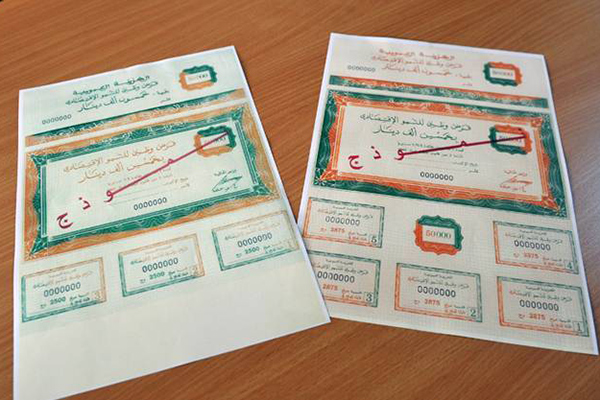
Public treasury director committed the insurance companies to withdraw 1300 billion centimes (130 b DZD) from the bonds that are deposited in the treasury, and transfer them to the national loan for economic growth, in the form of bonds that are offered to the general public, which caused a lot of pressure to those who who face, since days, a significant scarcity in the financial liquidity, along with the stock market that is facing large deficit in finance and banking.
According to a source from the financial sector, the process of offering the public company of cement “Ain Kebira” in Setif to the bourse noticed a miserable failure, after the expiration of the stock sale on last Thursday, which has not been achieved, after more than 21 days from the subscription through 2000 bank nets, more than 3.4% of the capital, while the law required reaching at least 20% of its capital, at a time when some parties are talking about the intervention of the public cement company “GICA” to save the situation.
According to Echorouk sources, this comes at a time when eight public companies prepare for opening their capital soon on the stock market, including two companies that are expected to offer their shares during 2016, and the Algiers Stock Exchange plans to reach a capital that is equivalent to one billion dollars before the end of the year, and public companies like Mobilis, CAAR, CPA, COSIDER, and HYDRO AMENAGEMENT, while the banks will work in the current period in the process of selling bonds, and financing of the national loan for economic growth, which faces a severe liquidity crunch at its level.
In spite of the efforts that are made by the company to manage the Stock Exchange , and the company of monitoring the stock exchange, but the reluctance of citizens for this type of financial transactions, and the absence of a popular financial culture, this led to the catastrophic failure of the institution which lost 5,000 billion centimes of its capital, since its founding, not to mention the absence of the bank financing, and the lack of a political decision that obliged the banks officials to finance the operation, and who refuse to do that often due to the continued criminalization of the act of governance, which remained only ink on paper, and the lack of decisions that bind the heads of financial institutions to allocate from 1 to 3% of their capital to finance the stock market, and in the absence of a commitment to do so, it will be obliged to pay it in the form of fees, as it is imposed by the legislation.
Same source thinks that the cause of the company’s failures on the stock exchange coincides with the launch of the bank loan, which emptied the banks from the financial liquidity, and because it coincides with the month of Ramadan, and the exit of citizens on holidays, meaning the wrong time that is not studied to launch the subscription.