Is It The Break Between The “New Authority” And Bouteflika’s Parties?

-
-
305
-
0
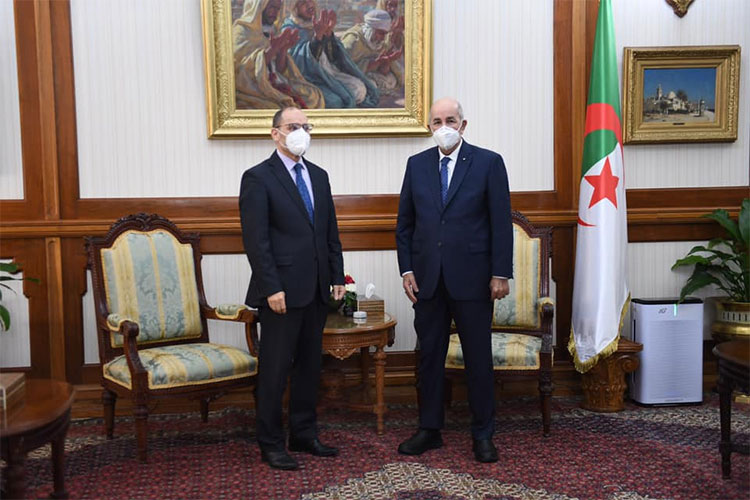
The number of party leaders that President Abdelmadjid Tebboune has received during the last two days has reached six, none of the parties that were affiliated with the authority and its surroundings, during the era of former President Abdelaziz Bouteflika.
President Tebboune had begun to receive the two main parties that participated in the recent presidential elections, namely: Abdelkader Bengrina, head of the National Construction Movement (El Bina) , who came second in those elections, as well as Abdel Aziz Belaid, head of the Moustakbal Front, in addition to the head of the New Generation Party (Jil Djadid) , Djilali Soufiane.
On the next day, he received the President of the Movement of the Society for Peace Abd-Razzaq Makri, the First National Secretary of the Socialist Forces Front, Youssef Aouchiche , and the President of the National Reform (Islah) Movement, Filali Ghouini, before the turn on the third day of the Election Law Review Committee.
According to sources from the National Liberation Front and the National Democratic Rally, these two parties did not receive until yesterday an invitation from the Presidency of the Republic within the framework of the political dialogue that President Tebboune launched after his return from his second medical treatment trip, as he aimed to know the positions of some political partners on important issues such as a projected government change, dissolving parliament, calling for legislative elections, and other matters that affect the country’s political situation.
It is not the first time that the higher authorities who followed the “popular movement” refrained from communicating with the parties that previously formed the political belt of support for power, while it seemed in harmony with the demands of the “movement”, which was among the slogans raised by banners calling for the departure of the parties that provided the political cover for the regime of the former president, in the form of the Liberation Front and the National Democratic Rally, the Amal front of Algeria “Taj” party, and the Popular Movement, knowing that all the leaders of these parties have been imprisoned in connection with corruption and bribery scandals.
In the dialogue sessions that preceded the recent presidential elections, which were supervised by Karim Younès, in his capacity as the coordinator of the Dialogue and Mediation Commission at the time, he met about fifty political parties, none of them among the four aforementioned parties, and the President also received many party leaders and national figures immediately after his election about a year ago, none of the leaders of the former loyalist parties was among them either.
From what Karim Younès said at the time in response to his previously not including the “loyalty parties” in the dialogue: “We are applying the trends of society and those of the popular “Hirak” movement and there are many parties and partners who refused the participation of loyalist parties in the dialogue, and we of course will not impose on our partners a dialogue with parties whose leaders are in prison on corruption charges”.
Observers agree that the parties that contributed to providing the political cover for the regime of the former president bear with him the responsibility for the conditions that the country has reached today.