Makhzen’s Foreign Intelligence in the Crater of European Justice
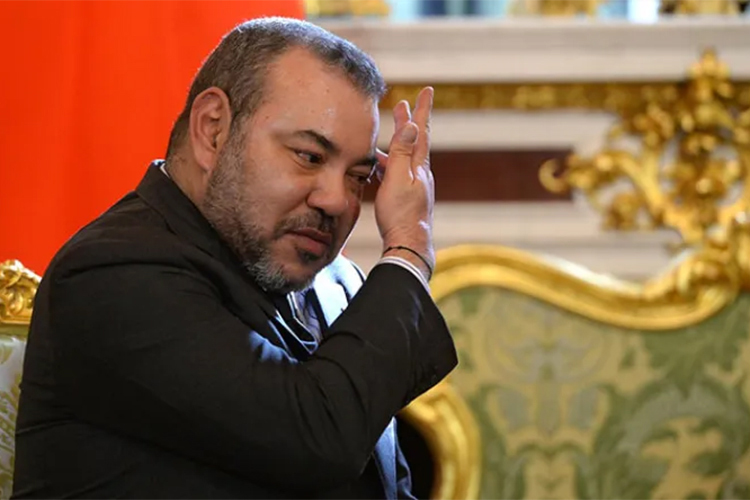
The Belgian justice opened into the corruption scandal that shook the pillars of the European Parliament did not stop at the person of Abderrahim Atmoun, the Moroccan ambassador to Poland, but extended directly to the Directorate General for Studies and Documentation (DGED), which is the Moroccan foreign intelligence, as a major party in this resounding scandal, as the scandal network expands to reach Spain’s representatives in the European Parliament.
The Moroccan ambassador to Poland is mentioned as a pivotal figure in the investigations, as he had direct contact with the former European representative, the Italian Antonio Panzeri, in the political corruption case, which was aimed at influencing decisions issued by the European Parliament, in a way that serves the agendas of the Moroccan Makhzen kingdom.
However, with the beginning of the investigations, two other personalities emerged, working for the Moroccan Foreign Intelligence Service (DGED), and they are the first responsible for this office, Mohammed Yassine Mansouri, and another person working under the command of Mansouri, Mohammed Belhareth, according to what was stated in the Italian newspaper “La Repubblica”.
According to the investigations that tracked the Moroccan ambassador accused of political corruption, the man was not originally a diplomat, but rather a politician who worked within the Authenticity and Modernity Party, which is called the “Party of King” Mohammed VI, given that his advisor, Fouad Ali El Himma, is the one who founded this party. Therefore, he previously chaired the Moroccan-European Mixed Parliamentary Committee, from 2011 to 2019.
In the period between 2016 and 2019, Atmoun accompanied, in the presidency of the Mixed Committee, the representative of the Spanish Socialist Party in the European Parliament, Inés Ayala Sender, according to the Spanish newspaper “El Pais”, a position that enabled the Moroccan ambassador to forge relations with many members of this parliament, which counts 705 MEPs, who decide on issues of concern to Morocco.
El Pais explained that it had contacted the MEP Inés Ayala, to ask her about the behaviour of the Moroccan ambassador, as she was in contact with him and visited Morocco in her capacity as the head of the mixed parliamentary committee, but she apologized, noting that she spent ten years in the European Parliament (from 2004 to 2014), and she was criticized by associations that support the rights of the Saharawi people to self-determination, because she stood by the Moroccan proposals (she described Western Sahara as the southern regions of the Makhzen Kingdom), just as Rabat calls it.
The Spanish MEP, Inés Ayala, shares with her colleague, the Italian representative who is in prison, Antonio Panzeri, many clues that implicated him in the scandal that shook the pillars of the European Parliament, as the Italian MEP had previously held the position of head of the Human Rights Committee during the period between 2014 and 2017, as well as the Chairman of the Committee on Relations with the Maghreb between 2014 and 2017.
Among the data that facilitated the task of the Belgian judicial authorities in the accusation of corruption against the Moroccan ambassador, according to the Spanish newspaper El Pais, was the praise he gave to the arrested Italian MEP, Antonio Panzeri, for the reports he prepared on behalf of the European Union, which he considered victories for Moroccan diplomacy, similar to the report on the European neighbourhood policy with southern and eastern Europe.