Malian President Rules Out Direct Foreign Intervention In Northern Mali

الشروق أونلاين
-
-
1854
-
0
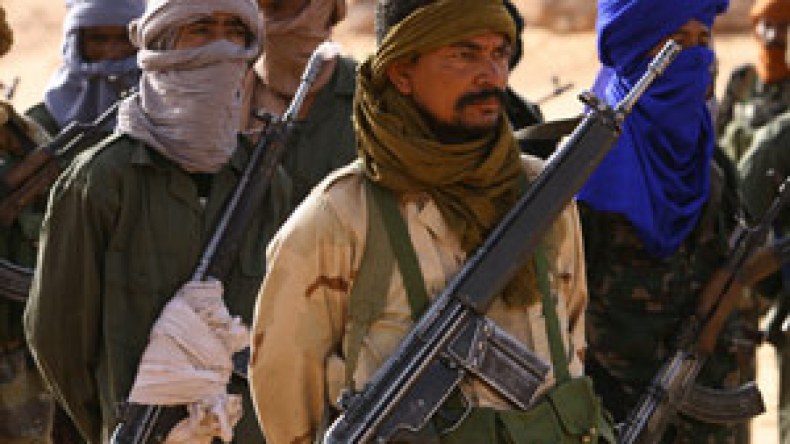
Mali’s interim President Dioncoundé Traoré has called for regional military assistance but steered clear of requesting a long-debated Ecowas forces’ direct intervention in northern Mali now totally under the sway of radical islamist rebels
- Interim President Troré said that Malian armed forces needed only military hardware including planes and helicopters to launch decisive combing operations in the northern part of the country without resorting to any foreign military intervention on Malian soil.
- Meanwhile, The ECOWAS Committee of Chiefs of Defence Staff (CCDS) wound up its two-day emergency meeting on 15th September 2012 in Abidjan, reiterating some of the proposals from its two extra-ordinary meetings of 14th and 24th August 2012 in Bamako and Abidjan, respectively, for the resolution of the crisis in Mali.
- These include soliciting the support of the governments of neighbouring Algeria and Mauritania to help facilitate the deployment of the ECOWAS Mission in Mali (MICEMA).
- The meeting was convened to review a request by the Government of Mali to ECOWAS soliciting assistance to recover the occupied territory in the North of Mali as well as combat terrorism.
- The CCDS called on ECOWAS and the Malian government to embark on a massive media campaign to help create and sustain the awareness of the citizens of Mali, including the Armed Forces, on the deployment of the Mission.
- The Chiefs of Defence Staff called on the Malian authorities to intensify efforts at an inter-Malian dialogue with the rebels under a national mechanism of strategic management to ensure the resolution of the crisis.
- The Malian authorities were also urged to comply with UN Resolution 2056 on the total withdrawal of the National Council for the Recovery and Restoration of the State (CNDRE) from the political arena.
- Resolution 2056 also calls for the dissolution of the CNDRE and demands that its members refrain from any interference in political matters and in the work of the Transitional authorities.
- At the opening on Friday, 14th September 2012, the ECOWAS Commissioner for Political Affairs, Peace and Security, Mrs. Salamatu Hussaini Suleiman, the Minister of Defence of Mali, Mr. Paul Koffi Koffi and the Chief of Defence Staff of Cote d’Ivoire, Lieutenant-General Soumaila Bakayoko, stressed the sensitivity and importance of the meeting.
- They expressed the need to meet the expectations of the Authority of Heads of State and Government by successfully addressing the threats and challenges to peace and security in the region, restoring the territorial integrity of Mali and helping to ensure a peaceful transition and return to the normal Constitutional rule in the country.
- Mali, a former French colony, is a West African nation that had often been cited as a democratic model. But in March 2012, mutinous soldiers in Bamako, the capital, rose up in a coup, overthrowing the elected government of President Amadou Toumani Touré.
- The soldiers were angry over the government’s mishandling of a rebellion by nomadic Tuareg rebels in the country’s vast northern desert. Soon after the coup, the Tuareg rebels seized much of the north.
- In April, under international pressure, the military junta — led by Capt. Amadou Sanogo — agreed to a civilian government led by an interim president, Dioncounda Traoré, the former leader of the national assembly; and an interim prime minister, Cheick Modibo Diarra, an unlikely Malian-American astrophysicist who once worked at NASA, a political neophyte known for emotional outbursts.
- Mr. Traoré‘s future as president came into question in May, when a mob of angry protesters stormed the presidential palace and beat him into unconsciousness. He spent two months after the assault receiving medical treatment in Paris. In late July, Mr. Traoré returned to Mali.
- Radical Islamist Takeover in the North
- The military coup left the Malian Army rudderless and unable to defend the vast northern region. While the south is still controlled by the military-led government in Bamako, the north has fallen into the hands of radical jihadi factions who pushed out the nomadic Tuareg rebels and imposed a brutal application of Shariah law, including public beatings, amputations and a stoning death.
- In mid-September, the radical Islamists extended their campaign of enforcing harsh Shariah law by amputating the hands and feet of four young men they accused of robbery in the main square at Gao, a principal town in the region.
- With the Islamists increasingly well established in the north and appearing to be on the move southward, and with an undisciplined Malian Army that is largely standing by, there have been rising fears about possible Islamist incursions into the portion of Mali still controlled by the government.
- The Malian Army has rejected offers of military assistance from regional powers, even as the country’s weak civilian government, shadowed by a military junta that took over in late March, appeared to accept those very offers in September. The interim president, Dioncounda Traoré, asked the grouping of West African states, Ecowas, in a letter for “five battalions, on the front line, to be gradually engaged in the control of the reconquered cities.”
- But the Malian Army, in statements to French radio, appeared to reject even that mild request, as it has dismissed such suggestions of help in the past. Diplomats have said the army and the junta are fearful that outside troops could weaken their dominant positions in the country.
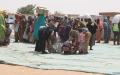
- About 400,000 people have fled the north since the Islamist takeover.
- General Information on Mali:
- Official Name: Republic of Mali
Capital: Bamako (Current local time)
Government Type: Republic
Population: 11.995 million
Area: 474,764 square miles; the size of Texas and California combined
Languages: French (official), Bambara, numerous African languages
Literacy: Total Population: [19%] Male: [27%]; Female: [12%]
Year of Independence: 1960