Monarchy In Morocco Is Threatened With Collapse And Western Support Is An Attempt To Save It
A specialized American research study revealed that the shift in the positions of some Western countries on the Sahrawi issue will not change the situation in the Maghreb region one iota, because the source of these positions is one, which is the Western camp known for providing protection to the Moroccan regime for decades. This study, which came under the title “The United States, France and Spain are deceiving themselves about Western Sahara”, estimated that the support provided to Morocco “has nothing to do with reactivating the peace process in Western Sahara, but rather exacerbates the situation further.”
The American magazine “World Politics Review” described in its latest issue for the month of August the positions of the United States, Spain and France on the Sahrawi issue as “a mixture of deal policies and geopolitical maneuvers in the international arena, the need to appease the internal opposition and concern for the survival of the Moroccan monarchy besieged in Rabat.”
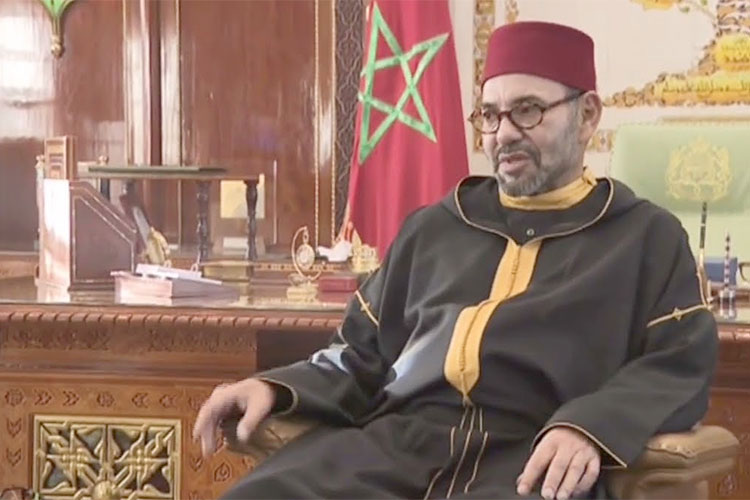
Jacob Mandy, an associate professor and head of the Department of Peace and Conflict Studies at Colgate University in the United States, believes that the Sahrawi issue has been, for decades, “a major source of annoyance for the Western powers supporting the Moroccan regime, which has suffered and continues to suffer from an ongoing legitimacy crisis in recent years due to its failure to confront the repercussions of the devastating September 2023 earthquake, as well as Mohammed VI’s continued support for the Zionist entity in its war on Gaza despite the rejection of the Moroccan people, in addition to its inability to solve the problems of poverty, unemployment and high prices.”
Mandy, author of “Western Sahara: War, Nationalism and the Unresolved Conflict,” pointed out that: “Strategically, Morocco and its allies must also remember Henry Kissinger’s famous quote: ‘The fighter wins if he does not lose.’ For five decades, Sahrawi nationalists, led by the Polisario Front, have lived in exile in Algeria, along with 170,000 refugees, nearly half of the indigenous Sahrawi population. There is no indication that support for independence has diminished among most Sahrawis.”
The right of the Sahrawi people to self-determination, the study says, is affirmed under international law in all international legal forums in which it is discussed. Most recently, the International Court of Justice’s opinion issued last July on the Zionist occupation of the Palestinian territories cited the Court’s historic ruling in 1975 on Western Sahara, which was then under Spanish administration, and which was issued a few weeks before the Moroccan regime invaded Western Sahara. Then, as now, the court recognized the people of Western Sahara as the true sovereign power of the territory.
The study stopped at the efforts made by the United Nations to resolve this conflict, and when they failed, the task was entrusted to the two conflicting parties, hence the autonomy proposal presented by the Moroccan regime in 2007, after which the Polisario Front responded with a series of political and security guarantees. The study estimated that the Moroccan proposal “is not in fact a serious and credible proposal,” and the four UN mediators who followed in Baker’s footsteps failed to obtain a single concession from either side, and the current envoy, Staffan de Mistura, has not yet been able to bring the two parties together despite nearly three years in office.
Regarding the fate of the Sahrawi issue in light of the American and French support for the Moroccan regime’s thesis, the study says: “If France and the United States seek to get the UN Security Council to adopt the autonomy proposal presented by Morocco as the only way to resolve the issue, this is likely to provoke resistance from China, and more importantly, Russia.”
“Moscow has increasingly abstained from voting on Council resolutions on Western Sahara in recent years, often citing the unilateral approach of the United States, as the Council’s “penholder” on the conflict, in pushing resolutions without the little consultative and consensus-based practices that form part of Council votes on Western Sahara,” she added, noting that the other anti-Western camp, represented by Russia and China, will nullify any attempt to impose a fait accompli by using its veto power against any attempt to change the official position of the UN Security Council.