Moroccan Makhzen regime on an “impossible mission” to influence the European Court of Justice
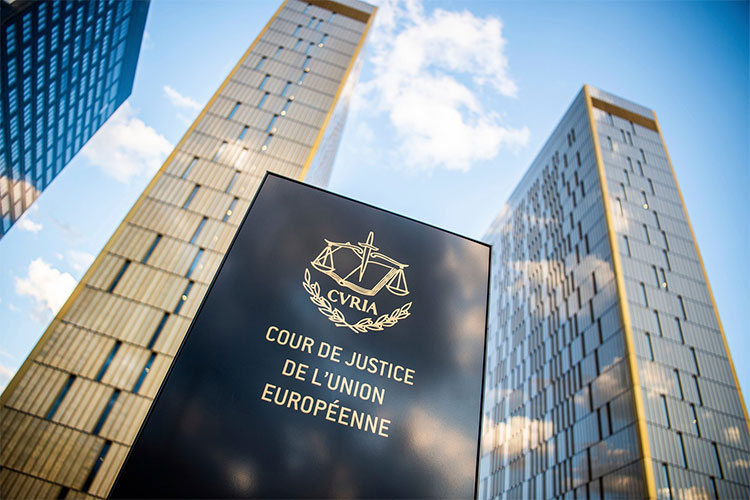
The holding of the appeal sessions at the European Court of Justice regarding the agreement on fisheries and agricultural products between the Moroccan regime and the European Union has set the wheels of the Alawite kingdom in motion, which is trying by all means to overturn the appealed decision, which ruled that Morocco has no sovereignty over the occupied Sahrawi territories.
In a seemingly desperate attempt to pressure or co-opt politicians on the Old Continent in order to achieve gains at the level of justice, both the Moroccan Prime Minister, Aziz Akhannouch, and his Foreign Minister, Nasser Bourita, went to the capital of the European Union, Brussels, last Wednesday, just one day after the end of the court sessions.
Aziz Akhannouch and Nasser Bourita were received by the President of the European Council, Charles Michel, just as Moroccan officials had been to Brussels on the 10th of this month to be received by the President of the European Commission, Ursula von der Leyen. The aim of this meeting was “to strengthen the partnership between the European Union and Morocco.
The Moroccan Makhzen regime is looking for alternatives to preserve its gains from the agreement on marine fishing and Saharawi agricultural products, which Rabat trades with the European Union as if they were Moroccan products, after the belief was strengthened in the Alawite kingdom that the appealed ruling will be upheld by the European Court of Justice of the European Union, which is the decision, which this time will be final, and not subject to appeal by Rabat and Brussels.
The Alawite Kingdom is seeking guarantees from the European side to protect the partnership between the two parties in case the European Court of Justice upholds the appealed decision. However, this time the European side will be strict in dealing with the upcoming judicial decision, because whoever violates it will be prosecuted.
This tendency is shown by the commitment of all the European member states of the Union not to renew the fisheries agreement when it expired on July 17, despite the repeated requests of the Moroccan regime, as well as the temptations and concessions it offered, especially for the Spanish side, since it is the one most affected by the non-renewal of this agreement, since of the 128 European ships, 92 are Spanish.
Last August (after the suspension of the fisheries agreement), the Moroccan authorities had previously offered the owners of Spanish fishing vessels to continue fishing in the territorial waters of the Sahrawi Republic, while raising the Moroccan flag to remove suspicions, in addition to other privileges, including providing free accommodation for Spanish fishermen in hotels. Moroccan, but all these privileges did not stimulate the desire of the other party.
Nevertheless, the Moroccan regime continues to offer more temptations to the Spanish side and is trying to create pressure groups of Spanish fishermen to pressure their country’s government to sign a fisheries agreement in a bilateral framework away from the European Union. This meeting, brought together Moroccan fishermen with their Spanish counterparts in the city of Tangier in northern Morocco last August, and the second on the tenth of this month in the Spanish city of Cadiz.
The Moroccan regime insisted on sending its representatives to the capital of the European Union in order to offer more privileges to Brussels and to try to influence the judges of the European Court of Justice. However, these visits will not really change anything in the Court’s decision, at least according to the data that characterize the court sessions, and the independence of judicial decisions from politics in Europe, as well as in light of the crises that have shaken relations between Rabat and Brussels in the last two years, due to corruption cases involving the Moroccan regime, such as the “Pegasus” spying scandal and the purchase of the liabilities (bribing) of European politicians and parliamentarians to serve the Moroccan agenda.