Have France’s Excuses For Shirking Its Historical Responsibilities Disappeared?
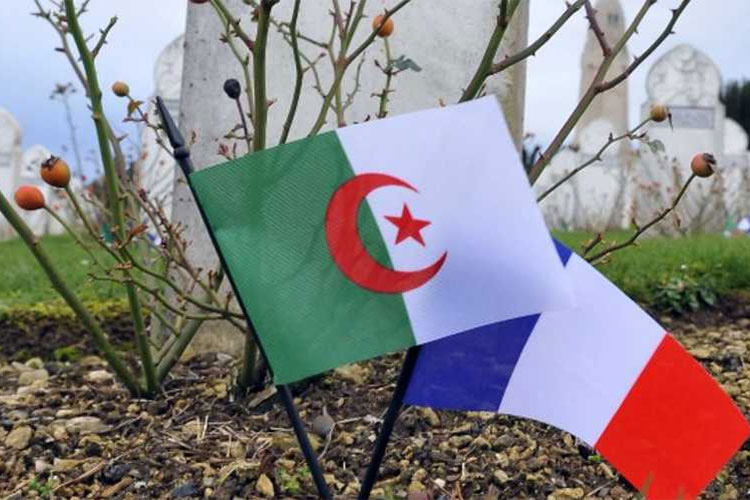
When Algerians raised the demand for an apology from France for the horrendous crimes of French colonialism in their country, politicians and media figures known for their right-wing and far-right leanings rushed to reject this demand, claiming it had religious undertones. They invented a word, “repentance” (La repentance), as a pretext to justify this rejection.
The approval by both houses of parliament of the law criminalizing French colonialism in Algeria affirmed the necessity for the French state to acknowledge its heinous colonial crimes in Algeria, without demands for apology or compensation. This effectively nullified the French pretext, placing France in a difficult position, compelling it to respond to what some consider an Algerian step towards de-escalation. This is how French newspapers portrayed the Algerian parliament’s approval of the law in their coverage on Tuesday, March 10, 2026.
Does this indicate that the French now feel that the next step regarding the thorny memory file will come from them? Or is the issue more complex than observers imagine, including the French who cheered the Algerian side dropping the demands for apology and compensation for France’s colonial crimes in Algeria?
Historian and researcher in colonial history at the University of East Anglia, Mr. Hosni Guitouni, believes that what Algeria will gain from enacting a law criminalizing French colonialism in Algeria will take time. In a communication with “Echorouk,” he said, “This law is not expected to yield immediate results. We can talk about the fruits of this law in the medium and long term. This law will be a roadmap for Algeria’s engagement with the memory file, and a beacon for our children in the future, to reveal the truths and hidden aspects of what our fathers and grandfathers suffered due to brutal French colonialism.”
The researcher at the University of East Anglia expressed his pessimism regarding what is expected from France in this regard, explaining: “The file of colonial memory in Algeria is a very complex issue for the French. In my opinion, the French will not take any steps. The issue goes beyond war crimes to cultural matters, and we can refer here to what they did in 2005, when they enacted a law glorifying the practices of French colonialism in former colonies.
This law completely ignored the tragedies left by French colonialism in Africa and elsewhere, while talking about transferring civilization and modernity and developing societies…”
In response, Mr. Hosni Guitouni says that the Algerian side must keep the memory file alive and present in any bilateral projects between the two countries, especially those with economic and cultural dimensions, which France attaches great importance to.
According to the speaker, Algeria has drawn a roadmap for Africans on how to deal with colonialism, through the conference it organized earlier at the Abdelatif Rahal Conference Hall, attended by historians and intellectuals from various African countries, which witnessed a consensus among the victims of this phenomenon on the necessity of criminalizing it.
The history researcher believes that French colonialism in Algeria differs from others on the continent, as it was settler colonialism, which was behind France’s undertaking of some projects, believing that it would remain in Algeria forever.
Therefore, independence was a shock for France, and this is where France’s stubbornness lies, unlike the rest of the African countries where colonialism was exploitative, meaning the looting of wealth and the imposition of slavery on their peoples, without undertaking projects for the benefit of the local population, as happened in Senegal and Cameroon, for example.
Nevertheless, according to Mr. Guitouni, Algeria still has demands that must be pursued, namely those related to the theft of the Algerian state treasury in 1830, the recovery of archives, the cleasing of nuclear and chemical explosion sites in the south, the handover of the map of buried waste, and compensation for the victims of these experiments, who are still dying to this day because of them, while also emphasizing the issue of recognizing the heinous crime of the French state, warning at the same time against recognition in installments, because that is a colonial concept that serves only France.
In turn, Mr. Redouane Bouhidjel, Professor of Political Science and International Relations at the University of Algiers, calls on France to fully assume its responsibilities due to its colonial past, and stressed the importance of taking “concrete initiatives through which symbolic rhetoric that achieves nothing can be overcome.
We can focus on a number of files in this regard, such as the recognition of crimes, which is one of the most important and prominent Algerian demands, provided that it is official and clear, from the French state, represented by the President, covering the period from 1830 to 1962, as crimes against humanity, and this will reduce tension, as a symbolic step for a historical reconciliation based on truth.”
He also stressed the imperative of handing over and opening the French colonial archives related to Algeria, while enabling researchers in this field, especially Algerians, in addition to returning Algeria’s archives located in France, in order to rewrite history correctly, especially concerning the liberation revolution and the brutal colonial repression of Algerians that accompanied it.
Regarding nuclear explosions, Mr. Bouhidel says that Algeria’s demands are well-known, which are to clean up the areas affected by radiation, as President Abdelmadjid Tebboune stated, and to hand over waste maps.
Here, the speaker adds, it is necessary to compensate the victims of radiation, “and why not compel France to cooperate in treating the victims and benefit from French experience,” in addition to recovering historical properties and symbols, a step that cannot be separated from official recognition, as well as handing over the remains and skulls of resistance fighters, demands that cannot be compromised.
In addition to the archaeological properties looted during the colonial period, including documents and treasures, and opening the file of those missing in the revolution, as thousands disappeared during arbitrary detention, Algeria here demands revealing the truth about their fate, and opening the secret military archive file related to enforced disappearances, adds the professor of political science, who also spoke about the necessity of recognizing major massacres such as May 8, 1945.