Morocco’s Regime Seeks to Disrupt Algeria-Mali Rapprochement
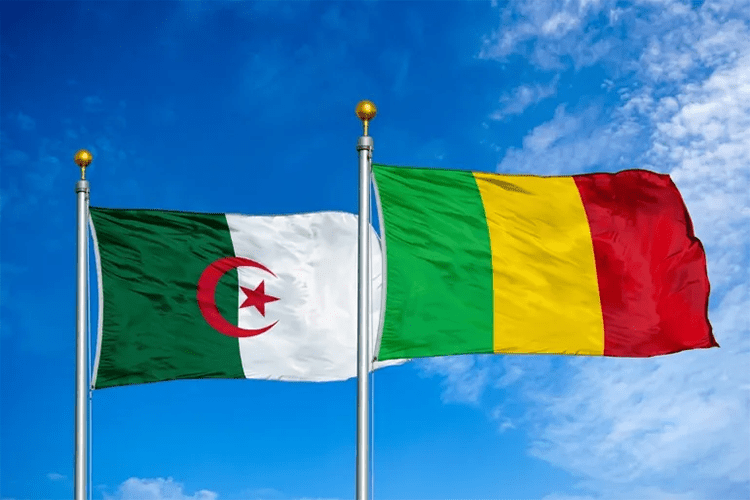
The Moroccan regime has wasted no time revealing its hostility as Algeria moves to restore normal relations with its southern neighbours, foremost among them the Republic of Mali.
More than a year after a diplomatic dispute between Algiers and Bamako escalated into a complete rupture, well-known hostile circles have sought by every means available to exploit the rift and deepen the divide between the two neighbouring countries.
Less than two weeks after Algeria and Mali announced the restoration of diplomatic relations, the reopening of their airspace and the return of their respective ambassadors to the two capitals, Moroccan Foreign Minister Nasser Bourita travelled to Bamako on what appeared to be a questionable mission. The timing and outcome of the visit suggest that its purpose was to try to disrupt the fledgling Algerian-Malian reconciliation.
These suspicions were further reinforced by a statement circulated by Mali’s Foreign Ministry on its Facebook account following a meeting between Malian Foreign Minister Abdoulaye Diop and his Moroccan counterpart, Nasser Bourita. The Western Sahara issue featured prominently in the statement, which followed an earlier communiqué issued by the Malian authorities on April 10, in which Bamako endorsed Morocco’s proposal for autonomy in Western Sahara, first put forward by Rabat in 2007.
In the same context, Morocco’s Foreign Ministry announced that the kingdom had handed over to Mali a vocational training complex specialising in construction and public works, as well as hospitality, tourism and catering, to accommodate trainees. The Moroccan minister described the initiative as part of the two countries’ bilateral cooperation.
The Moroccan opportunistic move echoes initiatives previously undertaken by Algeria in Niger and Burkina Faso. These included the donation of power-generation facilities to Niger, Burkina Faso and Chad, as well as agreements covering sectors such as public works and healthcare. The donations were presented as measures aimed at strengthening bilateral relations.
The move by Bamako has reportedly raised eyebrows among some observers, particularly because it came less than two weeks after Algeria and Mali restored relations. This is especially significant given the sensitivity of the Western Sahara issue within Algerian diplomatic doctrine, which regards the matter as a highly important geopolitical file.
According to a diplomatic affairs specialist who spoke to Echorouk, these developments reveal the Moroccan regime’s obsession with Algeria’s relations with its southern neighbours. Rabat, he argued, repeatedly seeks to target those relationships for geopolitical purposes, despite the fact that Morocco has no direct geographical access to the Sahel and is relatively far removed from the region, with vast political and geographical spaces — Western Sahara and Mauritania — separating it from the Sahelian states.
The analyst nevertheless ruled out another setback in relations between Algeria and Bamako, arguing that the two countries can cooperate on matters of mutual interest while setting contentious issues aside. The process of rebuilding bilateral ties, he noted, is still in its early stages, and given time, the two sides could restore the historic relationship that dates back to the first years of their independence in the early 1960s.
The same source believes that the Moroccan regime is seeking, through such initiatives, to consolidate its foothold in Bamako before Algeria has time to fully regain its historic influence in the country. Morocco’s efforts to interfere with that process, he argued, would explain its decision to promote a “symbolic gesture” — the provision of a vocational training complex to Mali. Such assistance, he said, would not ordinarily warrant the publicity it received unless Rabat intended to leverage it for political and diplomatic purposes.
Algerian authorities have on several occasions previously accused the Moroccan regime, along with what they describe as hostile actors such as the zionist entity and the United Arab Emirates, of contributing to tensions between Algeria and Mali. According to Algiers, this has included fuelling the dispute in Mali and promoting media narratives financed by the UAE.