Non-Hydrocarbon Activity: Algeria’s Key to Economic Growth
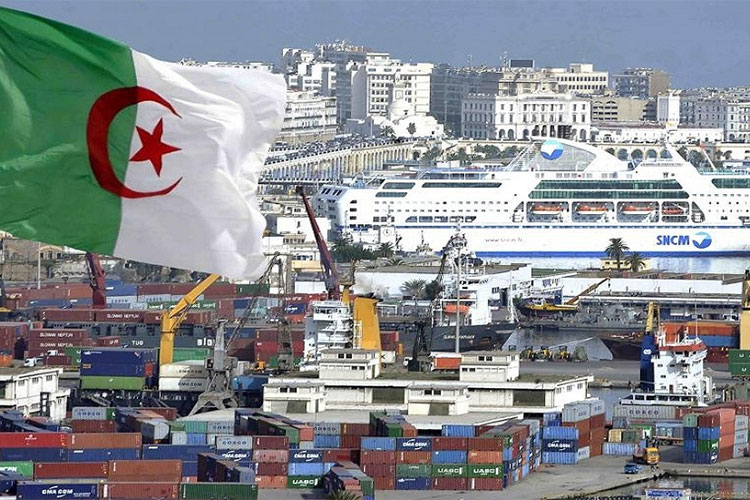
The World Bank has released its latest report on the economic activity of Algeria published on June 22, 2023, indicating that the Algerian economy is experiencing favourable conditions.
The World Bank explained in its report that “Algeria is embracing favourable to foster robust and diversified growth”, and pointed out that the development of nonhydrocarbon activity has become a reality and will be the main engine for growth in 2023, and that the Bank of Algeria intervened last year to improve the exchange rate of the dinar against the dollar and the euro to curb inflation saying; “the authorities have resorted to exchange rate and monetary policies to curb inflation and raised public spending to support household purchasing power”.
The report, titled “Monitoring the Economic Situation in Algeria, Winds Remain Favorable” which culminated in the spring meetings of the World Bank, stated that the pace of nonhydrocarbon activities accelerated in 2022 buoyed by a rebound in agricultural production and sustained private consumption growth, showing that it will be the main engine of the Algerian economy in 2023 and that these sectors will also support the growth of the country’s economy in the current year.
“Indications of cross-regional growth are extending into the first quarter of 2023. The increase in natural gas export prices has helped offset the dip in oil prices, enabling high export levels, a rapid accumulation of foreign reserves, and a reduction in the budget deficit,” the world bank explained.
World Bank’s report expected that Algeria’s GDP growth would reach 1.8% this year, resulting from the growth in the non-hydrocarbon activity by +2.2%, and the stability in hydrocarbon GDP by +0.6%.
According to the same authority, Algeria’s gas production would increase and crude oil production would decline constrained by the reductions in production quotas according to the decision of November 2022 and then the decision taken last March, which will come into effect in May. it is expected that the agricultural sector would slow down due to the significant lack of rainfall, which has caused delays in crop development at the beginning of the year, particularly in Algeria’s main agricultural regions.
The forecasts of the World Bank report indicate that agricultural and hydrocarbon production would increase in 2024, which would contribute to accelerating Algeria’s GDP growth reaching 2.6%. The rise in exports and moderate growth in imports would offset the slowdown in consumption and investment growth, with the assumption that rainfall levels will return to normal starting next year, and also an increase in Algeria’s share within the Organization of the Petroleum Exporting Countries (OPEC). Driven by a recovery in the global economy.
“In the baseline scenario, the rebound in agricultural and crude oil production in 2024 would allow for higher growth. Assuming a return to average rainfall and agricultural production in 2024, on the one hand, and an increase in OPEC quotas as a result of the recovery in global activity,” the world bank added.
The WB believes that, given the current economic conditions, continuing efforts to diversify the Algerian economy and exports remain essential, especially through the measures undertaken by the authorities to stimulate foreign and private investment, notably through a new Hydrocarbon Law in 2019, the partial lifting of limits on foreign ownership of domestic firms (49/51 rule) in 2020, and a new Investment Law in 2022, and stressed that the diversification of exports would reduce the vulnerability of macroeconomic balances to oil prices.
The same financial authority confirmed that the Bank of Algeria resorted in the second semester of 2022 to measures to value the dinar against the US dollar, in an attempt to curb inflation, after years of devaluation of the local currency that lasted from 2014 to 2021.
The World Bank indicated that the actions of the Bank of Algeria enabled the local currency to gain 4% against the euro in 2022, and 6.2% against the dollar, and in total the official real effective exchange rate improved by 9% in 2022.