Paris, October 17, 1961 Massacres: “When The Seine River Turned Awfully Red”

الشروق أونلاين
-
-
959
-
0
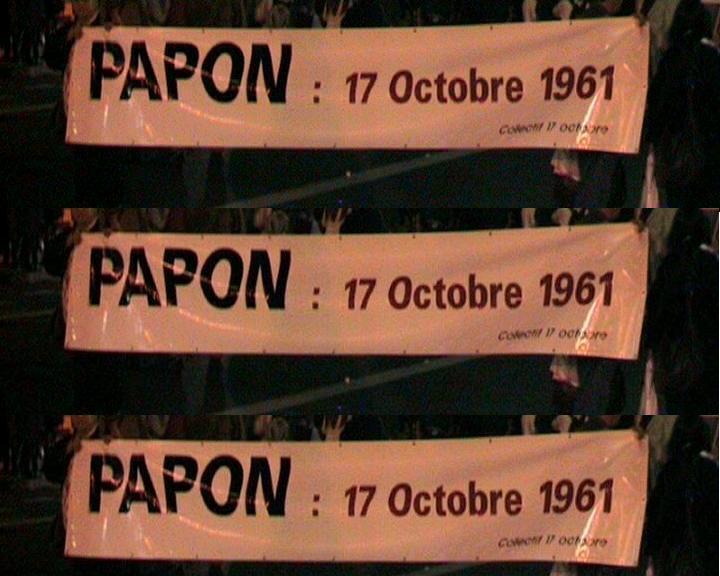
Exactly 50 years ago today, up to 200 Algerians, who were taking part in a peaceful demonstration, were brutally murdered by Paris police units at the behest of then police chief Maurice Papon. After decades of official cover-up, the collective memory of the awesome events of 17 October 1961 is finally being restored.
- A look back at the dark moment in Parisian history which left 200 peaceful Algerian protesters dead.
- Fifty years ago, the Parisian police brutally suppressed a demonstration of about 30,000 Algerian migrant workers protesting against a discriminatory and racist curfew banning them from the capital’s streets at night. The march was peaceful, but by the end of the night over 200 Algerians were dead and 11,000 others had been arrested and detained in horrific circumstances by French police units.
- The date, barely known outside France, is undoubtedly one of the city’s darkest episodes, and survivors of the repression and relatives of those killed are still seeking the truth about what happened that night, and full recognition of the role the French authorities played on October 17, 1961.
-
The FLN sustained struggle for Algeria’s freedom and independence
- In 1961, France had been fighting for seven years to retain control of occupied Algeria, as the National Liberation Front (FLN) battled for independence. From its beginnings in November 1954, the Algerian independence war grew steadily more brutal, with the then French authorities using methods such as torture and collective punishment to secure the loyalty of the population. The violence had spread to mainland France by 1961, as the French Federation of the FLN organized attacks on policemen across the country.
- Escalating violence between the French police forces and the FLN in France was key to the events of October 17, 1961. In 1958 Maurice Papon was appointed chief of police in Paris, returning from a stint as governor of the embattled Algerian province of Constantine. In his tenure in Algeria Papon instigated controversial and heinous methods to deal with the liberation struggle , including a series of shady detention centres for militants and the forcible resettlement of civilians to cut the FLN off from its support base.
-
Papon’s murderous tactics
- On his arrival in Paris, Papon decided that an aggressive stance was necessary to defeat the FLN’s units on the mainland, and set about trying to crack their Parisian networks.
- At the time over 150,000 Algerians were living in and around Paris and were seeking work to support their families at home.
- Faced with continuing FLN attacks, Papon announced a curfew on Algerians in Paris on October 5, confining them to their homes between 8.30pm and 5.30am. Anyone contravening the curfew would be forcibly deported and, unofficially, was also likely to receive a beating from the officers who arrested them.
- In protest at such openly discriminatory new measures, the French Federation of the FLN organised a demonstration for the evening of October 17 on the Grands Boulevards. It was stressed that the demonstration would be peaceful and that disorder would not be tolerated and FLN activists kept watch over the demonstration to ensure the good behaviour of the protesters.
- Papon instantly mobilized the police around Paris. Many of the officers present on the night of 17 October 1961 were themselves veterans of the Algerian war, and were bitterly opposed to independence. Many more were looking for revenge for previous attacks on their colleagues.
-
Murder and detention
- At Opéra, policemen opened fire and charged the demonstrators, killing several instantly. Over the following hours and days, around 11,000 Algerians were arrested and herded into improvised detention centres. Others were arbitrarily murdered on the streets by enraged policemen, thrown into the Seine, shot, strangled or beaten to death.
- For days, the internees were held by Papon’s police in temporary detention centres across the city. There, they were deprived of food, water and medical care and were subject to random beatings by the police.
- In the wake of the protests, the bodies of over 200 Algerian protesters were found in forests around the capital and pulled from the Seine. Most of the corpses showed the signs of a violent death.
-
Wanton Official amnesia
- The media’s coverage was initially muted; at the time, the press was subject to rigorous censorship over the Algerian war, and editors erred on the side of caution. The Parisian police prefecture issued a statement claiming that demonstrators had fired shots at the police, that the police had returned fire, killing two and injuring several others. Some papers simply reprinted Papon’s version of events, and this account of the night remained the version accepted by most public for years.
- Later, left-wing newspapers such as Libération and Humanité questioned this version of events. Pictures taken by the photojournalist Elie Kagan emerged, showing what had taken place. However, no judicial inquiry was launched into what took place, and October 17, 1961, was shrouded in an official amnesia as the government refused to release official documents connected to the incident for decades.
- But the October 1961 massacre surged back into the public eye in 1991 when historian Jean-Luc Einaudi published his book The Battle of Paris, in which he gave a blow-by-blow account of the night. Einaudi laid the blame squarely on Papon, who he claimed had directly encouraged the police to kill protesters. He pointed to the funeral of a policeman killed by the FLN on 2 October 1961 where Papon had declared; “For every hit taken, we’ll give them ten back!” Many officers took this as carte blanche to deal with Algerian immigrants as they saw fit.
- Papon, convicted in 1998 for his role in the deportation of French Jews to Auschwitz during World War Two, took Einaudi to court for defamation in 1999 after the historian wrote an editorial for Le Monde entitled; “On the 17th October 1961, a massacre took place in Paris committed by the police forces acting on the orders of Maurice Papon”. Papon’s case was unsuccessful, although no further action was brought against the former chief of police over his role in the repression of the protest in October 1961.
-
The unflagging fight for recognition
- In the 1970s and 1980s, groups were formed demanding full recognition of the extent of the state’s crimes on October 17, 1961. In 1998, a judicial inquiry reviewed a number of police documents and conceded that some Algerians had been killed in cold blood by the French police, although the inquiry concluded no more than 48 could have died at the hands of the police.
- In spite of repeated calls from these groups, the French government has never fully recognised what happened in 1961, and the event has left a legacy of alienation and anger amongst the country’s Arab immigrant communities. The violence meted out by police is etched into the communities’ memories.
- Ten years ago, Bertrand Delanoe, mayor of Paris, recognised that peaceful demonstrators had been killed by the police and decided to dedicate a plaque to the victims of the “nuit noire” at the Pont St Michel, where Algerians were thrown into the Seine.
- On the fiftieth anniversary of what Einaudi laconically referred to as the “battle of Paris” activists are still demanding recognition of the state’s crimes. To mark the fiftieth anniversary of the events, several new documentaries and short films will be screened on television and cinema screens across France; productions like “We drown Algerians here” and “October in Paris” will undoubtedly bring the issue back to public attention, but so far the Champs-Elysées has given no indication that there will be further action on investigating what happened on fifty years ago on Paris.
- Until the bloody events are properly investigated, and the French state fully recognizes the role of Maurice Papon’s police forces in the horrendous massacre, their legacy will continue to poison Franco-Algerian relations and breed mistrust amongst France’s North African community in years to come.