Rachad’s Conspiration Against Algeria
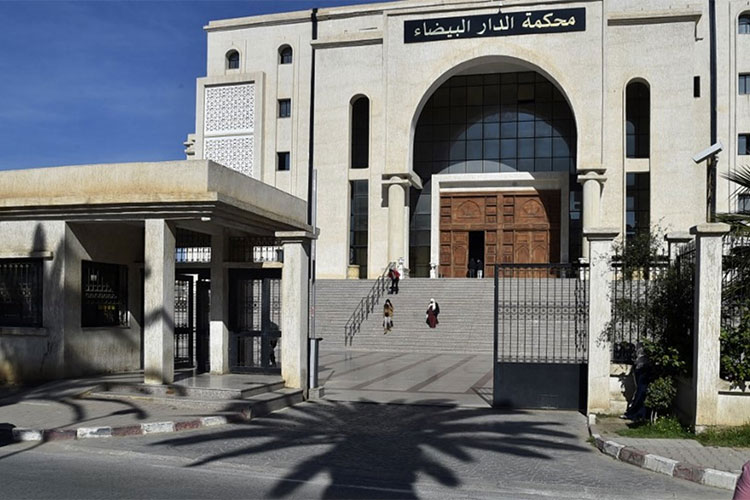
The trial of 16 people before Algiers’ Dar Bida Criminal Court, on Tuesday, revealed serious incidents that affected the security and stability of the Algerian state, involving members of the Rachad Organization, headed by the brother of the wanted activist, “Zitout Mohamed Larbi”, called “Abderrahman”, accompanied by “Mohamed Azouz Benhalima” and “Mohamed Abdallah”, along with former police officers and executives in public institutions, after they blackmailed the Algerian authorities and plotted against its constitutional institutions.
The Criminal Court heard the statements of the arrested defendants over hours on Tuesday, where the judge proceeded to interrogate the deserter soldier, “Mohamed Azouz Benhalima” as the main suspect in the file, who insisted on denying all the charges against him, indicating that the facts of the case were decided during former trials. He also denied his relationship with the Rachad movement, adding that his communication with its members was long ago and before it was classified as a terrorist organization, refuting that he had received confidential information about leaders in the National Security Corps from the defendants, despite his previous admission of his complicity with the duo “Amir B” and “A. Zitout” to strike the security and stability of Algeria.
The defendant “Abderrahman”, the brother of the fugitive accused “Mohamed Larbi Zitout”, denied all the charges against him in a sentence and detail during the hearing. However, he admitted to having an Instagram account known as “Imad for selling clothes” related to his commercial activity in selling luxury men’s clothing, stating that he started his business by borrowing a sum of money and did not receive any support from his brother as previously accused, adding that he travelled to France for treatment after blindness in one of his eyes.
The accused “Abderrahman” confirmed that he did neither meet his brother “Larbi” abroad, nor did he communicate with him through social media, but cut off contact with him and the rest of his brothers after accusing his family members of being “terrorists.”
For his part, the so-called “H. Samir”, who is a senior executive in a private company, denied having an account on Facebook under the name “Sami Al Maktoum” that contains many publications that offend the President of the Republic and the People’s National Army, in addition to publications inciting the people to gather, claiming that he was exposed to a conspiracy whose source is unknown, adding that the account was under his real name before it was changed under the pseudonym “Sami Al Maktoum” after it was hacked.
Regarding his contacts with the main suspect, “Benhalima”, which were proven by the investigations after subjecting his phone to an electronic search, the accused replied that the so-called Benhalima asked him to provide him with information about one of the female influencers as well as the former and current general directors of national security, in addition to information about the security director of Oran (eastern Algeria), and the head of the security department of Algiers Sidi M’hamed, a journalist who worked for several national French-language newspapers in Algeria.
On the other hand, the accused “B. Dahou”, a former policeman who was charged in the case with the felony of joining and praising the terrorist organization Rachad, stated that he did not know the so-called “Benhalima” despite his confrontation during the session with what the investigations proved that they were in constant contact as they hail from the same area in the wilaya of Mascara (western Algeria). The trial revealed that this accused sent a message to the so-called “Amir B” containing sensitive and highly confidential security information that he had leaked to him via Facebook.
After strong pleading and reviewing evidence of the defendants’ involvement in the file, the Public Prosecutor demanded penalties ranging from 5 to 10 years in prison, in addition to a fine of 500,000 DZD against the arrested defendants, and a life sentence for the defendants who are still wanted by security services.